

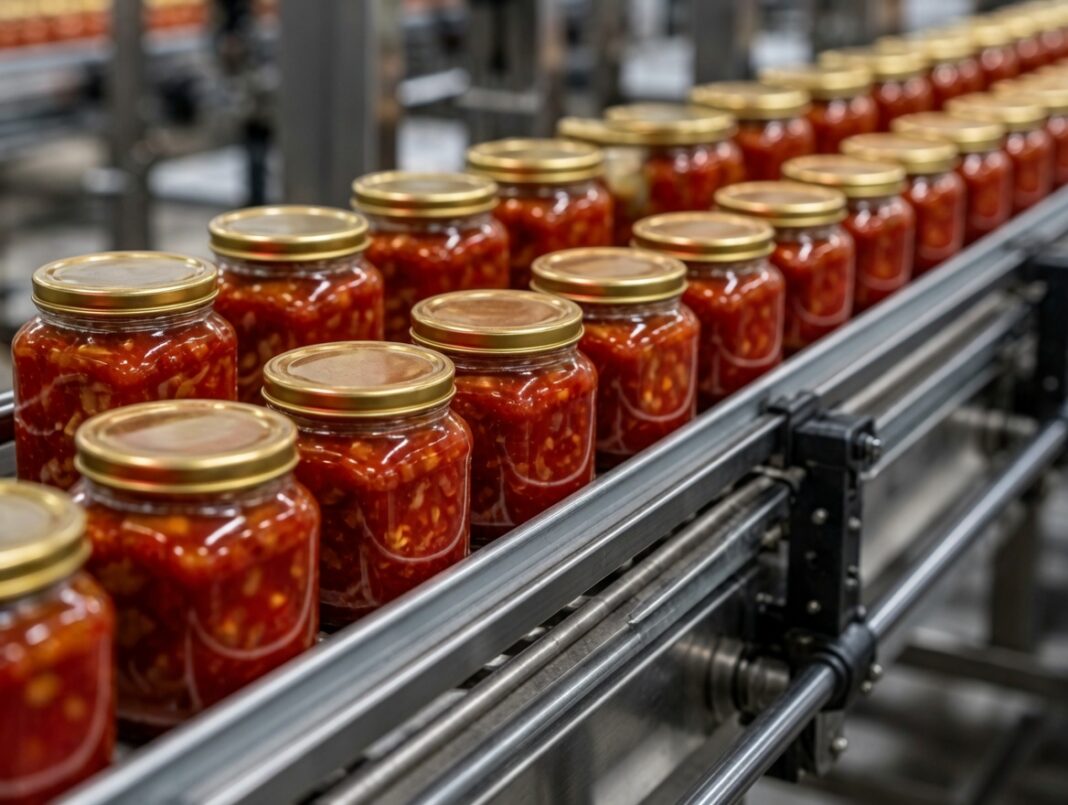
HARARE – Zimbabwe’s food processing industry emerged as the country’s strongest manufacturing employer in 2025, recording the highest net employment growth among all industrial subsectors, according to the latest Confederation of Zimbabwe Industries (CZI) Manufacturing Sector Survey.
The survey shows that the food production sector achieved a 16% net increase in employment during the year, supported by robust business activity, rising output and growing revenues. The sector also recorded an 18% increase in production volumes and a 19% growth in revenue, highlighting its resilience and expanding role within the country’s industrial economy.
Industry analysts say the performance demonstrates the critical role food processing is playing in driving value addition, strengthening local supply chains and creating employment opportunities across Zimbabwe.
The sector’s growth comes at a time when locally manufactured products continue to dominate retail shelves. Previous CZI assessments indicated that approximately 70% of products available in Zimbabwean supermarkets are produced domestically, reflecting growing industrial capacity and consumer demand for locally made goods.
Economists note that food processing has become one of the most strategic segments of the manufacturing industry because of its strong linkages with agriculture, transport, packaging and retail sectors. Increased investment in agro-processing has helped transform agricultural outputs into higher-value products while creating jobs throughout the value chain.
“The performance of the food manufacturing sector demonstrates the potential of local industry to contribute meaningfully to economic growth, employment creation and import substitution,” an industry observer said.
The survey findings have also reignited debate over Zimbabwe’s long-term monetary and industrial policy direction, particularly regarding calls for full dollarisation.
While proponents of dollarisation argue that the use of the United States dollar provides price and exchange-rate stability, industrialists have repeatedly warned that prolonged dollarisation can undermine the competitiveness of domestic manufacturers.
Manufacturing firms often face production costs that are significantly higher than those of competitors in neighbouring countries that operate with more flexible monetary systems. This can make locally produced goods more expensive and reduce profit margins for manufacturers.
As a result, businesses may increasingly depend on imported raw materials or finished products to maintain profitability, a trend that can weaken domestic production capacity over time.
Economic experts argue that while dollarisation can offer short-term monetary stability, it may also create structural challenges for a productive economy if not accompanied by policies that support industrial competitiveness.
“An economy cannot sustainably grow on consumption alone. Long-term growth depends on production, value addition, exports and job creation,” said one manufacturing sector analyst.
They warn that excessive reliance on imports risks undermining industrialisation efforts, weakening local supply chains and reducing the country’s export competitiveness. Such conditions can entrench an import-dependent economy rather than one driven by production and innovation.
The strong performance of the food processing sector in 2025 is therefore being viewed as evidence of the importance of maintaining policies that encourage domestic manufacturing, investment in productive sectors and the expansion of local value chains.
With food manufacturers continuing to expand production and employment, industry leaders believe the sector could become a key pillar of Zimbabwe’s industrialisation agenda, supporting economic growth while improving food security and reducing dependence on imports.