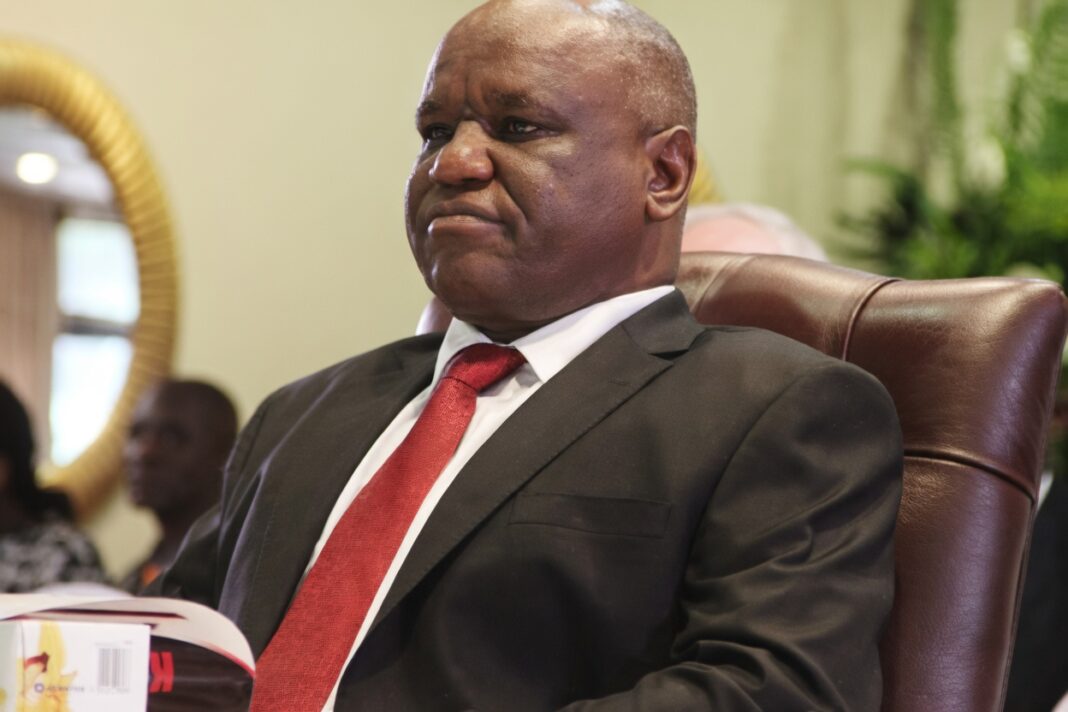

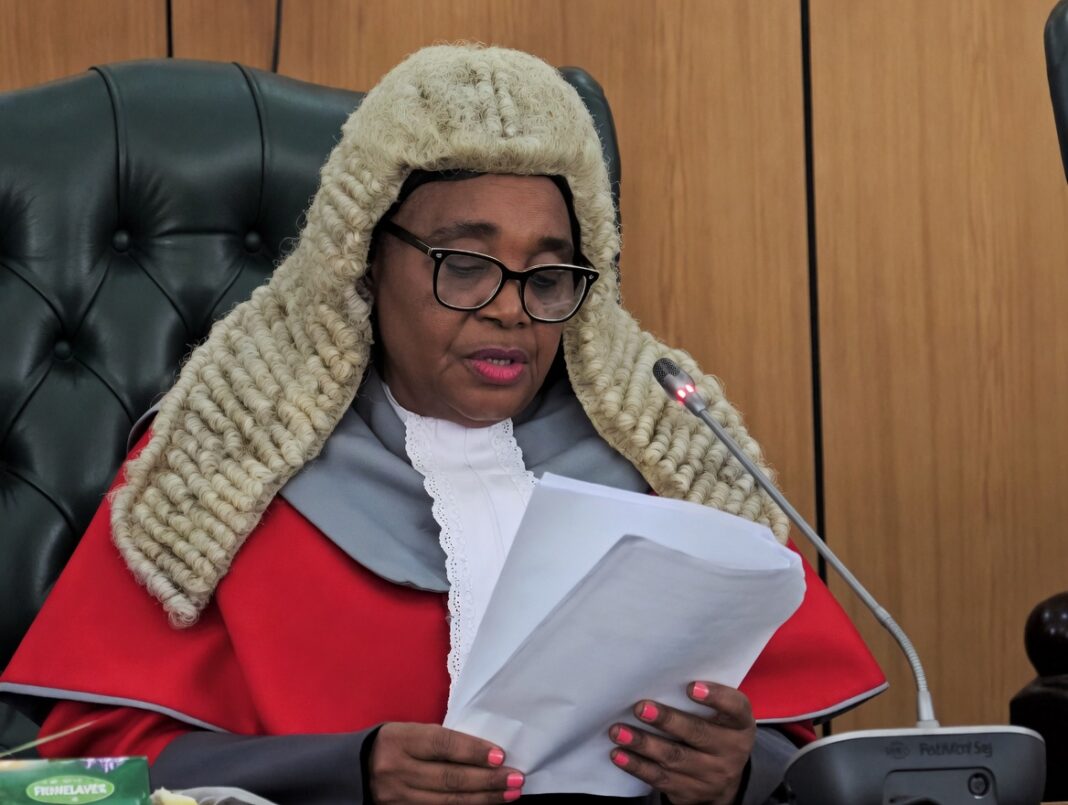
HARARE – President Emmerson Mnangagwa has appointed Justice Elizabeth Gwaunza as the new Chief Justice of Zimbabwe, marking a historic milestone as she becomes the first woman to hold the country’s highest judicial office. She assumes office with effect from 15 May 2026, succeeding outgoing Chief Justice Luke Malaba, who formally retired following a judicial career spanning more than four decades.
The appointment was confirmed in a government press statement issued by Chief Secretary to the President and Cabinet, Dr Martin Rushwaya, in terms of Section 180(2) of the Constitution of Zimbabwe.
Justice Gwaunza, who has served as Deputy Chief Justice since March 2018, is widely regarded as one of the most experienced jurists in the country’s superior courts. She will be deputised by Justice Paddington Garwe, who now moves into the Deputy Chief Justice role.
End of an Era as Malaba Exits the Bench
Chief Justice Luke Malaba bade farewell at a special sitting of the Constitutional Court, bringing to a close a judicial career that began in the early 1980s and saw him rise through the magistracy, High Court, Supreme Court and ultimately the apex of Zimbabwe’s judiciary.
His departure comes just a day before his 75th birthday, following constitutional amendments that adjusted judicial retirement provisions to allow him to remain in office beyond the previous age limit of 70.
That extension, effected through constitutional changes in 2021, became one of the most contested judicial developments in recent years, drawing legal challenges and criticism from sections of the legal fraternity and civil society. Critics argued that the amendments were politically motivated and risked undermining judicial independence, while supporters maintained they were lawful and within parliamentary competence.
Although the legal challenges did not ultimately dislodge him from office, the episode has remained a defining feature of his tenure.
A Career of Institutional Expansion and Judicial Reform
Despite controversy surrounding the end of his term, Malaba’s career is also marked by significant institutional reforms within the judiciary.
He oversaw the expansion of court infrastructure across Zimbabwe, reforms aimed at simplifying court processes, and an increase in judicial appointments to improve case throughput.
One of the most notable modernisation initiatives under his leadership was the rollout of the Integrated Electronic Case Management System, introduced in phases from 2022 and progressively extended across superior and magistrates’ courts to improve efficiency and reduce administrative delays.
Regionally, Malaba also played a role in continental jurisprudence, having served on the COMESA Court of Justice between 2005 and 2016, and later assuming leadership of the Conference of Constitutional Jurisdictions of Africa following Zimbabwe’s hosting of its seventh congress in 2024.
Constitutional Context and Political Undercurrents
Malaba’s tenure intersected with several politically sensitive constitutional matters, including disputes over presidential term limits and constitutional interpretation cases that came before the Constitutional Court.
His retirement now coincides with renewed constitutional debate, as Parliament considers proposals under Constitutional Amendment (No. 3), which seeks to extend President Mnangagwa’s current term from 2028 to 2030. The proposal has already triggered legal scrutiny and public debate over constitutional stability and governance norms.
The judiciary’s role in adjudicating such matters is expected to remain central in the coming months, particularly as several Constitutional Court judges, including Gwaunza, were themselves beneficiaries of the earlier retirement-age amendments.
he President, has, in terms of section 180(2) o f the Constitution of Zimbabwe, appointed Honourable Mr Justice Paddington Garwe as the Deputy Chief Justice of the Republic o f Zimbabwe with effect from 15 May 2026. Honourable Mr Justice Paddington Garwe is qualified for appointment, having served a s a judge o f the Constitutional Court since 2 0 May 2021 and possessing extensive judicial experience.
A Historic Appointment for Gwaunza
Justice Elizabeth Gwaunza’s elevation represents a significant moment in Zimbabwe’s judicial history, not only for its gender milestone but also for continuity within the senior judiciary.
She has served in various judicial capacities over the years and has been Deputy Chief Justice since 2018, during which she presided over key constitutional and appellate matters.
At the special sitting of the Constitutional Court, Gwaunza paid tribute to Malaba’s legacy, highlighting his role in shaping institutional reforms and advancing judicial administration.
Justice Paddington Garwe’s appointment as Deputy Chief Justice completes the reshuffle at the top of the judiciary.
Looking Ahead
Gwaunza assumes leadership of the judiciary at a time of heightened constitutional sensitivity, with courts expected to play a pivotal role in adjudicating politically significant disputes and safeguarding institutional credibility.
As Zimbabwe enters this new judicial era, attention will turn to how the judiciary balances continuity in reform with the growing demands for transparency, independence, and public confidence in the constitutional order.