
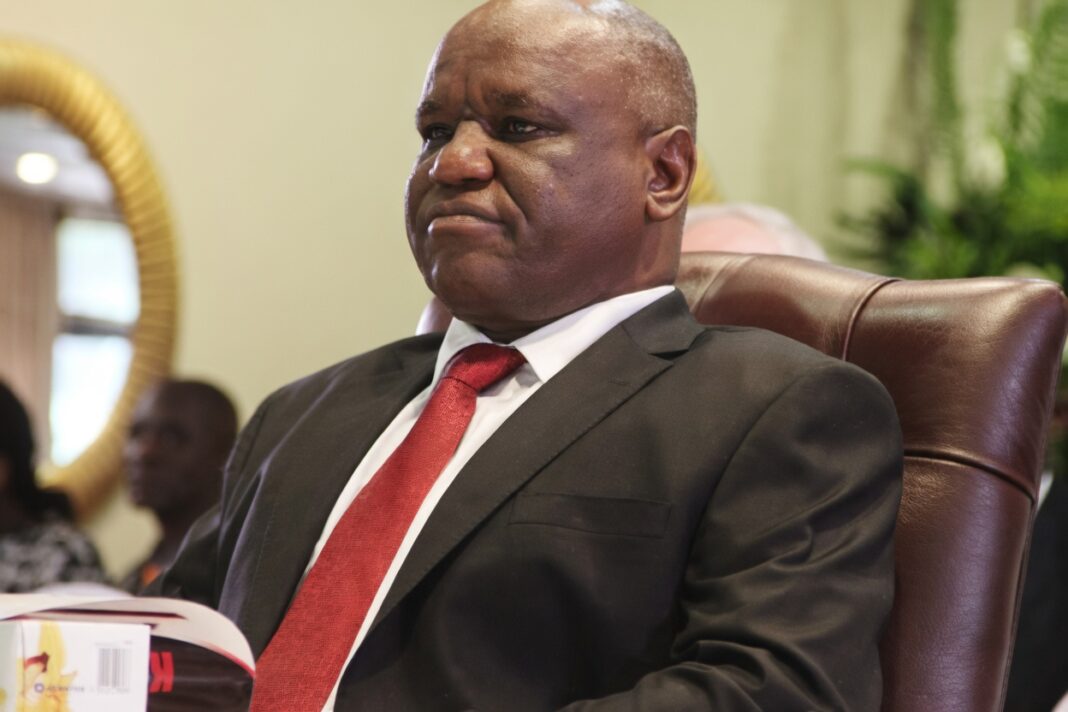
HARARE – Chief Justice Luke Malaba bade farewell to the bench at a special sitting of the Constitutional Court on Wednesday, closing a judicial career spanning more than four decades, though his legacy will be forever shadowed by the controversial extension of his tenure that many lawyers and civil society groups said undermined the very constitutional order he was sworn to uphold.
Malaba turns 75 on Thursday, the revised retirement age introduced after Zanu PF amended the constitution in 2021 to allow him to remain in office beyond the then-limit of 70, which he had already reached in May of that year.
The extension was fiercely contested, drawing legal challenges and accusations that the ruling party had manipulated the constitution to retain a favourable chief justice at a politically sensitive time.
The controversy has never fully dissipated, and it hangs over an otherwise distinguished career.
Malaba’s retirement now comes at another moment of constitutional tension – Zanu PF is pushing through the Constitutional Amendment (No. 3) Bill, which seeks to extend President Emmerson Mnangagwa’s second and final term from 2028 to 2030, a matter that has triggered several challenges before the Constitutional Court.
Born on May 15, 1951, in Kezi, Matabeleland South, Malaba obtained a law degree from the University of Warwick in 1974 and a second from the University of Zimbabwe in 1982.
He began his legal career as a prosecutor before being appointed a magistrate in 1984, serving in Masvingo, Bulawayo and Harare before rising to Regional Magistrate.
In 1994 he was appointed a judge of the High Court, and in 2001 elevated to the Supreme Court as a judge of appeal.
Between 2005 and 2016 he also served as a judge of the COMESA Court of Justice, contributing to regional jurisprudence.
In 2008 he became the first Deputy Chief Justice of Zimbabwe, a position he held until 2017 when he was appointed Chief Justice – head of the judiciary, chairperson of the Judicial Service Commission and chairperson of the Council of the Judicial College.
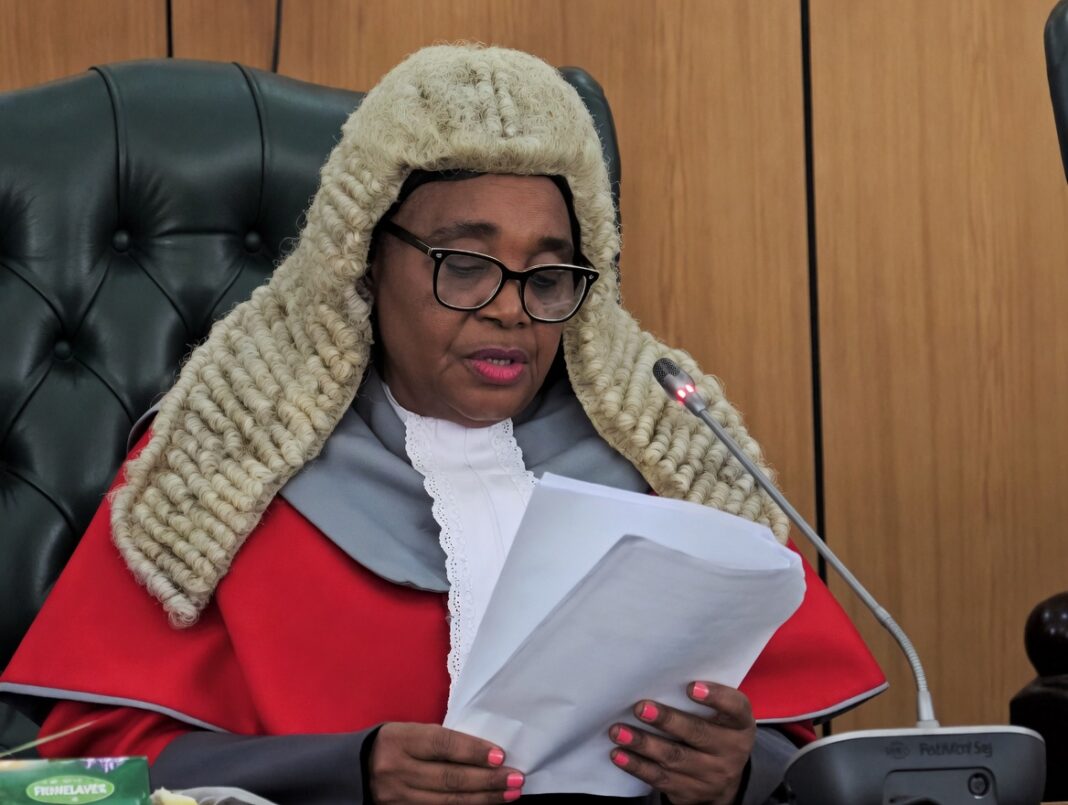
His bench appearances included the 2016 landmark Constitutional Court judgement outlawing child marriages, a ruling Deputy Chief Justice Elizabeth Gwaunza, who delivered his biography at Wednesday’s sitting, described as “a powerful affirmation of the rights and dignity of children in Zimbabwe.”
As chief justice, Malaba championed the construction of courthouses across the country, simplified court procedures and expanded the number of judicial officers.
His most cited institutional achievement is the Integrated Electronic Case Management System, launched in phases from May 2022 and now covering all superior courts, with rollout into the magistrates’ courts continuing beyond his retirement.
In 2024, Zimbabwe hosted the Seventh Congress of the Conference of Constitutional Jurisdictions of Africa, after which Malaba assumed the presidency of the continental body.
“Your legacy is not confined to the judgements you have written or the offices you have held,” Gwaunza told him at Wednesday’s sitting. “It lives in the systems you have built, the standards you have set and the people you have inspired.”
Yet it is the 2021 constitutional amendment – and Malaba’s acquiescence in a process that extended his own term – that critics say will define how history remembers him.
The extension was challenged in the courts and condemned by lawyers, opposition parties and civil society as a nakedly political manoeuvre. The episode raised enduring questions about judicial independence and whether the chief justice, by accepting the benefit of an amendment pushed through by the executive, had compromised the integrity of the office he held.
Those questions were never definitively answered and remain part of his record.
Malaba retires to what Gwaunza described as two great passions: reading and ranching.
He is survived, in institutional terms, by a judiciary whose independence will face its next major test in the constitutional battles over the Amendment Bill he leaves behind.
Several judges of the Constitutional Court, including Gwaunza, are beneficiaries of the “Malaba Amendment” after reaching the age of 70 and securing extensions. In the coming weeks, they will sit in judgement over Mnangagwa’s own attempt to stay on – an illustration of the judicial mess Malaba leaves behind.
Malaba will be replaced by Gwaunza, who becomes the country’s first female Chief Justice. Justice Paddington Garwe replaces Gwaunza as Deputy Chief Justice.
Source: ZimLive