HARARE – Econet Wireless Zimbabwe is seeking to bring artificial intelligence into everyday life through a nationwide adoption campaign targeting schools, small businesses and communities, as the telecommunications group looks to turn its extensive smartphone customer base into a market for AI-powered services.
The initiative, spearheaded by its wholly owned subsidiary Econet AI, represents a shift from deploying artificial intelligence within the company’s operations to building a broader consumer market for the technology.
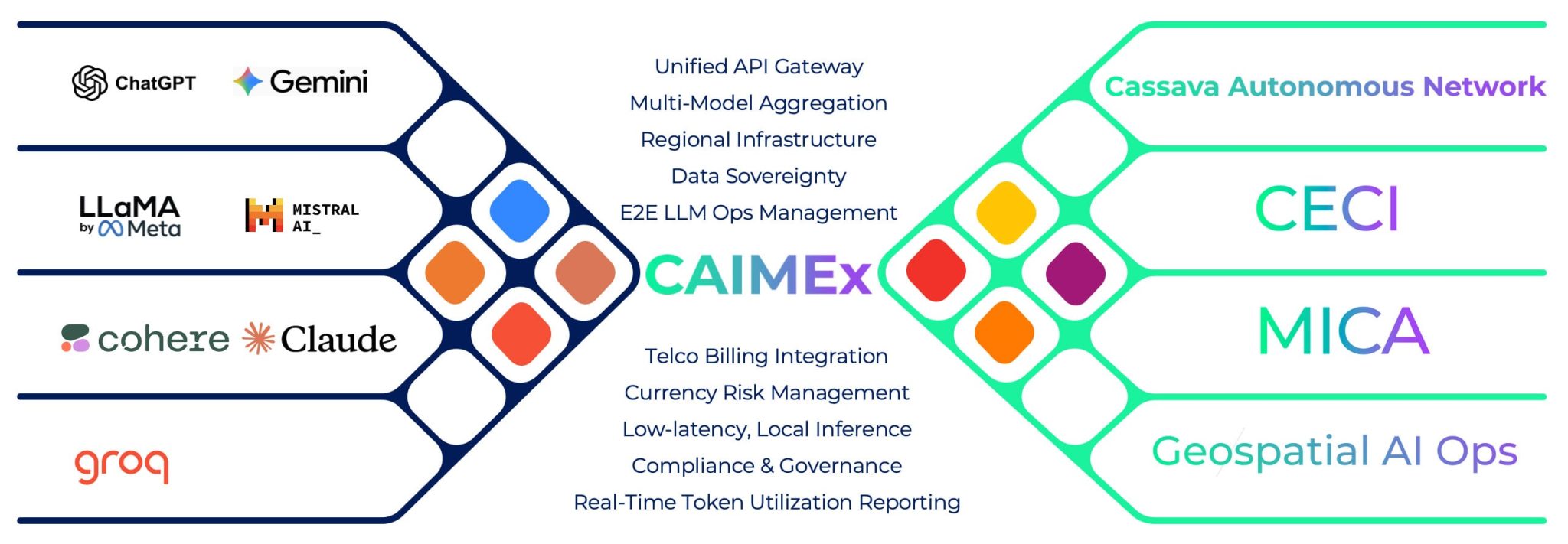
At the centre of the strategy is CAIMEX, a platform offering access to 100 artificial intelligence models, allowing users to select lower-cost options for tasks ranging from education and business administration to research and everyday information searches.
The platform operates through a token-based payment system, potentially creating a new revenue stream for Econet while giving consumers access to multiple AI models without subscribing individually to each provider.
“We want everyone who has a smartphone to start using AI, and that is nearly 70% of our base. Unfortunately, you can’t access AI without a proper smartphone,” Econet AI chief executive Navdeep Kapur said.
The company’s approach draws on its experience popularising mobile financial services through EcoCash, where widespread mobile adoption helped establish new patterns of consumer behaviour and digital transactions.
However, expanding AI usage presents a different commercial challenge. Unlike mobile payments, where transactions have an immediate financial purpose, artificial intelligence requires consumers to recognise its practical value before committing money to regular usage.
For small businesses, potential applications include inventory management, customer communications, marketing and basic financial record-keeping. Students could use the technology for research and personalised learning, while community organisations could benefit from faster access to information.
The economics of adoption will depend on smartphone affordability, mobile data costs, digital literacy and the price of AI tokens.
Econet is also betting that local-language accessibility will differentiate its services from international technology platforms.
Its Yamurai AI assistant currently supports English, Shona and Ndebele, with additional Zimbabwean languages planned. The company describes its multilingual AI helpline as the first of its kind among African mobile operators, although that claim has not been independently verified.
Econet Group chief executive Douglas Mboweni said Zimbabwe was already demonstrating significant engagement with artificial intelligence through the company’s existing digital services.
“Zimbabweans are using AI every day through Econet products like Yamurai, EcoChat, and EcoFarmer. Students are already using AI for study. I don’t know of an African country that has reached our level of AI interaction and adoption; Zimbabweans should be very proud,” Mboweni said.
The company wants Zimbabwe to become Africa’s most AI-literate market, citing the widespread use of artificial intelligence in technologically advanced economies as an ambition for domestic adoption.
Yet the distinction between access and productive use will be critical.
Making AI tools available to millions of smartphone owners does not automatically translate into measurable improvements in productivity, educational outcomes or business profitability.
The commercial opportunity lies in developing applications that solve practical problems at prices affordable to Zimbabwean consumers.
For Econet, the strategy could also strengthen customer engagement, stimulate demand for mobile data and diversify digital-service revenues beyond conventional telecommunications.
The initiative comes as African economies increasingly confront the challenge of participating in the global AI economy without owning the expensive computing infrastructure and foundational models underpinning much of the technology.
By aggregating access to existing AI models, Econet could lower some barriers to adoption, although the arrangement also exposes users and businesses to questions about data privacy, model reliability and dependence on external technology providers.
The company’s longer-term success will therefore depend less on how many AI models its platform offers than on whether Zimbabweans find sufficient economic value in using them regularly.
For a country seeking to improve business productivity and digital competitiveness, Econet’s campaign presents an opportunity to move artificial intelligence beyond corporate experimentation and into mainstream economic activity.
Whether that ambition becomes a commercially sustainable business will ultimately be determined by affordability, accessibility and the practical benefits delivered to users.