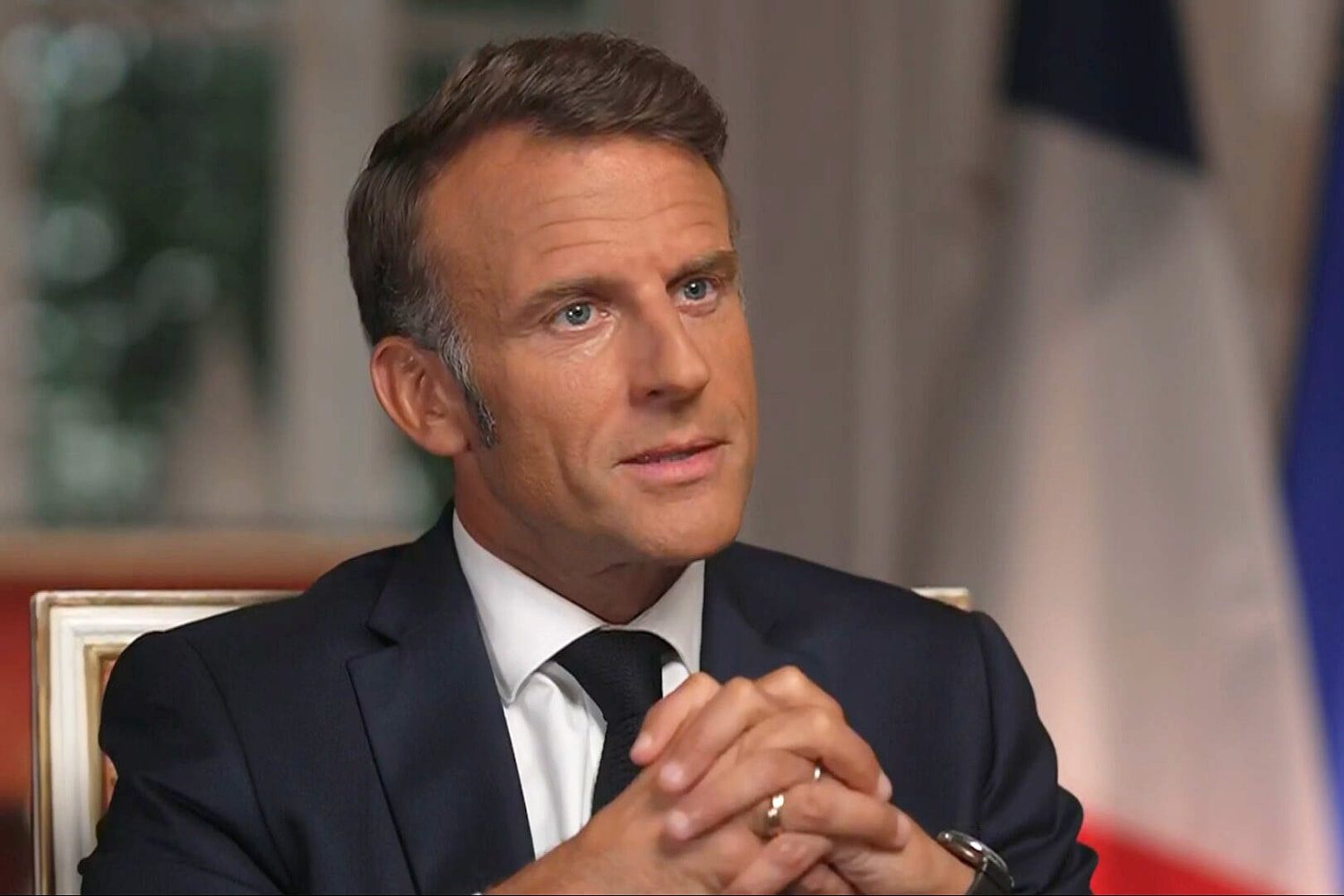
Emmanuel Macron promised to modernise France, transcend the traditional left-right divide and strengthen European integration. Instead, his presidency has exposed the limits of technocratic centrism, intensified France’s political fragmentation and created new opportunities for the nationalist right. The crisis is not simply one of public debt. It is a crisis of democratic legitimacy.
By Timothy Mutsekwa
France is not a peripheral European economy. It is one of the European Union’s largest economies, a major sovereign-debt issuer and one of the principal pillars of European political integration. Its stability has long been essential to the credibility of the eurozone.
Yet France is entering a period of profound political and economic uncertainty.
Public debt reached 115.6 per cent of GDP in 2025, while the budget deficit remained at 5.1 per cent. These figures are serious. But they tell only part of the story. France’s fiscal difficulties cannot be understood independently of the political choices that have shaped its economy, the institutional weaknesses of the Fifth Republic and the erosion of public confidence in its governing class.
The central question is no longer whether Macron’s presidency has failed to deliver political stability. It is whether the political and economic model he represented can survive its own contradictions.
The illusion of the radical centre
Macron’s rise in 2017 was built on a compelling proposition: France’s traditional political divisions had become obsolete, and a new generation of pragmatic leadership could reconcile economic modernisation with social protection, national sovereignty with European integration, and market efficiency with democratic responsiveness.
His movement weakened the established parties of the left and right. But it did not create a durable political settlement capable of replacing them.
Macronism was less a coherent political organisation than a presidential vehicle. Its authority depended heavily on Macron himself, while its ideological foundations remained centred on economic liberalisation, European integration and executive-led reform.
The weakness of this arrangement became increasingly apparent as Macron’s popularity declined.
The political centre had succeeded in displacing its traditional competitors without establishing a sufficiently broad coalition to sustain its programme.
This was not simply a failure of political communication. It was a failure to understand that democratic legitimacy cannot be reduced to electoral victory or administrative competence.
Macron’s presidential mandate did not confer an unlimited right to determine the country’s economic and social direction.
The electorate could support him as an alternative to the far right while simultaneously rejecting significant elements of his domestic programme.
The mistake was to interpret the absence of a clear alternative as evidence of popular consent.
Neoliberalism disguised as pragmatism
Macron’s economic programme was consistently presented as a necessary modernisation of the French state.
Labour-market reforms, pension changes, business-friendly taxation and efforts to improve competitiveness were justified as measures required to strengthen economic growth and restore fiscal sustainability.
Some of these objectives were legitimate. France faces demographic pressures, productivity challenges and a substantial public deficit.
But the language of pragmatism concealed a political choice about who should bear the costs of economic adjustment.
Macron’s reforms generally favoured a model in which investment incentives, labour-market flexibility and market confidence occupied a central position in economic policymaking.
The reduction of the wealth tax on financial assets, the pension reform and the use of constitutional mechanisms to advance contested legislation reinforced the perception that the government was more responsive to economic elites than to ordinary citizens.
The pension reform was particularly revealing.
The decision to raise the statutory retirement-age threshold from 62 to 64 was defended as fiscally necessary. Yet its passage through Article 49.3, which allowed the government to enact the legislation without a conventional parliamentary vote, intensified opposition to the reform.
The issue was not merely whether the reform was economically defensible. It was whether a government could impose a deeply contested redistribution of social costs while treating parliamentary resistance as an obstacle to be overcome.
This is the central contradiction of Macronism: it claimed to transcend ideology while consistently advancing a particular political-economic vision.
Its failure demonstrates that economic policy is never simply a matter of technical necessity. It is also a question of power, distribution and democratic consent.
The fiscal crisis and the limits of austerity
France’s public finances require serious attention. The deficit remains above the European Union’s three per cent reference value, and rising debt-servicing costs are reducing the resources available for public investment and social expenditure.
But the assumption that fiscal consolidation must necessarily mean dismantling the French social model is neither economically inevitable nor politically sustainable.
France has historically chosen a comparatively extensive system of public services and social protection. Its high level of public expenditure reflects that choice.
The relevant question is whether the state can finance those commitments sustainably while maintaining economic productivity and social cohesion.
Austerity can reduce deficits in the short term. But poorly designed fiscal consolidation can also weaken demand, undermine public services and reduce the productive capacity of the economy.
Equally, the indefinite continuation of large structural deficits without a credible financing strategy would increase the risks associated with rising debt and borrowing costs.
The challenge is to establish a fiscal settlement that is both economically sustainable and democratically legitimate.
That requires a serious examination of taxation, public investment, the distribution of wealth, the efficiency of public expenditure and the long-term productive capacity of the French economy.
It cannot be resolved through the simplistic assertion that France spends too much.
The presidential gamble that destroyed the centre
Macron’s political difficulties were compounded by his decision to dissolve the National Assembly in June 2024.
The snap elections were intended to clarify the political situation following the National Rally’s victory in the European Parliament elections.
Instead, they produced a fragmented parliament divided between the left, the weakened presidential coalition and the far right.
No bloc secured a durable governing majority.
Macron’s gamble therefore achieved the opposite of its intended objective.
It weakened his parliamentary position, intensified political fragmentation and made the formation of stable governments increasingly difficult.
The subsequent instability cannot be attributed exclusively to Macron. France’s political institutions, electoral dynamics and the unwillingness of competing parties to compromise have also contributed to the crisis.
Nevertheless, the president’s decision was a decisive turning point.
The failure of Macronism was not simply imposed upon it by an increasingly polarised electorate. It was also produced by the political choices of its own leadership.
France and the future of the euro
France’s difficulties have implications for the entire European Union. The eurozone remains an incomplete monetary union. Its member states share a currency and monetary policy, but retain substantial control over national taxation, public expenditure and borrowing.
This creates a structural vulnerability.
A sovereign-debt crisis in a major economy such as France would be far more difficult to manage than one in a smaller member state. The European Central Bank possesses significant instruments to protect the integrity of the eurozone, but its interventions are not politically or legally unconditional.
France’s position therefore raises an important question: can European monetary integration survive without a more developed system of fiscal and political coordination? The answer cannot simply be to impose increasingly rigid fiscal rules on national governments.
Nor can it be to assume that the ECB will always intervene regardless of the political circumstances. The euro requires a credible framework that combines fiscal responsibility with economic solidarity, investment and democratic accountability.
Without such a framework, the tensions between national democracy and European monetary integration will continue to intensify.
The far right and the politics of rupture
The most dangerous consequence of Macronism’s failure is that it has created new opportunities for the nationalist right.
The National Rally has benefited from economic insecurity, political fragmentation and declining confidence in established institutions.
Its appeal is not limited to immigration. It also reflects dissatisfaction with public services, the cost of living and the perception that political elites have become disconnected from ordinary citizens.
Macron’s decline has therefore created an opening for a party that presents itself as the defender of national sovereignty and public order against a discredited political establishment.
But the RN’s promise of national renewal should not be confused with a credible solution to France’s structural problems.
Its nationalist and exclusionary politics risk deepening social divisions while creating new conflicts with European institutions.
The danger is that the failure of the centre will be interpreted as evidence that democratic pluralism itself has failed.
That conclusion would be profoundly mistaken.
The alternative to technocratic centrism is not necessarily authoritarian nationalism. A democratic alternative could combine economic reform with stronger public services, progressive taxation, productive investment and greater parliamentary accountability.
The challenge is to demonstrate that democratic politics can deliver meaningful economic change without sacrificing social cohesion or institutional legitimacy.
Macronism’s legacy
Macron’s presidency was intended to stabilise France by overcoming the traditional left-right divide. Instead, it has weakened the established political parties, intensified social tensions and contributed to a political landscape in which the centre has become increasingly fragile. The consequences extend beyond France.
A politically weakened France cannot provide the same leadership on European defence, strategic autonomy, economic integration or support for Ukraine.
The European Union therefore faces a choice.
It can continue to treat political instability as a problem to be managed through fiscal discipline and technocratic intervention.
Or it can recognise that the legitimacy of European integration ultimately depends on its capacity to deliver economic security, democratic accountability and a meaningful sense of political agency.
The crisis of Macronism is not proof that the political centre is inherently incapable of governing.
It is evidence that a centre which loses its social foundations, weakens its political organisation and treats democratic consent as secondary to economic management cannot sustain itself indefinitely. France’s reckoning is therefore not simply about debt.
It is about the future of democracy in a Europe where the established political order is increasingly challenged by forces promising rupture, national restoration and a return to political certainty.
The question is whether Europe can renew its democratic foundations before the political vacuum created by the failure of the centre is filled by the nationalist right.