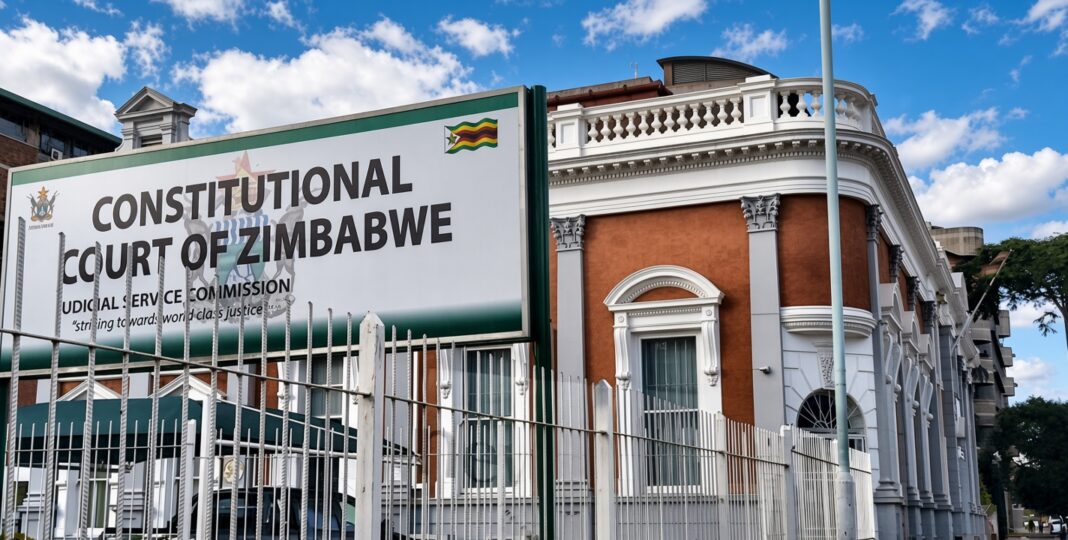
HARARE – Zimbabwe’s Constitutional Court has postponed hearings on two legal challenges to constitutional amendments that could keep President Emmerson Mnangagwa in office until 2030, setting November 18 for the next stage of proceedings after concerns emerged over the composition of the bench.
The postponement followed a case management meeting on Wednesday chaired by Deputy Chief Justice Paddington Garwe, with the court agreeing to prioritise an application challenging the legality of provisions that expanded the number of Constitutional Court judges.
The dispute centres on Constitutional Amendment Act changes signed into law in July, which extended Mnangagwa’s current presidential term by two years, from 2028 to 2030, and also extended the tenure of MPs who supported the legislation.
According to reporting by ZimLive, lawyer Professor Lovemore Madhuku, who represents the applicants, said the court had raised the question of whether judges appointed under the contested amendments should participate in deciding their constitutionality.
The applicants indicated that they preferred the challenge to be heard without the additional judges appointed under the disputed provisions. The issue has become central to the proceedings because the amendments increased the Constitutional Court’s membership beyond its previous seven-member composition.
Madhuku said the parties had agreed to give priority to an application filed by Vhurande Mahlupeko, which challenges aspects of the amendments, including allegations that several provisions were introduced without appearing in the Government Gazette publications setting out the proposed changes.
He said approximately nine or 10 provisions were allegedly added during the legislative process, including the provision increasing the number of Constitutional Court judges. These remain allegations to be determined by the court.
The second challenge, brought by Prince Dubeko Sibanda, raises a separate constitutional question: whether the amendments can lawfully extend the terms of the president and parliamentarians who were already in office when the changes were adopted.
Sibanda argues that such an extension would violate Section 328(7) of the Constitution, which restricts amendments to presidential and parliamentary term limits from benefiting incumbents who were in office when the changes were made.
The applicants are seeking direct access to the Constitutional Court, allowing the disputes to be heard by the country’s highest court without first commencing proceedings in the High Court. The court must determine whether the applications qualify for that procedure before moving to the substantive constitutional questions.
Madhuku said the applicants had no objection to Justice Antonetta Guvava sitting on the bench, arguing that her elevation followed the retirement of former Chief Justice Luke Malaba rather than the disputed expansion of the court.
The next hearing is expected to proceed before a bench that excludes the additional judges appointed under the contested amendments, according to Madhuku’s account of the discussions.
“We really think that it’s now time for this matter to be determined,” he said, according to ZimLive.
Attorney General Virginia Mabhiza attended Wednesday’s proceedings, although the Government’s legal representation was handled by private lawyers.
The cases carry significant implications for Zimbabwe’s constitutional framework, the 2028 electoral timetable and the balance of power between the executive, legislature and judiciary. A ruling on the legality of the amendments could determine whether the changes withstand constitutional scrutiny and how their provisions may be applied.
The Zimbabwe Mail’s assessment is that the dispute extends beyond the political question of Mnangagwa’s tenure. At its heart is the constitutional principle that amendments to the supreme law must follow the prescribed procedures and that courts must be able to examine their validity without questions about judicial independence or institutional conflicts undermining public confidence.
The immediate focus, however, is procedural. The Constitutional Court must first decide whether to grant direct access and establish the appropriate bench before it can determine the substantive challenges. The November 18 proceedings are therefore an important next step, but they should not be mistaken for a final ruling on the constitutionality of the amendments.