
HARARE – Zimbabwe is experiencing one of its most significant mining investment cycles in recent years, with record-breaking imports of underground mining equipment and growing exports of processed lithium products providing fresh evidence that the country’s push towards mineral beneficiation is beginning to reshape its industrial landscape.
Analysis by Equity Axis of Zimbabwe’s April 2026 merchandise trade data shows that while headline figures reflected a widening trade deficit and softer earnings from some traditional exports, the underlying data points to a powerful capital expenditure boom driven by mining expansion projects, processing plant construction and critical minerals development.
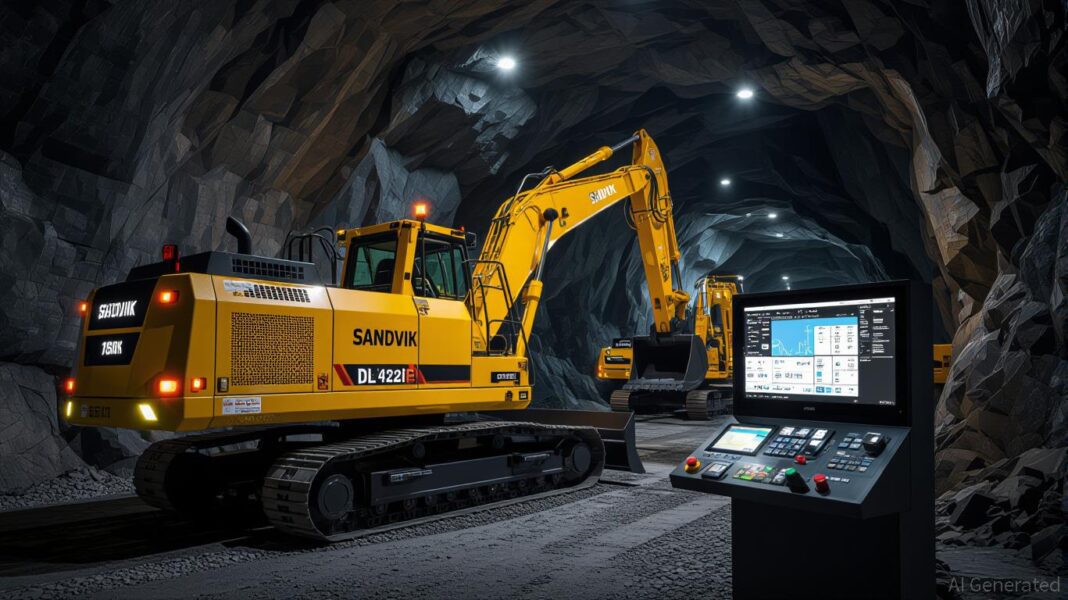
The most striking indicator was a historic surge in imports of self-propelled coal and rock-cutting machinery as well as underground tunnelling equipment, which reached US$23.2 million in April, compared to just US$604,000 in March.
According to Equity Axis, the April figure represents the largest single-month importation of underground mining equipment ever recorded in Zimbabwe’s trade statistics and is approximately fourteen times larger than any previous monthly record.
“The import and export signatures visible in April’s trade data point to a mining capital expenditure cycle that was initiated between 2022 and 2024 and is now translating into physical industrial activity, processing infrastructure and export production,” Equity Axis said in its assessment.
The investment trend was further reinforced by rising imports of bulldozers, excavators and other earthmoving machinery, which climbed to a historic high of US$17.2 million in April from US$16.6 million the previous month.
Industry analysts say the figures reflect simultaneous expansion across multiple mining projects rather than isolated investments by a single operator.
The development comes as Zimbabwe seeks to leverage its vast reserves of lithium, platinum group metals (PGMs), gold and other critical minerals to drive industrialisation and attract foreign direct investment.
A parallel increase in diesel imports has provided further evidence of accelerating mining and processing activity.
Zimbabwe’s diesel import bill rose sharply from US$91.6 million in March to US$132.5 million in April, an increase of nearly 45% within a single month.
Economists note that such increases typically accompany periods of intensive mine development, plant commissioning, earthmoving operations and increased industrial power demand.
“Diesel consumption is often one of the clearest indicators of expanding mining and construction activity because it powers everything from underground development equipment to haulage fleets and processing facilities,” a Harare-based mining analyst said.
Perhaps the most significant milestone in April’s trade figures was the emergence of Zimbabwe’s first substantial lithium sulphate export shipment.
The country exported approximately US$12.6 million worth of lithium sulphate during the month, marking a breakthrough in efforts to move beyond raw mineral exports and into higher-value processing activities.
The shipment is widely linked to production from the Arcadia Lithium Project in Goromonzi, one of Zimbabwe’s flagship lithium investments.
Operated by Prospect Lithium Zimbabwe, a subsidiary of Chinese battery materials giant Zhejiang Huayou Cobalt, Arcadia recently commissioned a US$400 million processing facility designed to produce lithium sulphate for global battery supply chains.
The development is being viewed as an early test of Zimbabwe’s beneficiation strategy, which aims to increase local processing and capture more value from the country’s critical mineral resources.
Government policy has increasingly focused on moving Zimbabwe up the mineral value chain.
Earlier this year, authorities introduced a Critical Minerals Declaration that classified lithium, platinum, cobalt, nickel, graphite, copper, rare earths and chrome as strategic resources requiring increased domestic beneficiation and state participation.
The policy framework builds on previous restrictions on the export of raw lithium concentrates and seeks to encourage investment in downstream processing facilities.
At the same time, Cabinet approved the Integrated Provincial Special Economic Zones framework, which designates specific provinces for targeted industrial activities. Mashonaland East, home to Arcadia, has been earmarked as a lithium processing hub, while the Midlands has been designated for steel and iron beneficiation.
Several major mining projects appear to be driving the current wave of capital expenditure.
These include underground expansion work at the Renco Gold Mine in Masvingo Province, Zimplats’ Phase Three expansion programme on the Great Dyke, the continued development of Arcadia Lithium Mine, and preparations for the commissioning of Sinomine’s lithium sulphate processing facility at Bikita Minerals.
Collectively, these projects represent billions of dollars in long-term mining and processing investments.
However, analysts caution that while the shift from raw ore exports to lithium sulphate production represents progress, Zimbabwe still captures only a fraction of the value available within global battery supply chains.
Current lithium sulphate prices command a significant premium over raw spodumene concentrate, but battery-grade lithium carbonate and lithium hydroxide remain substantially more valuable products.
Equity Axis argues that the country’s next industrial challenge lies in moving beyond intermediate processing into battery-grade chemical production.
“The April lithium sulphate exports confirm that beneficiation policies are beginning to generate commercial output. However, the higher-value conversion stages remain largely outside Zimbabwe, meaning substantial value addition continues to be captured in Asia,” the research firm noted.
The report suggests that future investments in lithium carbonate and hydroxide conversion facilities could significantly increase export earnings while supporting broader industrial development.
Financing for such projects could potentially be supported through Zimbabwe’s ongoing engagement with the New Development Bank, the African Development Bank and the Mutapa Investment Fund.
The latest trade data also arrives against the backdrop of findings from the African Development Bank’s industrialisation assessments, which indicate that Zimbabwe has achieved strong manufacturing value-added growth over the past decade but remains heavily concentrated in basic metals and primary mineral processing.
For policymakers, the record machinery imports and emerging processed mineral exports offer evidence that mining-led industrialisation is gaining momentum. The key question now is whether Zimbabwe can leverage the current investment cycle to develop higher-value manufacturing capabilities that extend beyond extraction and intermediate processing.
As global demand for battery minerals continues to grow, the country appears increasingly determined to position itself not merely as a supplier of raw resources but as a participant in the industrial value chains underpinning the global energy transition.