

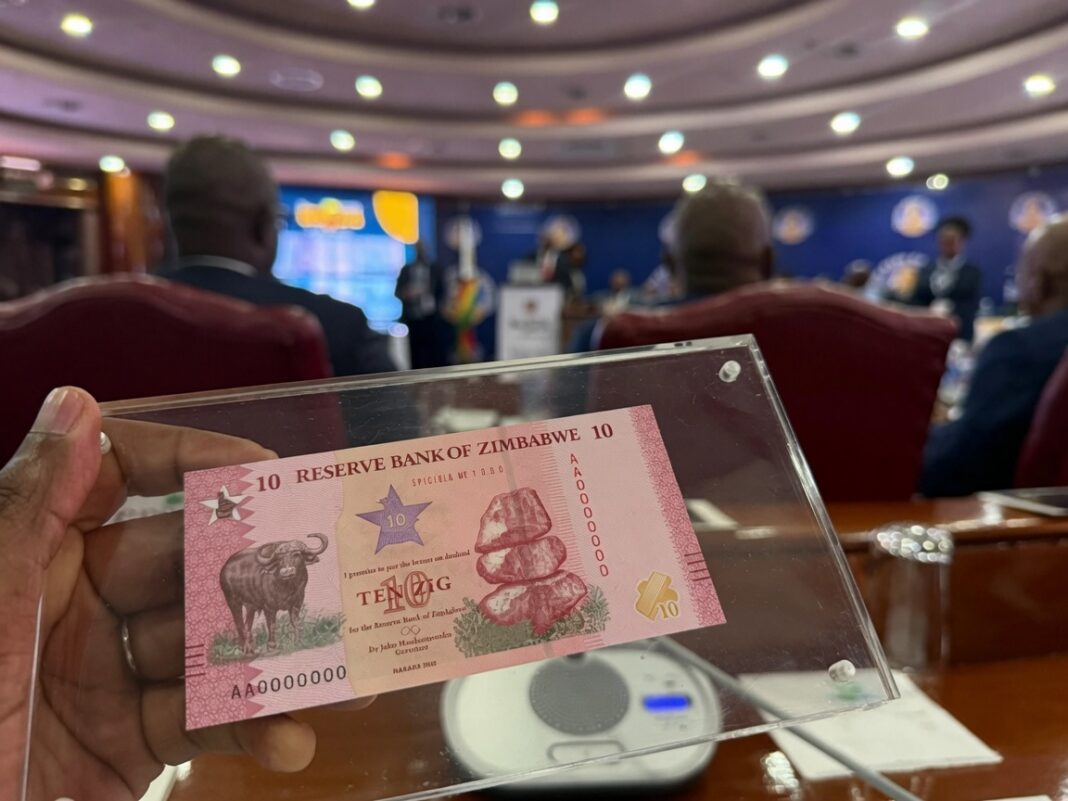
HARARE — The Reserve Bank of Zimbabwe (RBZ) has rolled out a new suite of short-term monetary instruments, introducing 30-, 60- and 90-day Zimbabwe Gold (ZiG) Denominated Term Deposit Facility Bills (ZiGDTDFs) as part of its ongoing efforts to absorb excess liquidity in the financial system and reinforce stability in the domestic currency market.
The instruments carry stepped annualised interest rates of 8%, 9% and 11% respectively, and are open to participation by commercial banks, corporates and individual investors. According to monetary authorities, the initiative is designed to encourage the temporary locking-up of local currency holdings, thereby reducing money circulating in the economy and easing pressure on the exchange rate.
The introduction of the ZiG bills comes at a time when Zimbabwe’s financial system is grappling with heightened liquidity pressures, driven in part by a widening trade imbalance and sustained demand for foreign currency to finance imports. The imbalance has intensified pressure on the parallel and official exchange rate channels, prompting the central bank to deepen its use of open market-style instruments.
By issuing short-tenor, interest-bearing bills, the RBZ is effectively attempting to sterilise excess liquidity without resorting to blunt monetary contraction. The policy approach reflects a broader shift toward more active liquidity management, where domestic currency supply is absorbed through structured financial instruments rather than administrative controls.
The latest issuance is consistent with a sequence of liquidity absorption tools deployed by the central bank over recent years. These have included the introduction of Mosi-oa-Tunya gold coins in 2022, followed by gold-backed digital tokens in 2023, alongside a range of reserve instruments aimed at anchoring value expectations and managing inflationary pressures.
Taken together, these measures signal an evolving monetary policy framework in which the RBZ has increasingly relied on asset-backed and time-locked instruments to stabilise the Zimbabwe Gold currency and rebuild confidence in domestic monetary policy.
Economists note that the immediate objective of the ZiGDTDF programme is to reduce short-term liquidity overhangs that tend to translate into foreign currency demand spikes. By offering competitive yields on ZiG-denominated instruments, the central bank is incentivising both institutional and retail holders of liquidity to park funds within the formal monetary system rather than exert pressure on the exchange rate.
If effectively absorbed, this could contribute to greater exchange rate stability and a moderation in inflation expectations, particularly in a market that remains highly sensitive to liquidity shocks and import-driven demand for hard currency.
However, monetary tightening through sterilisation instruments often comes with trade-offs. Reduced liquidity in the banking system can constrain credit creation, potentially slowing down private sector borrowing, investment expansion and consumer lending activity.
The RBZ’s latest move highlights the delicate balance facing monetary authorities: stabilising the currency while sustaining economic activity. While short-term deposit instruments may help anchor expectations and manage volatility, their effectiveness ultimately depends on broader structural conditions, including export performance, fiscal discipline and confidence in the domestic currency regime.
In the absence of sustained foreign currency inflows or productivity-led growth, liquidity management tools alone may not fully resolve underlying exchange rate pressures. Nevertheless, the introduction of ZiG bills signals a continued effort by the central bank to refine its monetary toolkit and strengthen control over domestic liquidity dynamics.
Market participants will closely monitor uptake levels of the new instruments, as well as their impact on money supply growth, credit availability and exchange rate behaviour in the coming months. The success or otherwise of the programme will likely shape future iterations of Zimbabwe’s monetary policy framework as authorities attempt to stabilise the ZiG and reinforce confidence in the local financial system.