

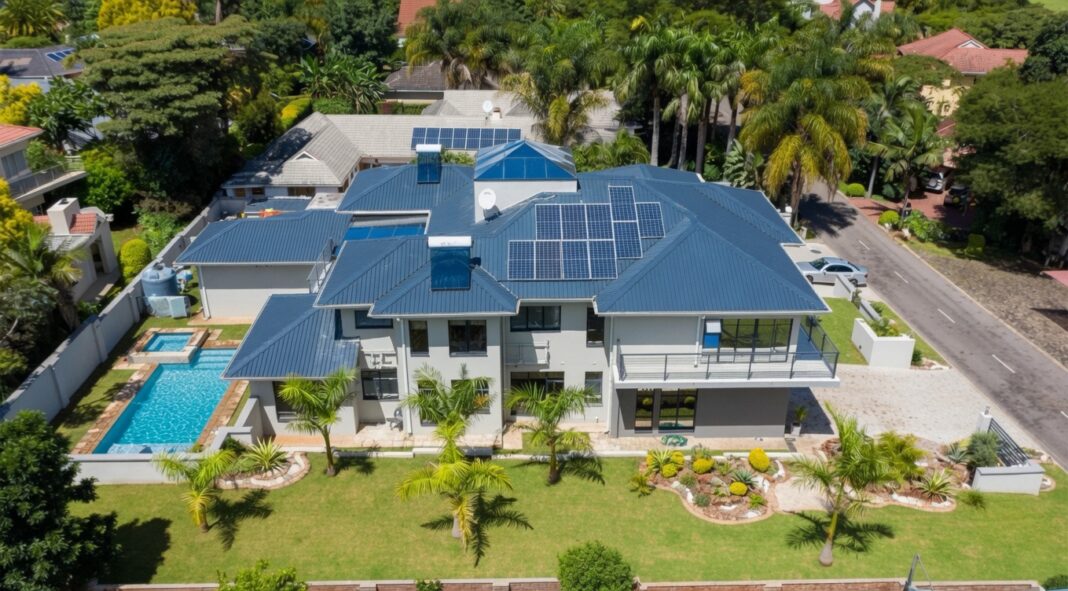
Zimbabwe’s property sector is being held back by a chronic shortage of long-term mortgage finance, with industry leaders warning that the country’s banking system is failing to provide the patient capital needed to unlock billions of dollars in investment.
Chairperson of the Real Estate Investment Trust (REIT), Mike Juru, said the absence of 25-year mortgage financing has become one of the biggest structural obstacles to growth, limiting investment in housing, commercial real estate and urban development.
“Property is a long-term investment, and we need the 25-year money,” Juru said.
“Imagine, right now, we don’t have 25-year money. We have so much construction.
“What will happen when we have 25-year money? A lot will happen. That’s our cry.”
His remarks come as Zimbabwe seeks to position construction and infrastructure as key drivers of economic growth while addressing an acute housing shortage and rapid urbanisation.
Although construction activity continues across Harare and other urban centres, developers argue that the sector remains constrained by a financial system geared towards short-term lending rather than the long-term financing that supports mature property markets.
Without affordable long-term mortgages, developers struggle to convert demand into completed sales, while many aspiring homeowners remain unable to enter the property market because short repayment periods result in unaffordable monthly instalments.
Industry executives say the consequence is a market increasingly reliant on cash buyers, corporate investors and high-net-worth individuals, reducing the sector’s broader contribution to economic growth.
Juru said Zimbabwe has already demonstrated its ability to build, but long-term financing remains the missing ingredient needed to unlock significantly greater investment.
“We have so much construction.
“What will happen when we have 25-year money? A lot will happen,” he said.
Economists argue that well-developed mortgage markets stimulate growth across multiple sectors by supporting industries such as cement and steel manufacturing, banking, insurance, engineering and construction.
Juru said restoring investor confidence would require not only greater access to long-term finance but also sustained stability in Zimbabwe’s monetary policy.
“Can we have a firm position? If we have a firm position with regards to the United States dollar, which gives confidence,” he said.
He noted that banks are reluctant to issue mortgages spanning two decades or more unless they have confidence that inflation, exchange rates and monetary policy will remain stable over the life of those loans.
Years of currency volatility and repeated policy shifts have undermined lenders’ willingness to offer long-term mortgage products.
Juru, however, welcomed recent assurances from the Reserve Bank of Zimbabwe regarding the future of the Zimbabwe Gold (ZiG) currency, saying policy consistency would be vital to rebuilding confidence.
“Today, the deputy governor presented on the future of the ZiG, giving assurances, and if we get that over 25 years, that will be good news for the real estate development sector,” he said.
Industry players argue that confidence will ultimately be measured by whether banks begin offering affordable mortgages with repayment periods comparable to those available in more developed markets.
Developers say such financing would unlock billions of dollars in investment, expand home ownership, deepen capital markets and allow pension funds and insurance companies to channel long-term savings into productive real estate projects.
They add that a stronger mortgage market would also boost demand for building materials, create employment across the construction value chain, increase tax revenues and accelerate the development of new residential suburbs, office parks, industrial estates and retail centres.
Without those reforms, industry leaders warn, Zimbabwe risks falling behind regional peers whose more mature mortgage markets have supported sustained growth in housing and commercial property.
Source – newsday