
TEXAS, Austin — Tesla Inc. reported continued momentum in the first quarter, advancing infrastructure, artificial intelligence and manufacturing capacity as it positions itself for a transition toward autonomous mobility and large-scale robotics.
The company said it made “meaningful progress” in building the foundational systems underpinning its robotaxi ambitions and broader AI-driven ecosystem. This included scaling new manufacturing facilities across AI compute, battery production and materials processing, while preparing production lines for next-generation products such as Megapack 3 energy systems, the Cybercab autonomous vehicle and the Tesla Semi truck.
Global demand recovery and regional strategy shift
Tesla indicated that vehicle demand remained resilient across key growth regions, with strong performance in Asia-Pacific and South America, alongside a rebound in Europe, the Middle East and Africa (EMEA) and North America.

However, the company acknowledged increasing uncertainty in global trade and geopolitics, prompting a strategic shift toward regionalisation and vertical integration of supply chains. The aim is to secure access to critical materials and components across its automotive, energy and AI divisions, reducing exposure to external shocks.
Automotive strategy pivots to autonomy
Within its automotive division, Tesla is refining its product portfolio to align with a fully autonomous future. The company is rolling out more affordable variants of its Model 3 and Model Y vehicles, while expanding availability of new configurations such as the Model Y L in international markets.
It has also begun deliveries of its Cybertruck in the United Arab Emirates, signalling continued global expansion of its premium product line.
Looking ahead, Tesla confirmed that volume production of both the Cybercab — its purpose-built robotaxi — and the Tesla Semi is expected to commence this year, marking a significant step in its transition from traditional vehicle manufacturing to mobility-as-a-service.
Energy business scales with Megapack 3
Tesla’s energy generation and storage division is emerging as a key growth driver. The company reported progress on a new megafactory outside Houston, which will produce its Megapack 3 systems designed for large-scale energy storage deployments.
Production at the facility remains on track to begin later this year. At the same time, Tesla has initiated customer deployments of its first in-house designed solar panels manufactured at its New York facility, signalling deeper vertical integration in renewable energy.
Robotics ambitions move into industrial phase
In a notable expansion beyond vehicles and energy, Tesla confirmed it is preparing to begin construction of its first large-scale Optimus humanoid robot factory in the second quarter.

The initial production line, expected to replace Model S and Model X assembly lines at its Fremont plant, is designed for an annual capacity of up to one million robots. A second-generation line is being developed at its Texas facility, with long-term ambitions of reaching 10 million units per year — underscoring the company’s aggressive entry into industrial and service robotics.
AI infrastructure and custom chip development
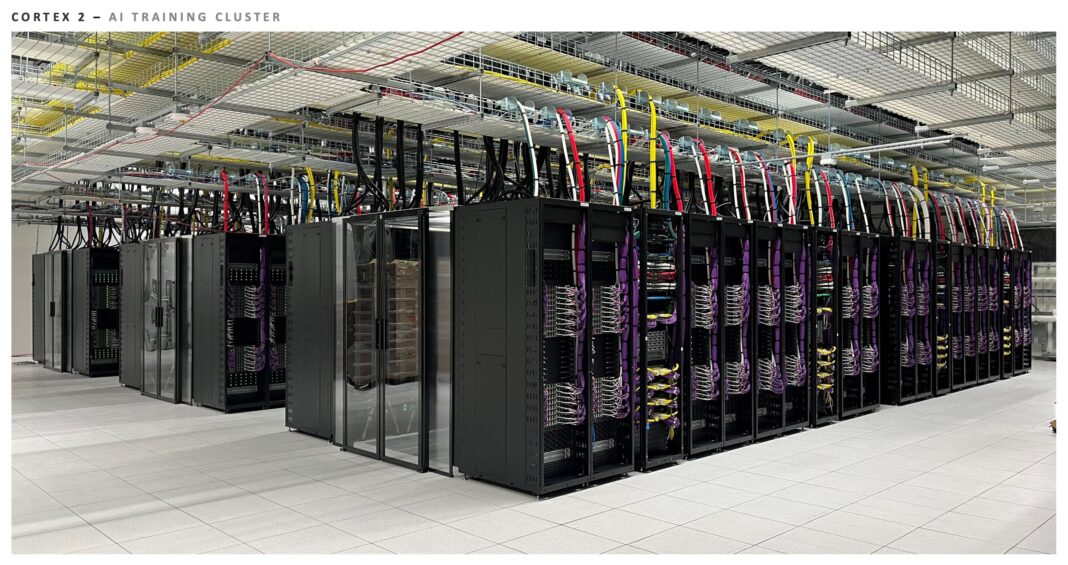
Tesla continues to invest heavily in AI infrastructure, with its Cortex 2 training system now operational and running workloads. The company is also expanding on-site training capacity to support growing demand for AI-driven products and services.
Development of its next-generation custom silicon, Dojo 3, is ongoing, with the goal of reducing AI training costs over time.

On the inference side, Tesla has completed the design of its AI5 processor, intended to power future autonomous systems. The company is also exploring semiconductor manufacturing, including a reported partnership with SpaceX to develop large-scale chip fabrication capabilities, aimed at securing long-term supply and accelerating innovation cycles.
Battery constraints and supply chain investments
Battery supply remains a bottleneck for vehicle production, according to Tesla. In response, the company is ramping new battery and materials facilities, including lithium iron phosphate (LFP) cell production in Nevada, cathode material manufacturing and lithium refining operations in Texas.
It is also working to alleviate constraints by integrating its 4680 battery cells into production at its Berlin facility.
Charging infrastructure and network expansion
Tesla continues to expand its global charging network, adding more than 2,200 new Supercharger stalls during the quarter — a 19% year-on-year increase.

Its New York facility is now producing V4 Supercharging cabinets, which offer higher power density and increased capacity compared to previous versions. The company is also deploying Megachargers to support its Tesla Semi rollout, including its first installation in Southern California.
Advances in autonomous driving software
On the software side, Tesla launched version 14.3 of its Full Self-Driving (FSD) system in April, introducing enhancements to its reinforcement learning models and neural network perception capabilities. Improvements include better handling of complex edge cases, enhanced low-visibility performance and a redesigned AI compiler that reduces inference latency by 20%.

These upgrades are aimed at accelerating the deployment of unsupervised autonomy across both robotaxi fleets and customer-owned vehicles.
The company also introduced “Digital Optimus”, a new AI initiative focused on automating digital workflows and building an intelligence layer to complement physical AI systems.
Robotaxi expansion and regulatory progress
Tesla’s robotaxi operations continued to scale, with paid miles doubling sequentially in the first quarter. The company plans to transition its fleet toward the Cybercab platform once production begins, with the vehicle expected to become the dominant unit over time.
Testing and regulatory groundwork is ongoing in multiple cities, with expanded operations already underway in Austin and new launches in Dallas and Houston.
In parallel, Tesla reported record growth in FSD subscriptions and regulatory progress in international markets, including approval to deploy supervised FSD in the Netherlands — a potential gateway to broader European expansion. Discussions with Chinese regulators are also ongoing.
Insurance and services integration
Tesla is further integrating its software ecosystem with its insurance offering. The rollout of Safety Score v3.0 allows drivers using supervised FSD to achieve maximum safety ratings, which can translate into lower insurance premiums over time.