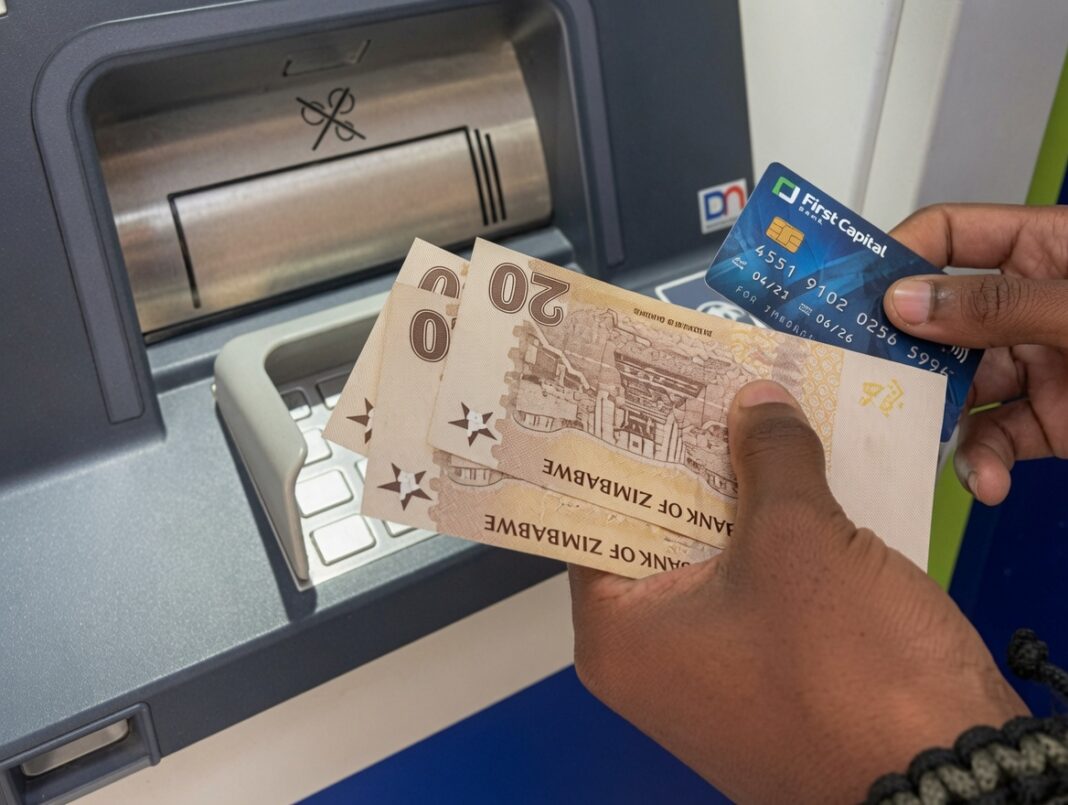
The Reserve Bank of Zimbabwe’s latest Monetary, Currency, Price and Financial Development Statement presents an economy that is materially more stable than the one Zimbabweans have become accustomed to over the past two decades. Inflation is contained, the ZiG exchange rate has stopped behaving like a crisis variable, foreign-currency receipts are rising, reserves are being accumulated and the country has met the quantitative targets under the IMF Staff-Monitored Programme.
By Brighton Musonza
But the deeper reading is less triumphant.
Zimbabwe has achieved macroeconomic stabilisation without yet achieving monetary normalisation. The ZiG is being managed successfully, but it has not yet acquired the depth of trust, financial intermediation and transactional dominance required of a mature domestic currency. The economy is therefore in an unusual intermediate state: the fundamentals underpinning currency stability are improving faster than the behavioural habits of households and businesses.
That distinction matters.
The question is no longer simply whether the ZiG can be stabilised. The more consequential question is whether stability can be converted into money demand, bank credit, longer-term investment and eventually a functioning single-currency economy.
The inflation number is important — but its real significance is behavioural
The most encouraging development is the sustained decline in local-currency inflation.
ZiG annual inflation fell to 2.9% in August before rising modestly to 3.7% in September, while monthly inflation remained around 0.4%. That is not merely another favourable statistical print. It represents a significant behavioural change in an economy where domestic-currency prices have historically carried an implicit expectation of rapid depreciation.
For businesses, inflation stability changes the economics of planning.
A company can quote in ZiG with greater confidence. A landlord can contemplate a longer lease. A manufacturer can calculate working-capital requirements. A bank can begin thinking about longer-duration local-currency lending. A household can hold a greater proportion of its liquidity in domestic money without assuming that its purchasing power will disappear within months.
That is how monetary credibility begins: not through a decree, but through millions of economic agents gradually changing their behaviour.
Yet Zimbabwe should be careful about declaring victory.
The September increase was associated largely with rents, fuel and lubricants, following the rise in international oil prices amid renewed Middle Eastern tensions. That is fundamentally different from a broad monetary inflation shock. There is no evidence in the latest numbers of the sort of uncontrolled price acceleration that characterised previous currency crises.
The important question, therefore, is whether inflation expectations remain anchored when external costs rise.
The RBZ’s survey evidence suggesting expectations around or below 5% is encouraging. But expectations in Zimbabwe have historically been extraordinarily adaptive. Confidence can disappear faster than it is built.
The real test is whether businesses begin to price the ZiG according to expected inflation rather than expected currency collapse.
That transition has not yet been completed.
The monetary expansion deserves more attention
There is an important tension beneath the favourable inflation numbers.
Local-currency broad money has been expanding at roughly 5.2% a month on average during the year. That is a substantial rate of monetary expansion relative to inflation running below 4%.
There are two possible interpretations.
The optimistic interpretation is that velocity is declining because confidence in the ZiG is improving. If economic agents are becoming increasingly willing to retain ZiG balances rather than immediately converting them into dollars, monetary expansion does not necessarily translate proportionately into consumer-price inflation.
That would actually be a positive development.
The alternative is that monetary expansion is beginning to run ahead of the price data and will eventually feed through into inflation.
The next two quarters will therefore be more revealing than the last two.
Zimbabwe has historically confused nominal stability with monetary credibility. The latter requires a sustainable relationship between money supply, real economic activity, fiscal discipline and money demand.
If the ZiG money stock expands while confidence and real output expand alongside it, the currency can absorb considerably more liquidity. If money creation accelerates while confidence stagnates, the exchange rate will eventually become the adjustment mechanism.
This is why the RBZ’s commitment to monetary-base discipline matters more than the headline inflation number itself.
The interest-rate cuts should not be mistaken for monetary stimulus
The reduction in the policy rate from 35% to 30% in June and subsequently to 27.5% in September is best understood as normalisation rather than stimulus.
Zimbabwe is coming down from emergency monetary settings because the inflation environment has become more predictable.
With minimum ZiG time-deposit rates at 7.18% and savings floors at 4.35%, the financial system continues to offer positive nominal returns against current inflation. That creates an important incentive to retain domestic currency.
But the policy rate does not yet tell us what the Zimbabwean economy’s effective cost of capital is.
The banking system remains heavily dollarised. Foreign-currency lending continues to dominate the practical credit market, while ZiG lending remains relatively shallow.
That is why the Term Deposit Facility is arguably more significant than the policy-rate cut.
The facility has begun creating something Zimbabwe has lacked for years: a nascent domestic yield curve.
Once banks, corporates and institutional investors can place surplus liquidity into predictable local-currency instruments and earn a return, the ZiG begins to acquire an economic purpose beyond simply being the currency in which government obligations are settled.
A currency becomes stronger when people have a reason to hold it.
That is the deeper significance of the oversubscribed 30-day facility. But the next step must be transmission.
If lower policy rates do not eventually produce longer-duration ZiG credit to productive businesses, the monetary easing remains largely administrative. Zimbabwe needs the interest-rate system to move from being a central-bank announcement into an actual mechanism for allocating capital.
The exchange rate is stable — but the economy remains structurally dual
The ZiG’s official exchange rate has shown remarkable stability, broadly operating around ZiG26–27 per US dollar. That is significant.
But exchange-rate stability should not be confused with currency unification.
The parallel-market premium of roughly 15% is still an important economic variable. It represents the continuing difference between the price of foreign currency inside the formal financial system and the price at which some economic agents are prepared to acquire it outside that system.
For a treasurer, this is not an academic distinction.
An importer with dollar obligations, a company with foreign debt or a business leasing property in dollars continues to face a conversion and liquidity risk that the official exchange rate does not eliminate.
The parallel premium therefore remains one of the best market-based tests of confidence in the ZiG.
Its decline from the extremes witnessed in 2024 and 2025 is encouraging. But true monetary normalisation would require the premium to become sufficiently small and stable that businesses no longer need to maintain elaborate currency-hedging behaviour simply to operate domestically.
The objective should therefore not be an artificially strong ZiG.
It should be one price for money.
A competitive exchange rate with a narrow market premium is more economically useful than a strong official rate accompanied by an underground market.
Reserves are becoming the credibility mechanism
Perhaps the most consequential change in the RBZ balance sheet is the accumulation of reserves.
Gross reserves have risen to approximately US$2 billion, from around US$1.6 billion in June, while gold holdings have increased to about 4.86 tonnes valued at roughly US$850 million.
That provides something Zimbabwe has lacked repeatedly during previous currency experiments: an expanding external buffer.
But two months of import cover remains modest.
It is sufficient to provide confidence against an ordinary liquidity shock. It is not sufficient to withstand several shocks simultaneously — for example, a commodity-price collapse, weaker remittances and a sudden deterioration in domestic confidence.
The distinction between reserve accumulation and reserve adequacy is therefore crucial.
Zimbabwe is moving in the right direction, but it has not yet reached the point where reserves can be regarded as an overwhelmingly convincing insurance mechanism.
The more important achievement is institutional.
The RBZ is accumulating reserves while maintaining monetary discipline rather than using the reserves simply to defend an unsustainable exchange rate.
That is fundamentally different from the old model.
In previous episodes, reserves were often treated as ammunition for defending a currency while underlying fiscal and monetary imbalances remained unresolved.
The new model is closer to the opposite: fiscal discipline and monetary restraint generate the conditions under which reserves accumulate, and reserves then reinforce confidence in the currency.
That feedback loop is potentially transformative.
The external sector is currently doing much of the stabilisation work
Zimbabwe’s foreign-currency receipts of approximately US$15.9 billion for January to September, compared with US$11.9 billion during the same period a year earlier, are perhaps the strongest external indicator in the statement.
The country has generated a substantial foreign-currency surplus, supported by exports, remittances and external financing.
Tobacco and lithium-related exports are particularly important. But this also reveals a vulnerability.
Zimbabwe’s external stability remains substantially dependent on commodity exports and diaspora income rather than a broad-based productivity transformation.
That distinction matters because commodity revenues can stabilise a balance of payments without necessarily transforming the domestic financial system.
Mining companies can generate dollars. Tobacco can generate dollars. Remittances can generate dollars. But Zimbabwe still has to convert that foreign-exchange abundance into domestic capital formation. That means deeper financial markets, longer-term lending, infrastructure investment, industrial capacity and productive SMEs.
The central economic challenge is therefore moving from:
foreign currency → reserves to: foreign currency → investment → productivity → exports → reserves.
Only the second cycle can produce durable monetary independence.
The IMF programme matters because it constrains the fiscal temptation
The IMF Staff-Monitored Programme is important not because it provides Zimbabwe with financing — it does not — but because it provides an external institutional constraint.
The three quantitative targets were reportedly met through September, including the restriction on central-bank financing of the non-financial public sector, the reserve accumulation floor and the ceiling on the growth of the ZiG monetary base.
The first of these is arguably the most important.
Zimbabwe’s currency crises have often been fiscal crises wearing monetary clothing.
When government expenditure becomes monetised through the central bank, the distinction between fiscal policy and monetary policy disappears. Once that happens, confidence in the currency becomes extremely difficult to restore.
A credible prohibition on central-bank financing therefore goes beyond accounting. It is a constitutional principle for monetary stability.
The RBZ can only establish durable credibility if markets believe that fiscal pressures will not eventually be transferred to the central bank.
This is why the next fiscal cycle may matter more than the latest inflation figure. A government can tolerate 3.7% inflation for a quarter.
The real test is whether it can maintain monetary discipline when political, social or infrastructure spending pressures increase.
The 55% mono-currency score is a beginning, not a green light
The increase in the conditions-precedent score for a return to a single domestic currency — from 50.1% in August to 54.9% in September — is politically and economically significant.
But it should not be misunderstood.
The score is evidence that the reform programme is progressing against the RBZ’s own criteria. It is not evidence that Zimbabwe has already created the conditions for a successful currency conversion.
The remaining conditions are precisely the difficult ones: reserve adequacy, market functioning, wider adoption and the ability of government and the financial system to settle obligations reliably in domestic currency.
This is why a date-driven approach would be dangerous.
Zimbabwe should not announce that the economy will return to a mono-currency regime simply because an arbitrary calendar deadline has arrived.
The currency should be allowed to earn its monopoly.
That means businesses and households voluntarily holding more ZiG because the opportunity cost of doing so has fallen and because they believe its purchasing power will remain reasonably stable.
In that sense, currency reform is ultimately a behavioural project, not a legislative project.
The government can legislate legal tender.
It cannot legislate trust.
The most important missing ingredient is financial deepening
This may ultimately be the central issue in the entire RBZ statement. Zimbabwe can stabilise the exchange rate. It can accumulate reserves. It can lower inflation. It can meet IMF monitoring targets.
But if the banking system remains fundamentally dollar-based, the ZiG will remain a settlement currency rather than a full financial currency.
A successful domestic currency needs a domestic financial ecosystem around it.
That means:
ZiG deposits;
ZiG mortgages;
ZiG corporate loans;
ZiG government securities;
ZiG pensions;
ZiG insurance assets;
ZiG working-capital facilities; longer-term ZiG investment instruments; and eventually a meaningful local-currency capital market.
Without these, Zimbabwe risks creating a stable currency that people use only when they have to.
The objective must be to create a currency that people want to hold.
That is a much higher threshold.
What businesses should make of the numbers
For businesses, the appropriate response is neither to dismiss the ZiG nor to assume that the currency crisis is permanently over.
Short-cycle domestic businesses can increasingly price and transact in ZiG with greater confidence.
Long-term contracts should remain more cautious. Construction, property, leases and other multi-year commitments should continue to incorporate appropriate currency or inflation protections until the reserve position and market premium become substantially stronger.
Borrowing should follow the currency of revenue.
A business generating predominantly ZiG revenues should increasingly consider ZiG financing as the domestic credit market deepens. A business earning dollars should not manufacture a currency mismatch merely because the policy rate has fallen.
Exporters are currently in the strongest position because they sit closest to the source of Zimbabwe’s external liquidity.
But their behaviour also matters systemically. How exporters surrender, retain and convert foreign currency will influence the depth of the formal market and ultimately the credibility of the exchange-rate regime.
The bigger economic question is now productivity
The RBZ statement demonstrates that Zimbabwe can stabilise the monetary side of the economy. The next challenge is much harder. Zimbabwe needs to make stability productive.
A stable currency that does not generate investment, productivity and employment eventually becomes merely a better-managed status quo.
The country therefore needs to use the current period of macroeconomic stability to repair the deeper transmission mechanisms of the economy: property rights, access to finance, infrastructure, electricity, industrial capacity, agricultural productivity, formalisation and capital-market development.
This is where the currency debate becomes much larger than the currency itself. The ZiG cannot become credible simply because the RBZ manages it well.
It becomes credible when the economy underneath it becomes sufficiently productive to support it.
The judgement
The third quarter represents one of Zimbabwe’s strongest macroeconomic stabilisation periods in years.
The improvement is not imaginary. Inflation is low. The exchange rate is comparatively stable. Reserves are rising. Foreign-currency receipts are strong. The monetary base is being constrained. Central-bank financing of government has been restricted. And the external monitoring framework is providing an additional layer of discipline.
But Zimbabwe has reached the beginning of monetary credibility, not the end of currency reform.
The critical vulnerabilities remain visible: reserves cover only about two months of imports; the parallel market still carries a material premium; local-currency credit remains shallow; broad money is expanding relatively quickly; and the domestic financial system has not yet fully reorganised itself around the ZiG.
The significance of the current moment is therefore not that Zimbabwe has solved its currency problem.
It is that, for perhaps the first time in a very long time, the country has an opportunity to solve it without another monetary crisis forcing the adjustment.
That opportunity should not be squandered by declaring victory too early.
The ZiG needs to move through three stages: stability, trust and depth.
Stability is now becoming visible.
Trust is being rebuilt.
Depth is still missing.
And it is the third stage — the creation of a genuinely deep domestic financial system capable of mobilising savings and allocating long-term capital in ZiG — that will ultimately determine whether Zimbabwe can move from a managed dual-currency economy to a credible single-currency economy.
The RBZ has therefore done something important.
It has bought Zimbabwe time.
The economic policy challenge now is to use that time to build the productive and financial architecture that makes the currency sustainable.
That is the real test of the reform.
Brighton Musonza: MBA(UK), BSc Business Management (UK). Fellow Chartered Management Institute (FCMI), Business Analytics Diploma, IIBA Certified Business Analyst (CCBA) and SAP Technologies. Contact details: musomusonza@gmail.com.