HARARE — Zimbabwe’s banking sector is entering the second half of 2026 with significantly more liquidity to deploy, but first-half results show that banks are taking sharply different approaches to where that money should go, highlighting an increasingly important tension between credit growth, productive-sector financing and asset quality.
Banking-sector loans and advances increased from ZWG75.59 billion in December 2025 to ZWG94.61 billion in June 2026, while deposits grew even faster, from ZWG123.53 billion to ZWG158.29 billion.
The resulting loan-to-deposit ratio declined from 61.19% to 59.56%, indicating that banks have accumulated deposits faster than they have expanded customer lending.
At the same time, the sector’s aggregate non-performing loan ratio improved to 3.19%, from 3.47% at the end of 2025.
But the headline stability masks significant differences between individual banks.
According to Equity Axis, banks are increasingly making different sectoral bets with the liquidity available to them. CBZ has increased exposure to distribution and mining while reducing agriculture; ZB has expanded private-sector and agricultural lending; POSB remains heavily concentrated in individuals and mortgages; First Capital is moving towards trade and industry; FBC Holdings has increased agricultural and manufacturing exposure; while NMB is targeting mining and agriculture.
The distinction is becoming increasingly important as Zimbabwe attempts to channel cheaper credit towards productive activity.
RBZ puts pressure on banks to lend more cheaply
The Reserve Bank of Zimbabwe has reduced its policy rate from 35% to 30% and cut the rate charged to banks under the Targeted Finance Facility from 20% to 15%. Productive-sector lending under the facility is capped at an all-in rate of 25%.
The intervention reflects concern that the gap between the central bank’s policy rate and prevailing commercial lending rates has become sufficiently wide to exclude productive businesses from formal credit.
The second half of the year will therefore provide an important test of whether lower funding costs translate into increased lending to agriculture, mining, manufacturing and other productive sectors.
Equity Axis argues that the test has two dimensions: whether banks deploy more capital into productive activity and whether they can do so without weakening credit quality.
CBZ shifts towards distribution and mining
CBZ Bank entered the second half with considerable balance-sheet capacity.
Customer deposits stood at ZWG32.33 billion at June, against gross loans of ZWG12.87 billion and net advances of ZWG11.87 billion.
The bank nevertheless significantly changed the composition of its lending book during the first half. Distribution lending increased 49% to ZWG3.83 billion, lifting its share of gross loans from 23% to 30%. Mining lending increased 60% to ZWG1.04 billion, while private-sector lending rose 20% to ZWG3.12 billion.
Agriculture moved sharply in the opposite direction, falling 28% from ZWG3.21 billion to ZWG2.31 billion, reducing its portfolio share from 29% to 18%.
Manufacturing remained broadly unchanged at ZWG885 million.
Equity Axis noted that the shift could reflect differences in lending cycles and borrower characteristics, although the published accounts do not establish the specific reasons for CBZ’s reduction in agriculture.
There is, however, a risk signal investors will be watching.
CBZ’s Stage 2 exposures increased from ZWG311.9 million to ZWG763.2 million, while Stage 3 exposures rose from ZWG479.9 million to ZWG589.3 million.
The figures come from a narrower credit-risk schedule and should not be mechanically compared with the bank’s entire gross loan book, but they nevertheless indicate increased migration into higher-risk categories.
ZB takes a more aggressive credit position
ZB Bank has adopted a considerably more aggressive approach. Gross advances increased from ZWG3.67 billion to ZWG5.08 billion, with private-sector lending almost doubling to ZWG1.70 billion.
Agricultural lending increased from ZWG156 million to ZWG440 million, while manufacturing rose to ZWG347 million. Construction lending more than tripled and transport lending almost doubled.
Mining, however, declined from ZWG278 million to ZWG233 million, while services fell to ZWG722 million. The most significant concern lies in asset quality.
ZB’s non-performing loans increased from ZWG852.5 million to ZWG907.3 million.
Although rapid loan growth reduced the derived NPL ratio from approximately 23% to about 18%, the actual stock of bad loans increased.
Corporate problem loans more than doubled, from ZWG366.9 million to ZWG806.2 million.
Equity Axis said the development creates a more complicated picture than the headline loan-growth figures suggest: ZB is expanding productive and private-sector credit while corporate underwriting has simultaneously become its most significant asset-quality weakness.
POSB favours households over productive-sector lending
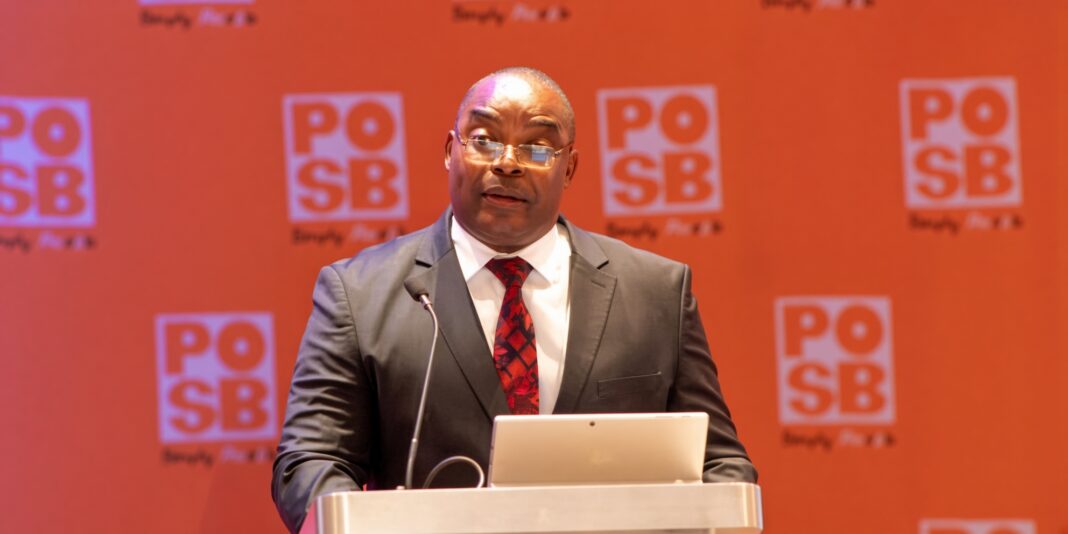
POSB presents a different model.
Individual loans increased approximately 43% to ZWG855 million, while mortgages rose 38% to ZWG310 million. Together, the two categories account for almost four-fifths of the bank’s disclosed customer loan portfolio.
Corporate lending remained largely unchanged, while SME and agribusiness lending declined and microfinance exposure contracted.
Meanwhile, POSB accumulated significant liquidity as deposits grew faster than loans, with money-market assets rising to approximately ZWG963 million.
The result is a balance sheet increasingly concentrated in household credit and liquid financial assets rather than corporate and SME financing.
POSB’s headline asset quality remains comparatively strong, with an NPL ratio of 2.09%, although IFRS 9 measures show an increase in credit-impaired and lifetime expected-credit-loss exposures.
For the banking sector, POSB illustrates the difficulty of translating strong deposit mobilisation into productive-sector lending when demand, collateral and risk-adjusted returns differ substantially between households and businesses.
First Capital redirects new lending towards trade
First Capital Bank provides one of the clearest examples of the banking sector’s shift towards commercial borrowers. Physical-person lending increased from US$72.7 million to US$80.2 million, but its share of the portfolio fell from 55% to 47%.
Trade and services, by contrast, increased from US$16.6 million to US$40.2 million, lifting its share from 13% to 24%. Light and heavy industry increased to US$20.2 million, while agriculture stood at US$19.1 million.
The Zimbabwe Financial Mail has previously highlighted the significance of this type of portfolio rotation, with analysts telling the publication that the quality of lending growth matters more than the headline expansion of a loan book.
One analyst told The Zimbabwe Financial Mail in commentary on First Capital’s performance that the important issue is whether the shift towards business lending produces sustainable cash flows and earnings rather than simply increasing the size of the balance sheet.
The risk is visible in First Capital’s loan-quality data. Industrial borrowers accounted for US$3.10 million of NPLs against US$20.24 million of loans, implying an NPL ratio of about 15%, while trade and services had US$2.47 million of NPLs against US$40.17 million of exposure.
Households, despite representing almost half the portfolio, had an NPL ratio of roughly 2.4%.
The figures demonstrate that moving away from household lending does not necessarily mean moving towards lower credit risk.
FBC makes strongest move into agriculture and manufacturing
FBC Holdings has made perhaps the clearest shift towards productive-sector lending. Agricultural lending increased from ZWG1.09 billion to ZWG1.95 billion, lifting its portfolio share from 10% to 16%.
Manufacturing increased to ZWG1.98 billion, also representing 16% of the portfolio, while mining increased to ZWG558 million. At the same time, individual lending declined from ZWG2.61 billion to ZWG2.05 billion, reducing its share from 23% to 17%.
The movement suggests a deliberate reallocation away from household lending towards sectors more directly connected to production. FBC’s Stage 3/default exposure declined from ZWG456.4 million to ZWG311.3 million as gross loans increased to ZWG12.32 billion.
However, the improvement was accompanied by ZWG215.9 million in write-offs, while Stage 2 exposures increased 39% to ZWG2.25 billion.
The latter will be an important indicator in the second half because loans currently under heightened monitoring can subsequently migrate into default.
NMB bets on mining and agriculture
NMB Bank is operating with a more credit-intensive funding model than many of its peers. Loans stood at ZWG6.03 billion, exceeding customer deposits of ZWG5.78 billion, while borrowings rose to ZWG3.32 billion.
Management has identified mining and agriculture as major drivers of corporate lending growth and says longer-term US-dollar lending is being supported predominantly by offshore credit lines.
At group level, NMBZ Holdings’ loan book reached ZWG6.81 billion, with significant increases in services, individuals, distribution, mining and agriculture.
The group’s mining exposure increased by ZWG423 million to ZWG1.18 billion, while agriculture increased ZWG405 million to ZWG1.24 billion.
The growth illustrates the attraction of sectors generating foreign-currency revenues.
Agriculture emerges as the biggest test
Agriculture is perhaps the clearest example of the different strategies being pursued by Zimbabwean banks.
FBC increased agricultural lending by almost 79%, while ZB nearly tripled its exposure.
NMB identifies agriculture as a core lending area.
CBZ, by contrast, substantially reduced its agricultural exposure, while POSB’s SME and agribusiness lending declined.
All of these banks are operating against broadly the same macroeconomic backdrop.
RBZ expects agriculture and mining to be among the principal contributors to Zimbabwe’s projected 5% economic growth in 2026.
But agriculture carries particular risks, including weather, commodity prices, collateral and repayment timing.
RBZ has itself identified adverse weather conditions as one of the risks to the economic outlook.
For that reason, the rapid expansion of agricultural credit by FBC and ZB will be closely watched through the next repayment cycle.
Mining enjoys a currency advantage
Mining has another advantage over many domestic sectors: its foreign-currency earnings.
Zimbabwe’s mining companies generate substantial US-dollar revenues, providing a natural currency match for banks financing them with foreign-currency deposits or offshore credit lines.
RBZ reported first-half foreign-currency receipts of US$10.72 billion, while stronger gold and platinum-group-metal prices are expected to support mining activity.
That makes mining particularly attractive to banks seeking to deploy US-dollar liquidity.
But lower global benchmark rates could also compress lending margins.
RBZ has noted that international rates such as SOFR have declined and wants domestic US-dollar lending rates to reflect the lower cost of funds.
The result could be cheaper credit for mining companies, but also tighter margins for banks.
Cheaper money now puts underwriting under scrutiny
The policy environment is increasingly supportive of credit expansion.
The reduction in the TFF rate from 20% to 15%, combined with the 25% maximum all-in lending rate for productive sectors, should improve access to financing for qualifying businesses.
But cheaper money does not automatically create good loans.
As Equity Axis noted, ZB demonstrates that rapid loan growth can coexist with significant corporate NPL concentrations; CBZ shows that Stage 2 exposures can rise before headline defaults become visible; First Capital demonstrates that business-lending expansion can concentrate risk in particular sectors; while FBC shows that declining default exposure can occur alongside substantial write-offs.
The banking system’s aggregate 3.19% NPL ratio therefore provides only part of the picture.
For policymakers, investors and depositors, the more important question is where new risk is being accumulated.
The economic question is where the next dollar of credit goes
Zimbabwe’s banks now have deposits.
The central bank is reducing part of the cost barrier to lending.
The next question is where the incremental dollar of credit goes.
If it finances machinery, irrigation, mining equipment, factories, working capital and productive infrastructure, it can increase the economy’s productive capacity.
If it primarily finances consumption, short-term trading or financial assets, its contribution to long-term economic growth will be more limited.
That does not make household or trade finance unproductive. Commerce is essential to the functioning of almost every productive sector, while household lending can support consumption and housing.
But the structure of credit matters for an economy attempting to raise investment, productivity and export capacity.
For The Zimbabwe Financial Mail, this is becoming one of the most important questions facing the banking industry: whether the current credit cycle represents genuine financial intermediation into productive activity or simply a reallocation of liquidity into the sectors where banks can most easily manage risk.
Equity Axis reaches a similar conclusion from a different angle: the critical distinction is no longer simply how much credit is growing, but whether banks are earning adequate returns after funding costs, provisions and defaults are taken into account.
H2 will test the quality of the credit cycle
Zimbabwe’s banking sector enters the second half of 2026 with stronger deposits, lower policy rates and considerable liquidity.
That creates an opportunity to deepen financial intermediation and support the investment required to sustain economic growth.
But it also creates a credit-risk challenge.
Banks are making very different sectoral choices. Some are increasing agriculture and manufacturing; others are favouring mining, trade, distribution or households.
The next six months will reveal which strategies produce the strongest combination of loan growth, interest income, asset quality and capital returns.
The ultimate test will not be whether banks lend more.
It will be whether the additional credit creates productive economic activity without creating the next generation of bad loans.