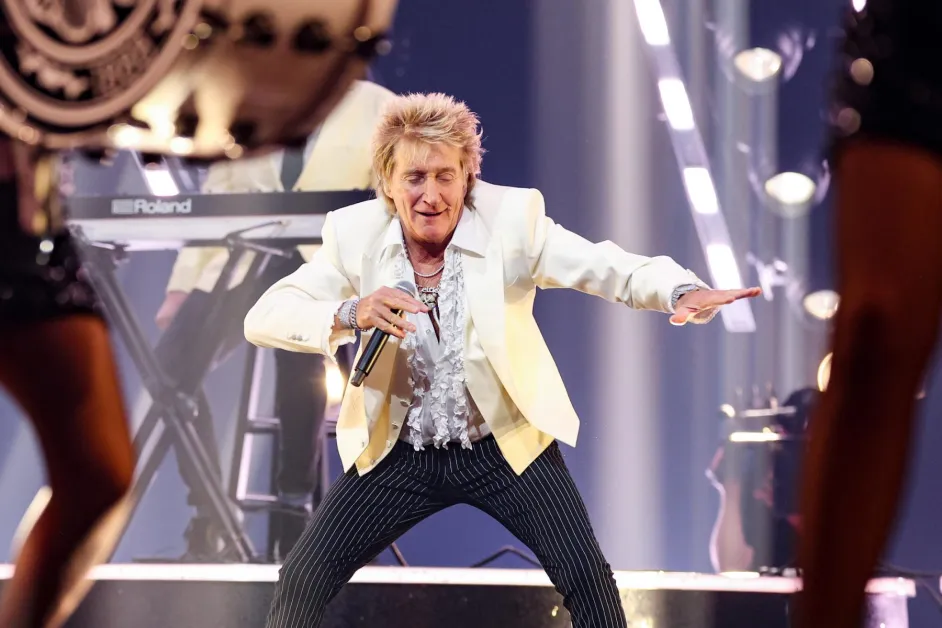

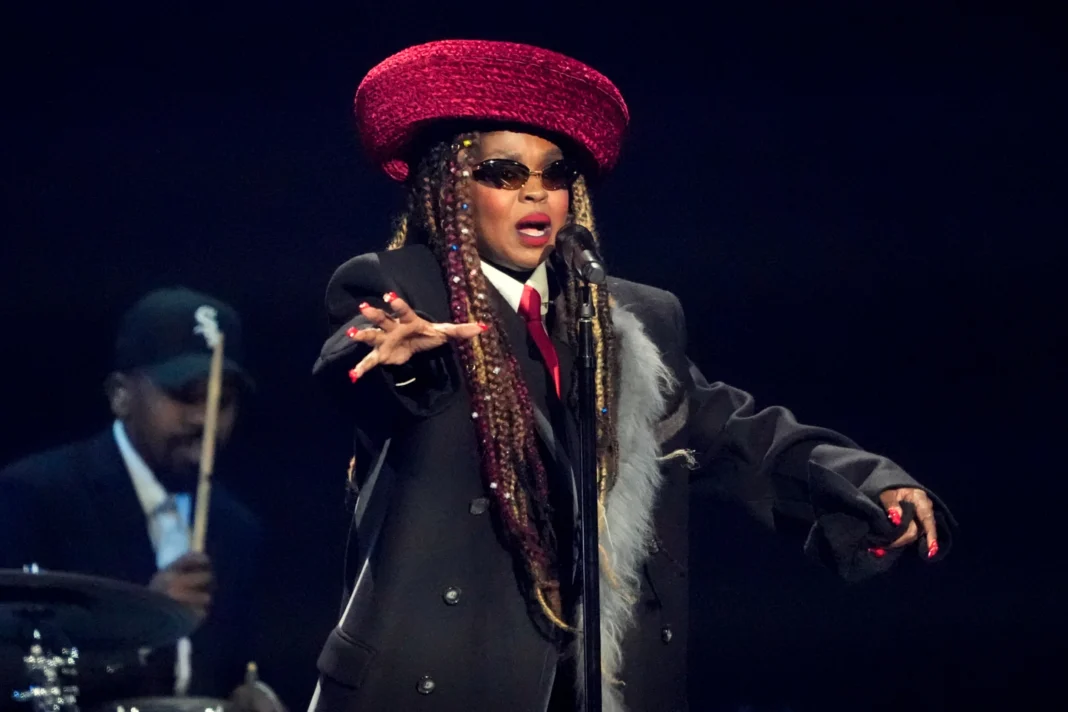
NEW YORK — Ms. Lauryn Hill and her Fugees’ bandmate Wyclef Jean will bring their pointed and political music to Global Citizen Festival this fall.
The headliners, announced Thursday, are a fitting choice. The annual gathering in New York’s Central Park rallies attendees to pressure world leaders to fund a range of antipoverty initiatives at the end of the United Nations General Assembly ‘s yearly high-level meetings. Joining them on Sept. 26 are rocker Lenny Kravitz, R&B-pop singer John Legend, country music star Lainey Wilson, chart-topping Grammy winner Shaboozey and K-pop group TOMORROW X TOGETHER.
The two Fugees are fresh off several performances marking the 30th anniversary of their landmark album, “The Score.” They were in London, where Hill also brought her music festival celebrating the sounds of the African diaspora, and Rio de Janeiro, where they closed out Global Citizen’s weeklong climate programming.
It’s also the first festival since Global Citizen produced the World Cup’s first halftime show. That collaboration helped raise more than $60 million for the education fund launched with FIFA. Global Citizen co-founder Hugh Evans hopes to leverage next month’s gathering to shore up some outstanding commitments.
Festivalgoers gain entry by taking actions such as petitioning countries to dip into their international development budgets. This year’s priorities include mobilizing $100 million to provide 2 million children with access to education, nutritious food and healthcare; gathering $100 million to improve food security for 1.5 million smallholder farmers; and moving $1.5 billion to expand clean energy in the Indo-Pacific region.
The countries facing asks this year include Spain, Norway, Ireland, Kenya, Japan, Denmark and Australia. Evans specifically called on France to support the FIFA Global Citizen Education Fund, Gavi, Education Cannot Wait, or any of their other education partners. “Macron will often talk a lot about their leadership on issues of education,” Evans said of the French president. “But I think, when the rubber hits the road, are they actually stepping up?”
One country that isn’t on the list? The United States. Once the world’s single largest aid donor, the U.S. now provides for Evans “an example of a country that should be a leader on the global stage that is such an incredible laggard at this point.” The U.S. wasn’t worth targeting, according to Evans, given that the administration “butchered its entire foreign aid budget” and “dismantled the entire apparatus” of the U.S. Agency for International Development.
“I believe that the future belongs to political leaders who are willing to understand the nuance of how power works,” Evans said. “Power doesn’t have to be a negative thing. It can be a very positive thing if you’re wielding it for good. As Spider-Man taught us: with great power comes great responsibility.”
This year’s festival offers a new way for people to gain admission. Fans can still enter the free ticket lottery by completing calls to action on the Global Citizen app. But they can also get automatic entry by making a $25 charitable donation. The funds raised will go toward New York’s City Parks Foundation and organizations that serve those experiencing homelessness.
Evans hopes that artists such as Wilson and Shaboozey, both country music acts, can bring a new audience to his movement. He noted that Wilson, who expressed interest in the festival’s support of the International Fund for Agricultural Development, comes from a family of farmers.
“It’s been quite some time I’d say since we had this level of a country presence in our lineup,” Evans said. “So, I’m super excited about that. I’m hoping that the fans are, too.”
Source: AP