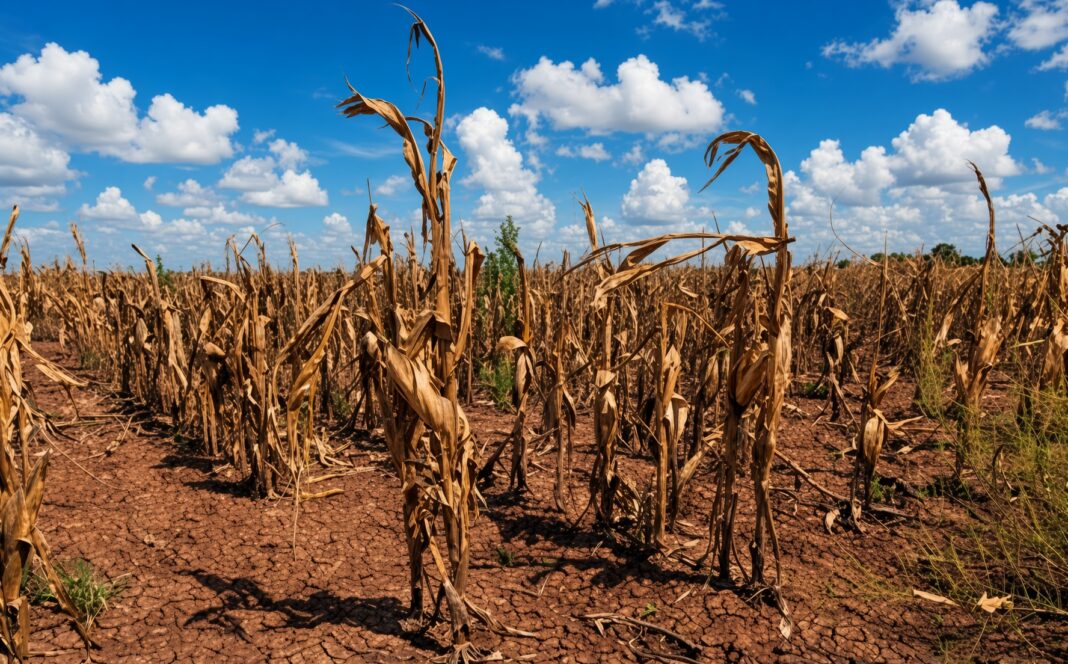
HARARE – Zimbabwe is preparing to import grain and expand irrigation infrastructure as the government moves to protect food supplies against a potential El Niño-induced drought during the 2026/27 agricultural season, with domestic cereal production projected to fall significantly below national requirements.
Cabinet has approved a revised summer cropping plan incorporating drought mitigation measures, strategic grain purchases and emergency livestock protection programmes amid concerns over increasingly unpredictable rainfall and disruptions to international agricultural supply chains.
Under the plan, Zimbabwe expects to produce approximately 1.6 million tonnes of cereals against estimated national requirements of 2.27 million tonnes, leaving a projected deficit of 670,000 tonnes.
The shortfall underscores the country’s continued exposure to climate-related agricultural shocks, despite efforts to expand irrigation and promote more resilient farming practices.
Authorities intend to strengthen the Strategic Grain Reserve to 600,000 tonnes by October 2027, supported by new grain storage facilities incorporating artificial intelligence technology.
The government has not disclosed the cost of the planned grain purchases or the financing arrangements for the proposed imports, leaving questions about their potential implications for public expenditure and foreign currency requirements.
The strategy also seeks to reduce Zimbabwe’s dependence on rain-fed agriculture through accelerated irrigation development.
More than 112,000 hectares have been identified for irrigated maize production, a measure intended to stabilise output during periods of inadequate rainfall.
Meanwhile, the government’s Pfumvudza/Intwasa climate-smart agriculture programme remains central to its food security strategy.
More than 7.6 million plots have been established against a seasonal target of 16 million, representing approximately 48 percent of the planned coverage.
The programme promotes conservation agriculture techniques designed to improve moisture retention, protect soil quality and support crop production under challenging climatic conditions.
However, the effectiveness of the intervention will depend on timely distribution of inputs, access to adequate rainfall and the ability of participating households to maintain recommended farming practices.
To address potential fertiliser shortages and rising international prices, the government will permit duty-free fertiliser imports, while extending duty-free arrangements for selected basic commodities.
The measures are intended to contain production costs and ease pressure on household food budgets, although their effectiveness will depend on international prices, transport costs and domestic distribution networks.
Livestock protection is another major component of the government’s drought preparedness programme.
Authorities estimate that more than two million cattle could be affected by drought conditions in 2027, threatening rural livelihoods and household wealth in communities where livestock remains an important economic asset.
The government plans to expand Ward Drought Mitigation Centres, which provide livestock feeding, dipping and marketing services, while encouraging farmers to diversify into goats, poultry and fisheries.
For Zimbabwe’s agricultural economy, the potential drought presents risks extending beyond food availability.
Lower crop yields could weaken rural incomes, increase demand for imported food and place additional pressure on foreign currency resources.
Food shortages could also raise consumer prices, particularly if international grain markets experience simultaneous supply disruptions.
The revised plan reflects an effort to address those risks before the main farming season, rather than relying entirely on emergency interventions after harvest failures.
Nevertheless, the success of the strategy will depend on implementation, financing and the severity of weather conditions.
With a substantial grain deficit already projected, Zimbabwe’s immediate challenge is to secure adequate food supplies while accelerating the longer-term transition towards more reliable, climate-resilient agricultural production.