





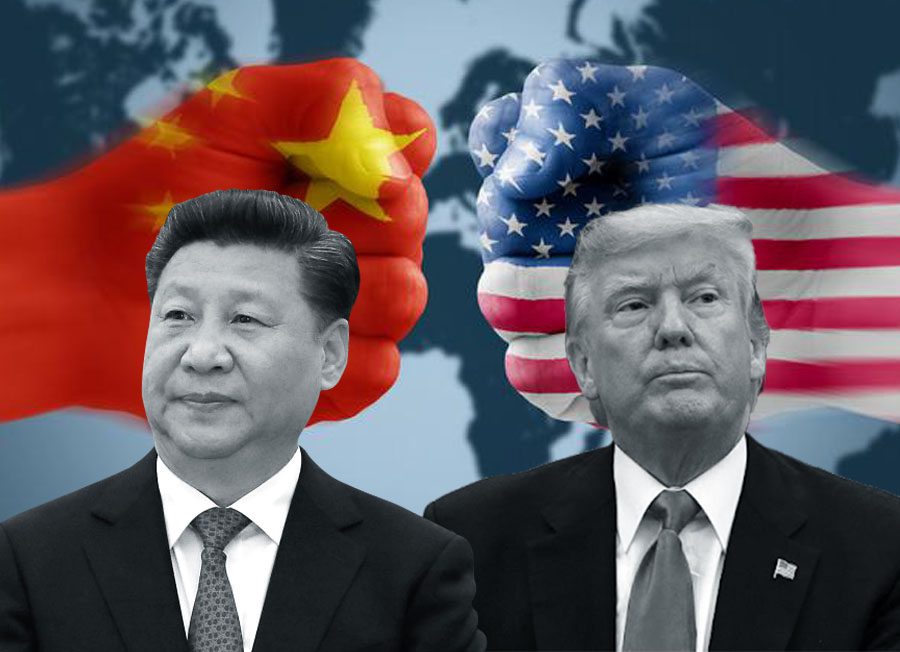
WASHINGTON — US President Donald Trump has called for trilateral arms-control negotiations involving the United States, Russia and China, signalling a potentially significant shift in the strategic dialogue among the world’s three major nuclear powers.
The proposal emerged during Chinese President Xi Jinping’s state visit to Washington from September 23 to 25, according to a White House fact sheet released after the meetings.
The two leaders also discussed a range of geopolitical flashpoints, including Russia, North Korea and Iran, underscoring the extent to which security policy is increasingly intertwined with the global economic environment.
Three-power arms control enters the agenda
The White House said Trump advocated for trilateral arms-control negotiations between the United States, Russia and China, potentially bringing the three countries into a broader discussion over nuclear weapons and strategic stability.
The move comes against a backdrop of heightened geopolitical competition, with Washington, Beijing and Moscow occupying increasingly important positions in the global security and economic system.
Analysts who spoke to sources said the significance of the proposal lies not only in arms control itself but in the possibility of creating a wider channel for strategic communication among competing powers.
“This is potentially important because strategic stability has an economic dimension,” one international affairs analyst said. “Businesses make investment decisions based on their assessment of geopolitical risk. Any mechanism that reduces the probability of strategic confrontation can ultimately influence capital allocation, trade and long-term investment.”
Iran and international waterways
Trump and Xi also discussed Iran and agreed that Iran must never possess a nuclear weapon, according to the White House account.
The leaders also addressed international waterways, with the fact sheet stating that no country or institution should be permitted to impose tolls on international waterways.
The issue has broader implications for global commerce because shipping routes remain fundamental to international supply chains, energy markets and commodity trade.
For economies such as Zimbabwe, which depend heavily on imported fuel, machinery, industrial inputs and consumer goods, disruption to major international trade routes can eventually feed into domestic costs.
A second analyst told sources that geopolitical stability increasingly needs to be viewed through the lens of global supply chains.
“Security shocks are no longer confined to defence ministries. They move through shipping costs, insurance premiums, commodity prices, exchange rates and inflation,” the analyst said.
Strategic competition meets economic interdependence
The discussions between Trump and Xi highlight an unusual feature of the modern global economy: the world’s largest economic powers can be strategic competitors while remaining deeply interconnected through trade, investment and supply chains.
For businesses, that creates a difficult operating environment.
Companies must increasingly account for geopolitical risk alongside conventional factors such as interest rates, currency movements, labour costs and consumer demand.
The potential for a broader arms-control dialogue could therefore have significance well beyond Washington, Moscow and Beijing if it contributes to a more predictable international environment.
Implications for emerging markets
For emerging economies, global geopolitical stability matters because external shocks can quickly translate into higher financing costs and greater sovereign risk.
Countries already carrying substantial external debt can be particularly vulnerable when global investors demand higher risk premiums.
Zimbabwe’s own economic reconstruction therefore takes place within this wider international environment. Improving monetary credibility, strengthening financial institutions and restoring access to international capital remain important not only for domestic economic policy but also for reducing the country’s vulnerability to global shocks.
The US-China discussions consequently have relevance beyond nuclear diplomacy. They reflect the increasingly inseparable relationship between geopolitical stability, international finance, trade and economic development.
“The global economy cannot completely separate security from economics anymore,” the analyst said. “The countries that build resilient financial and trade systems will be better positioned to absorb geopolitical shocks, whatever their source.”
For now, however, Trump’s proposal remains an opening for further negotiations rather than an established arms-control framework. Its significance will ultimately depend on whether Washington, Beijing and Moscow can translate strategic dialogue into a durable mechanism for managing competition.


