
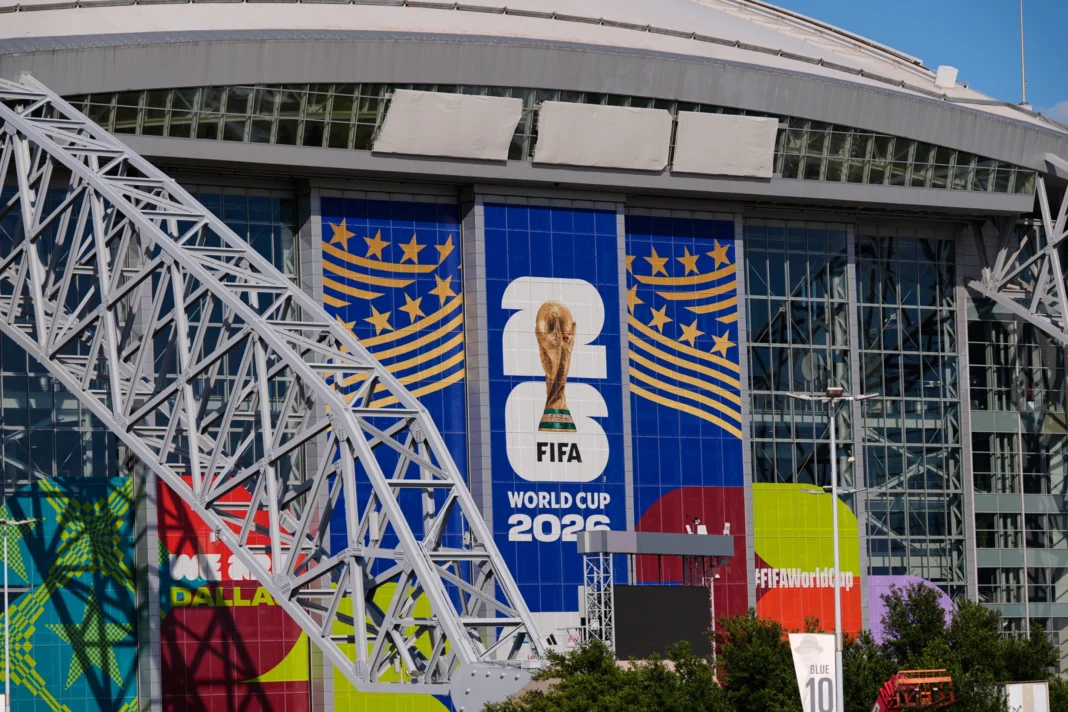
NEW YORK — The FIFA World Cup 2026, a sprawling 48-team tournament featuring 104 matches across 16 host cities in the United States, Mexico and Canada, is shaping up to be one of the most logistically complex and security-intensive sporting events ever staged, according to the Associated Press.
Set against a volatile international backdrop marked by geopolitical tensions, domestic political polarisation in the United States, and accelerating concerns over artificial intelligence-enabled disruption, authorities are preparing for a security operation of exceptional scale and sophistication.
The tournament — officially part of the expanded FIFA World Cup 2026 — will unfold across a vast continental footprint, stretching from major US metropolitan hubs such as New York, Los Angeles, Dallas and Miami, to host cities in Mexico and Canada. The sheer geographic dispersion alone presents a unique coordination challenge for security agencies.
A security environment defined by multiple threat layers
Officials and security analysts describe the risk environment surrounding the tournament as “multi-dimensional”, combining traditional physical security concerns with emerging digital and technological threats.
At the forefront are longstanding risks associated with large-scale international sporting events: terrorism, crowd control, and the protection of high-profile venues hosting tens of thousands of spectators per match. However, these are now compounded by newer and less predictable threats.
The ongoing geopolitical tensions involving the United States, Israel and Iran have heightened concerns about potential retaliatory or symbolic attacks targeting Western interests abroad and at home. While no specific credible threats have been publicly confirmed in relation to the tournament, intelligence agencies are expected to maintain heightened vigilance throughout the competition period.
Domestic volatility adds complexity
Within the United States, rising political polarisation and incidents of political violence linked to fringe actors have added another layer of concern for law enforcement agencies. Large-scale public events featuring global audiences and political visibility are often assessed as potential soft targets for disruption or high-impact incidents.
Security planning is therefore expected to extend beyond stadium perimeters, encompassing fan zones, transport hubs, hotels, and public viewing areas across host cities.
Cybersecurity and AI-driven risks
Perhaps the most rapidly evolving dimension of the security challenge is digital.
Experts warn that the tournament will be a prime target for cyberattacks ranging from ransomware campaigns against critical infrastructure to attempts to disrupt ticketing systems, broadcast feeds, and transportation networks.
In addition, security planners are increasingly focused on the potential misuse of artificial intelligence. Deepfake technology, automated disinformation campaigns, and AI-assisted phishing operations are all considered credible tools for sowing confusion, amplifying panic, or undermining public trust during the event.
Officials are expected to deploy advanced threat detection systems and coordinate closely with technology companies to monitor and counteract synthetic media and coordinated online manipulation campaigns.
Scale of coordination unprecedented
The expanded format of the tournament significantly increases operational complexity. With 48 national teams, hundreds of thousands of travelling supporters, and matches spread across three countries, coordination between federal, state, and local security agencies will be critical.
In the United States alone, agencies including federal homeland security structures, intelligence services, and local law enforcement departments will be required to operate in tightly synchronised command frameworks. Cross-border coordination with Mexico and Canada further adds to the logistical challenge.
Transport infrastructure — including airports, rail systems, highways and urban transit networks — will also fall under heightened surveillance and contingency planning.
Lessons from past global events
Security planners are drawing lessons from previous mega-events such as the Olympics and earlier World Cups, where layered security perimeters, intelligence-sharing mechanisms, and public-private partnerships proved essential in preventing major incidents.
However, analysts caution that the scale and geopolitical context of the 2026 tournament make it distinctly more complex than previous editions. The combination of a vast geographic footprint and an intensified global threat environment has no direct modern precedent in international sport.
A defining test for US-led coordination
For the United States and its partners, the tournament will represent not only a sporting showcase but also a test of advanced security coordination in an era defined by hybrid threats — physical, digital and psychological.
As preparations intensify, officials are emphasising resilience, rapid response capability, and real-time intelligence integration as key pillars of the security strategy.
While the tournament is expected to deliver one of the largest global sporting spectacles in history, it will also serve as a critical examination of whether contemporary security systems can effectively manage risk at unprecedented scale in an increasingly unpredictable world.