

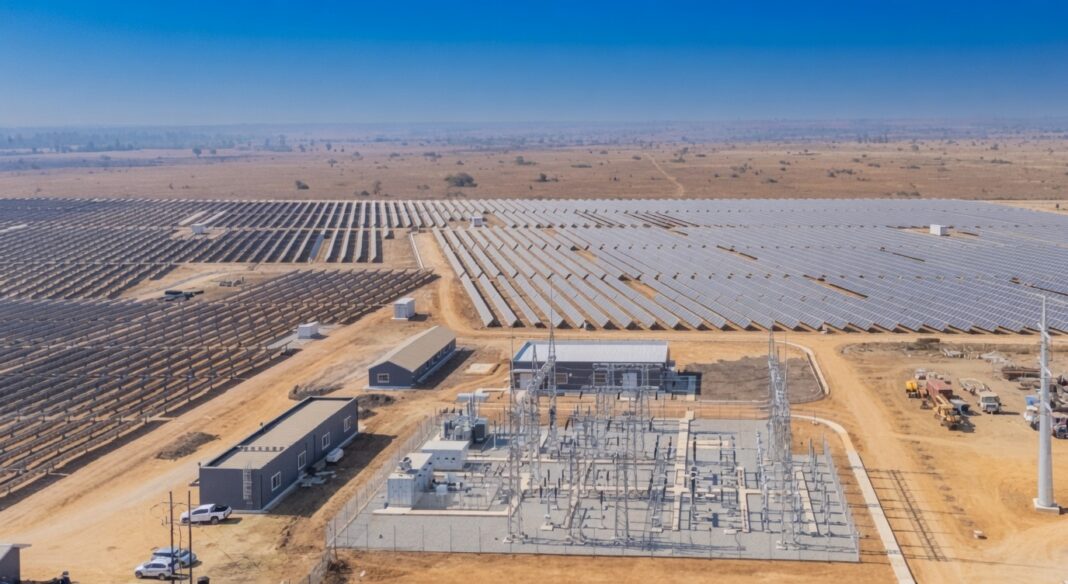
HARARE — The Centragrid Solar Power Plant, located in Nyabira in Mashonaland West province, has emerged as one of Zimbabwe’s most significant privately developed renewable energy projects, now contributing 25 megawatts (MW) of clean electricity to the national grid.
Developed in phases over nearly a decade, the project reflects the gradual but steady expansion of private sector participation in Zimbabwe’s power generation landscape at a time of persistent electricity shortages and growing industrial demand.
The project commenced in 2014, with its first milestone achieved in 2018 when Phase 1 delivered 2MW of electricity into the national grid. This initial connection marked one of the early utility-scale solar contributions in the country’s energy mix, signalling the viability of independent power producers in supporting national supply.
A major expansion phase was launched in 2023, culminating in full completion in 2024. The upgraded facility has since raised total generation capacity to 25MW, positioning the Centragrid Solar Plant among the key mid-scale renewable energy producers feeding into Zimbabwe’s electricity infrastructure.
Electricity generated at the plant is transmitted into the national grid, improving supply reliability in several load centres including Norton, Chinhoyi, Karoi, Bindura, and surrounding communities. These regions have historically experienced intermittent supply, with demand often exceeding available generation capacity.
Energy sector analysts note that projects such as Centragrid play an increasingly important role in stabilising grid performance, particularly as Zimbabwe continues to face constraints in thermal generation and hydropower fluctuations linked to climatic variability.
Beyond its contribution to electricity supply, the project has had a measurable socio-economic impact in the surrounding areas. It has generated employment opportunities during construction and operational phases, stimulated local procurement, and supported ancillary economic activity within Mashonaland West.
The Centragrid development is also widely viewed as a demonstration of how private capital is reshaping Zimbabwe’s energy sector. Independent power producers are increasingly filling the investment gap left by constrained public financing, particularly in renewable energy segments where solar deployment offers faster commissioning timelines and scalable output.
Industry observers argue that the project aligns with broader regional and global trends where renewable energy infrastructure is being driven by blended finance models, combining private equity, development funding, and long-term power purchase agreements.
As Zimbabwe continues to pursue energy security and industrial recovery, the Centragrid Solar Plant stands as a benchmark case of how targeted private investment can accelerate capacity expansion while supporting the transition toward cleaner and more diversified energy sources.