

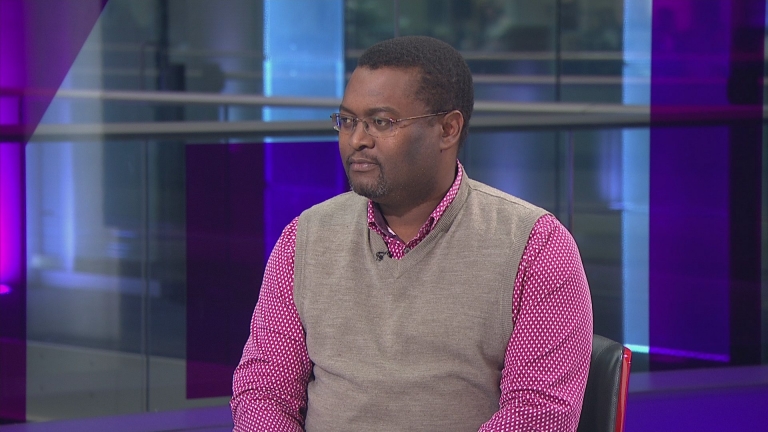
Some deaths do not end a voice. They merely change where we hear it from. Dr Alex Tawanda Magaisa died in June 2022, but in Zimbabwe’s troubled public square, his voice still walks among us: calm, learned, mischievous, morally alert, and stubbornly faithful to the idea that power must be questioned.
Many knew him as WaMagaisa, the writer behind The Big Saturday Read. But he was more than a commentator. He was a teacher of citizenship. He took the Constitution from the guarded language of lawyers and placed it in the hands of ordinary people. He made the law readable. He made power explainable. He made citizens feel that they had a right to understand what was being done in their name.
That is why remembering Magaisa today cannot be an exercise in nostalgia. It must be an act of civic responsibility. For Zimbabwe, once again, stands at the familiar crossroads where ambition dresses itself in legal language and asks the nation to call it progress.
Were Magaisa alive today, he would surely have turned his sharp eye to the so-called 2030 agenda: the attempt to extend presidential and other elected terms from five to seven years, thereby allowing President Emmerson Mnangagwa to remain in office beyond 2028. Reports indicate that the proposed amendment would also move Zimbabwe away from direct presidential elections towards selection by Parliament, a profound alteration of the democratic bargain established under the 2013 Constitution.
Magaisa would not have been fooled by technicalities. He would have asked the simple question that power hates most: why now? Why must the rules change when the end of a mandate is approaching? A football team cannot request another half because the scoreboard is inconvenient. A runner cannot move the finishing line because fatigue has arrived. In the same way, a political leader cannot treat the Constitution as a tailor treats a suit, loosening it whenever the body of power grows uncomfortable.
He would have reminded us that constitutionalism is not merely about what can be pushed through Parliament. It is about restraint. It is about the discipline of power. It is about leaders accepting that public office is borrowed, not owned. The Constitution is not a ladder to be kicked away after one has climbed. It is the rope that ties the governors to the governed.
Magaisa would also have seen the 2030 debate as a symptom of Zimbabwe’s oldest political disease: the fear of succession. In normal republics, leadership renewal is not a national crisis. It is routine. In Zimbabwe, succession is treated like treason, retirement like humiliation, and term limits like an enemy plot. This is why the country remains trapped in a politics of endless incumbency, where the future is forever postponed to protect the comfort of the present.
He would also have looked, with some sadness, at the opposition. Magaisa was never a lazy partisan. He believed in democratic struggle, but he also believed that struggle required organisation, discipline and strategy. He would have warned that anger alone cannot defeat authoritarianism. A movement cannot survive on charisma, slogans and social media thunder. It needs structures, values, accountability and patience. The tragedy of Zimbabwean opposition politics is that it often recognises dictatorship more clearly than it recognises its own weaknesses.
On the economy, Magaisa would have refused official poetry. He would have examined the ZiG not only as a currency, but as a question of trust. Zimbabwe’s central bank has pointed to lower ZiG inflation, including single-digit figures in early 2026, but citizens know from painful history that money is not stabilised by press statements alone. A currency survives when institutions are credible, policy is consistent, and people believe their wages and savings will not be ambushed overnight.
For the ordinary Zimbabwean, the test of economic policy is not in the elegance of ministerial speeches. It is in the price of mealie-meal, rent, transport, school fees and medicine. It is about whether a nurse can live on her salary, whether a teacher can feed a family, whether a graduate can imagine a future without first imagining an airport. Magaisa would have insisted that economics without human dignity is merely arithmetic in expensive suits.
He would have spoken too of the diaspora, those millions who left not because they ceased to love Zimbabwe, but because Zimbabwe ceased to make room for their dreams. They are praised when they send remittances, remembered when the state needs foreign currency, but often treated as outsiders when questions of political voice arise. Magaisa would have called this contradiction by its proper name. A nation cannot outsource survival to its children abroad while denying them a meaningful stake in its future.
On corruption, he would have been unsparing. He understood that corruption is not just theft. It is a method of rule. It decides who receives contracts, who gets protected, who is prosecuted, who is silenced and who eats. When corruption becomes the operating system of the state, elections alone cannot repair the republic. You may change the driver, but the machine still carries the same poison.
Yet Magaisa was not a prophet of despair. His writing carried disappointment, sometimes even sorrow, but never surrender. He believed in the slow work of democratic citizenship. He believed that truth may lose many battles and still remain the only soil from which freedom can grow. He taught us that the citizen’s duty is not to clap for power, but to question it; not to fear the law, but to understand it; not to wait for heroes, but to build institutions that make heroes unnecessary.
To remember Alex Magaisa, therefore, is not simply to mourn a brilliant Zimbabwean mind gone too soon. It is to continue his unfinished work. It is to read the Constitution carefully when others want us to sleep. It is to resist the abuse of law by those who know its language but despise its spirit. It is to insist that Zimbabwe belongs not to parties, factions, generals, billionaires or presidents, but to its people.
WaMagaisa would have told us, gently but firmly, that the problem is not that Zimbabwe lacks clever politicians. It lacks constitutional humility. It lacks leaders who understand that the mandate of the people is not a private inheritance. It lacks institutions strong enough to say to ambition: thus far, and no further.
And perhaps that is why his voice still matters. Because in a country where power often speaks too loudly, Alex Magaisa taught citizens how to listen carefully, think clearly, and answer back.
Dr Gift Mawire is a United Kingdom-based academic, political commentator and analyst. He writes regularly on public affairs, democracy, governance and political economy.