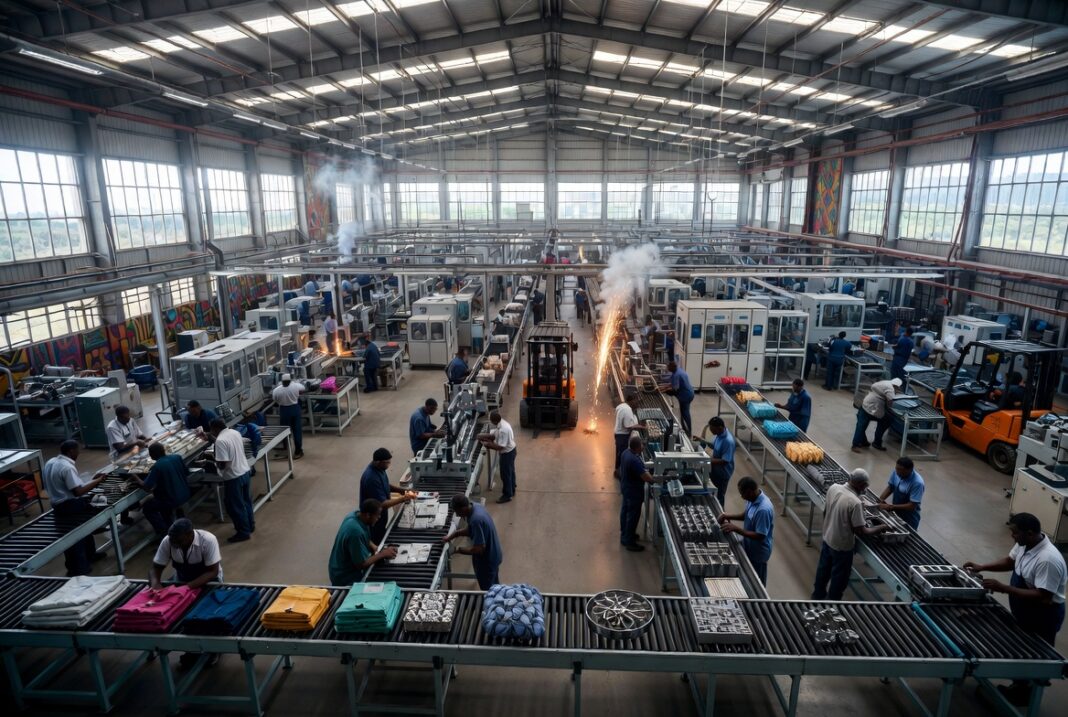

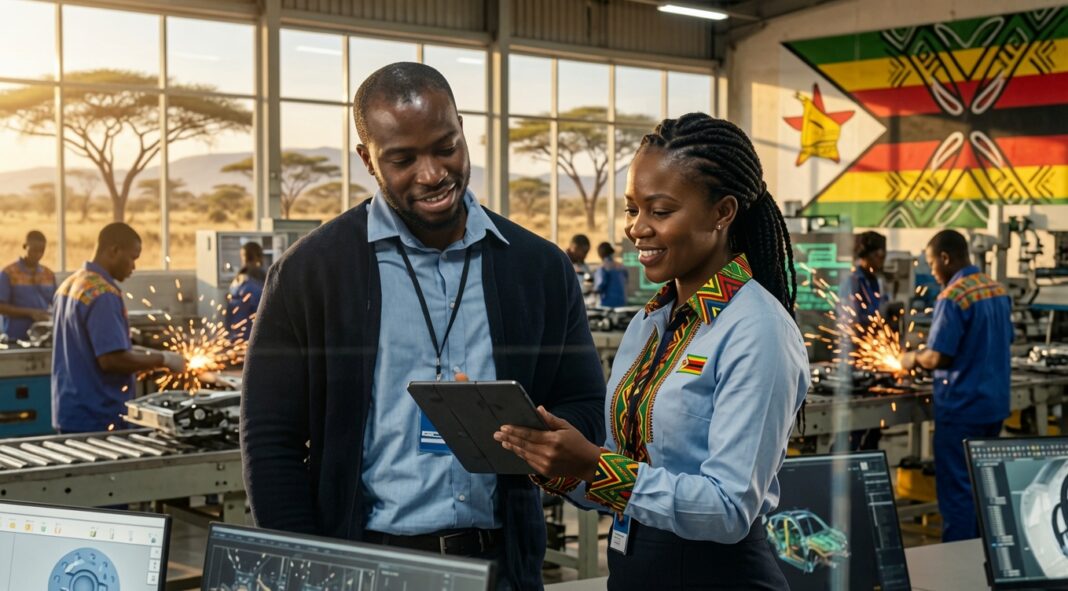
For much of the past decade, Zimbabwean businesses have focused primarily on surviving economic volatility rather than pursuing transformational growth. Currency instability, inflationary pressures, constrained access to capital, energy shortages, and policy uncertainty have understandably forced many firms to prioritise operational resilience over expansion.
By Brighton Musonza
However, a fundamental shift is beginning to emerge across global industrial markets. The most successful industrial companies are no longer relying solely on optimising their existing businesses. Instead, they are building entirely new revenue streams, leveraging digital technologies, artificial intelligence, data monetisation, sustainable business models, and innovative customer solutions to create growth opportunities beyond their traditional operations. Research increasingly suggests that future industrial success will belong not to the biggest companies, but to those capable of continuously building new businesses and adapting to changing market realities.
For Zimbabwe, where economic growth remains constrained by a narrow export base and limited industrial diversification, the implications are profound. The next phase of industrial development will depend not only on reviving manufacturing capacity but also on creating a new generation of industrial builders capable of transforming existing assets, technologies, and expertise into scalable businesses.
Moving Beyond Traditional Industrial Models
Zimbabwe’s industrial sector has historically relied on relatively conventional business models centred on production, distribution, and commodity-based value chains. While these models remain important, they are increasingly insufficient in an environment characterised by rapid technological disruption and changing customer expectations.
Globally, industrial companies are discovering that sustainable growth increasingly comes from creating new products, services, and business ecosystems rather than simply producing more of the same goods.
This shift is particularly relevant for Zimbabwean firms operating in mining, agriculture, manufacturing, transport, logistics, and energy. Many of these businesses possess valuable assets, technical expertise, customer relationships, and operational data that remain significantly underutilised.
The challenge for business leaders is to identify how these existing strengths can be transformed into entirely new sources of revenue and competitive advantage.
The Rise of Service-Based Industrial Models
One of the most significant developments reshaping industrial economics globally is the transition from one-time product sales to recurring revenue models.
Traditionally, manufacturers generated income through the sale of equipment or physical products. Today, many industrial companies are increasingly packaging maintenance services, monitoring systems, performance guarantees, and operational support into long-term contracts that generate predictable recurring income. Research indicates that these service-led business models improve customer retention, stabilise cash flows, and create stronger long-term relationships.
For Zimbabwean manufacturers, engineering firms, mining suppliers, and agricultural equipment providers, this presents a significant opportunity.
Rather than relying solely on product sales, firms could expand into equipment leasing, predictive maintenance services, remote monitoring solutions, fleet management systems, and performance-based contracts.
Such models would not only improve business resilience but also create new income streams less vulnerable to economic cycles and market fluctuations.
Green Industrialisation and Circular Economy Opportunities
As global economies accelerate their transition toward sustainability, environmental responsibility is increasingly becoming a source of commercial opportunity rather than merely a regulatory obligation.
Industrial companies around the world are investing heavily in recycling, waste recovery, renewable energy technologies, resource efficiency solutions, and circular economy business models. What began as an environmental compliance requirement is rapidly evolving into a major source of economic value.
Zimbabwe is uniquely positioned to benefit from this trend.
The country possesses vast mineral resources required for the global energy transition, including lithium, nickel, platinum, and rare earth minerals. Yet much of the economic value associated with these resources continues to be captured outside the country through downstream processing and manufacturing.
New opportunities exist in battery recycling, renewable energy infrastructure, industrial waste recovery, sustainable packaging, water treatment technologies, and green manufacturing processes.
As global investors increasingly prioritise environmental sustainability, Zimbabwean firms that successfully position themselves within emerging green value chains may gain access to new markets, investment capital, and strategic partnerships.
Direct Customer Relationships in a Digital Economy
Digital transformation is also changing how industrial companies interact with customers.
Historically, manufacturers relied heavily on intermediaries, distributors, and wholesale channels to reach end-users. Increasingly, however, businesses are establishing direct relationships with customers through digital platforms, online marketplaces, mobile applications, and integrated service ecosystems.
For Zimbabwean businesses, this represents a largely untapped opportunity.
Manufacturers can use digital platforms to gather customer insights, strengthen brand loyalty, improve service delivery, and increase profit margins by reducing dependence on intermediaries.
The rise of mobile technology across Africa provides an additional advantage. Digital engagement can help Zimbabwean firms access regional and international markets while developing stronger relationships with customers both locally and abroad.
As consumer expectations evolve, businesses that understand and respond directly to customer needs will enjoy a significant competitive advantage.
Data as a Strategic Asset
One of the most overlooked opportunities within Zimbabwe’s industrial sector is the commercial value of data.
Every day, mining companies, manufacturers, logistics operators, agricultural enterprises, and utilities generate vast amounts of operational information. Yet in many organisations, this data remains largely unused beyond routine reporting.
Globally, companies are increasingly transforming operational data into products, services, and decision-making tools. Artificial intelligence is accelerating this trend by enabling businesses to extract insights, automate processes, improve forecasting, and create entirely new commercial offerings. Research suggests that AI-driven business models could unlock hundreds of billions of dollars in additional value across industrial sectors worldwide.
Zimbabwean businesses have an opportunity to leapfrog traditional development stages by integrating AI, advanced analytics, and data-driven decision-making into their operations.
The firms that treat data as a strategic asset rather than a by-product of operations will be better positioned to innovate, reduce costs, and create differentiated products and services.
Beneficiation and Advanced Materials
Few opportunities are more significant for Zimbabwe than the growing global demand for critical minerals and advanced materials.
The rapid expansion of electric vehicles, renewable energy systems, battery technologies, and digital infrastructure is driving unprecedented demand for lithium, cobalt, rare earth elements, and other strategic minerals.
Zimbabwe already possesses substantial reserves of many of these resources. However, the country’s long-term economic gains will depend on its ability to move beyond extraction and into processing, refining, manufacturing, and materials innovation.
The future winners in the global minerals economy will not necessarily be those who mine the most resources. Rather, they will be those who capture the greatest proportion of value across the supply chain.
Investment in battery materials, chemical processing, industrial components, and advanced manufacturing could position Zimbabwe as a strategic participant in the emerging global green economy.
Artificial Intelligence as the New Industrial Operating System
Artificial intelligence is rapidly becoming the foundation upon which future industrial growth will be built.
Across the world, industrial companies are using AI to redesign engineering processes, optimise supply chains, accelerate product development, improve customer engagement, and create new business ventures. Increasingly, AI is not merely a technology tool but a strategic capability that enables faster innovation and more efficient execution.
For Zimbabwean firms, AI presents an opportunity to overcome traditional constraints associated with scale, capital, and geographic location.
Businesses that successfully integrate AI into operations can achieve greater productivity, improve decision-making, reduce waste, and compete more effectively within regional and global markets.
The challenge is not whether AI will transform industry, but how quickly local enterprises can adapt to this new reality.
Recommendations
Zimbabwe’s industrial future requires a deliberate shift from a culture of operational survival to one of business creation and innovation.
The government should establish policies that incentivise industrial entrepreneurship, technology adoption, and investment in new business ventures. Special economic zones, innovation hubs, and targeted tax incentives could encourage companies to experiment with emerging industrial opportunities.
Financial institutions should expand access to growth capital for industrial ventures, particularly those focused on technology, sustainability, advanced manufacturing, and value addition. Traditional lending models often fail to accommodate innovative business concepts, making alternative financing mechanisms increasingly important.
Industrial firms should actively identify underutilised assets, technologies, and capabilities that can be commercialised through new business models. Existing operational strengths can often provide the foundation for entirely new revenue streams.
Educational institutions and industry associations should strengthen programmes focused on digital skills, artificial intelligence, engineering, industrial automation, and entrepreneurship to ensure that the workforce is prepared for the next generation of industrial opportunities.
Most importantly, business leaders must adopt a builder’s mindset. Growth in the coming decade will increasingly depend on an organisation’s ability to continuously innovate, experiment, and create new businesses rather than simply optimise existing ones.
Conclusion
Zimbabwe’s industrial sector stands at the threshold of a new era. The traditional drivers of growth—commodity exports, conventional manufacturing, and incremental operational improvements—will remain important, but they are unlikely to be sufficient on their own.
The businesses that succeed in the next decade will be those that continuously build, innovate, and adapt. They will leverage technology, data, sustainability, customer engagement, and advanced materials to create entirely new sources of value.
For Zimbabwe, this transformation represents more than a business opportunity. It is a pathway toward economic diversification, industrial competitiveness, employment creation, export growth, and long-term resilience.
The future will not belong solely to the largest industrial companies or the owners of the richest mineral deposits. It will belong to those capable of converting ideas into enterprises, assets into platforms, and innovation into sustainable growth. In an increasingly competitive global economy, Zimbabwe’s next generation of industrial builders may ultimately become the architects of the country’s economic transformation.