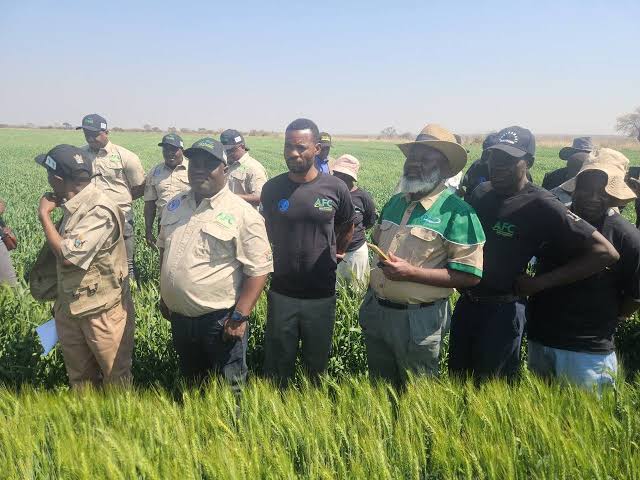
HARARE — Zimbabwe is on course for a wheat harvest of at least 600,000 tonnes after farmers collected 568,581 tonnes from 83% of the area planted this season, strengthening the country’s food-security position and creating fresh opportunities for millers, food processors and agricultural suppliers.
Agriculture Permanent Secretary Professor Obert Jiri said 108,569 hectares had been harvested out of 130,316 hectares planted during the 2026 winter season, with average yields of 5.2 tonnes per hectare. The Government is targeting completion by Friday, 6 November, ahead of forecast rainfall that could damage standing crops and compromise grain quality.
Authorities have deployed 482 combine harvesters, collectively covering an estimated 14,000 hectares a day, as they seek to bring in the remaining 21,747 hectares. Mashonaland West leads provincial production with 163,918 tonnes, followed by Mashonaland Central at 140,579 tonnes and Mashonaland East at 104,070 tonnes.
The expected harvest would exceed the initial planting target of 125,000 hectares, reflecting continued investment in irrigation, mechanisation and improved agricultural production. More importantly for the domestic economy, industrial wheat demand has increased from less than 360,000 tonnes three years ago to more than 552,000 tonnes annually, according to Jiri.
That growth has implications beyond food security. A larger domestic wheat supply provides local millers with a stronger sourcing base, potentially reducing exposure to imported grain and foreign-currency costs. It also supports downstream businesses involved in flour production, bread manufacturing, biscuits, pasta and other processed foods.
A harvest of 600,000 tonnes would imply a theoretical surplus of about 48,000 tonnes against the stated annual industrial requirement. However, the balance will depend on final deliveries, grain quality, storage losses and the specific varieties required by processors. Zimbabwe continues to import specialised hard wheat for blending and industrial applications that domestic production does not yet fully satisfy.
The distinction is commercially important. Higher volumes alone will not eliminate imports if locally produced wheat does not meet millers’ protein, strength and processing specifications. Greater coordination between farmers, seed suppliers, millers and agricultural researchers could help align production with industrial requirements and retain more value within the domestic supply chain.
The Zimbabwe Mail notes that sustained wheat self-sufficiency could also improve planning for food manufacturers by making local raw-material supplies more predictable. For farmers, reliable demand from millers offers an incentive to invest in irrigation equipment, machinery, seed and fertiliser, while transporters and grain-storage operators stand to benefit from increased volumes moving through the agricultural supply chain.
FurtherAfrica has previously highlighted the importance of agricultural training and industry partnerships in improving productivity and developing climate-resilient farming technologies. The wheat harvest reinforces the economic value of connecting agricultural expertise with commercial production, particularly as the country seeks to improve yields and manage weather-related risks.
The Government has said it wants to sustain self-sufficiency and eventually develop export capacity. But any exportable surplus will need to be assessed against domestic quality requirements, strategic reserves and the timing of local demand. The immediate priority remains completing the harvest before rainfall threatens the crop.
Zimbabwe’s wheat performance is increasingly becoming an industrial as well as an agricultural story. Its longer-term contribution will depend on whether higher farm output translates into competitive processing, reliable supplies and reduced dependence on specialised imports.