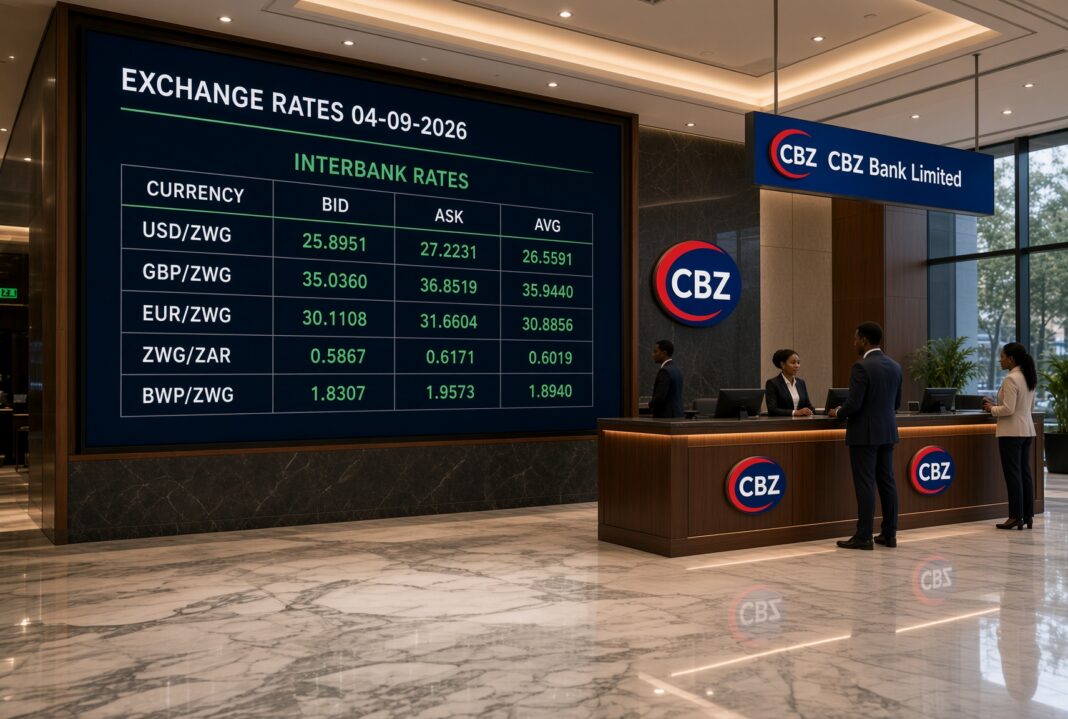
HARARE, October 5, 2026 — The Zimbabwe Gold (ZiG) traded at an average of ZWG26.7698 to the US dollar on the interbank market on Monday, according to Reserve Bank of Zimbabwe (RBZ) data, as businesses continue to monitor currency stability ahead of the final quarter.
The US dollar was quoted at a bid of ZWG26.1006 and an ask of ZWG27.4390. The British pound averaged ZWG35.3496, while the euro stood at ZWG29.9501.
The South African rand averaged ZWG0.6252 against the ZiG, while the Botswana pula was quoted at ZWG1.8879.
Analysts who spoke to The Zimbabwe Financial Mail said the latest rates highlighted the importance of a liquid and predictable formal foreign-exchange market for businesses managing costs and working capital.
“The key issue is whether the interbank market can provide sufficient liquidity and reliable price discovery for businesses to plan. Daily movements matter less than the market’s ability to provide a predictable trading environment,” one analyst said.
The US dollar’s bid-ask spread of about ZWG1.34 also underscored the importance of market liquidity, analysts said.
For Zimbabwean companies, exchange-rate movements directly affect the cost of imported raw materials, inventory and equipment, while currency uncertainty can complicate pricing and cash-flow planning.
“A predictable exchange rate gives companies greater confidence when pricing goods, negotiating contracts and managing inventories. That is particularly important in an economy where many businesses still have significant foreign-currency exposure,” another analyst said.
Zimbabwe continues to operate a multi-currency economy, with the US dollar widely used alongside the ZiG. This creates a challenge for policymakers seeking to deepen the use of the domestic currency while maintaining adequate access to foreign exchange.
Analysts said confidence in the ZiG would ultimately depend on consistent monetary policy, adequate foreign-exchange liquidity and the credibility of the formal market.
“The test is whether businesses and households can access foreign currency through transparent channels and whether the formal rate increasingly reflects genuine supply and demand,” an analyst said.
For companies entering the final quarter, the exchange rate will remain a key consideration as they manage imports, inventories and working capital during a period when demand typically strengthens.
The latest RBZ figures therefore point to a currency market that remains relatively stable, but where liquidity and confidence will continue to determine how effectively the formal interbank system serves Zimbabwe’s businesses.