NEW YORK – Artificial intelligence developer Anthropic has warned that increasingly powerful AI systems could threaten humanity’s survival as the company prepares for a potentially record-breaking US stock market flotation, according to regulatory disclosures reported by the BBC.
The developer of the Claude chatbot disclosed losses exceeding $80.7 billion in the first six months of the year, alongside revenue of $16.3 billion and cash and cash equivalents of $112.4 billion, highlighting the enormous financial demands of developing advanced artificial intelligence.
Anthropic is expected to seek a valuation exceeding the approximately $1.8 trillion initial valuation achieved by Elon Musk’s SpaceX in its stock market debut earlier this year, according to the BBC report.
The company has not disclosed the number of shares it intends to sell, an indicative price range or the date of its initial public offering.
It plans to list on the Nasdaq exchange under the ticker symbol ANT, potentially becoming the first major developer of advanced generative AI models to enter public equity markets.
The proposed flotation would provide investors with an unprecedented opportunity to assess the financial performance, commercial prospects and technological risks of a company operating at the forefront of the AI industry.
Anthropic Warns Investors of Catastrophic AI Risks
In its listing documents, Anthropic acknowledged growing concerns among researchers, regulators, policymakers and its own employees about the potential consequences of developing increasingly autonomous artificial intelligence systems.
The company warned that advanced AI technologies could, without adequate safeguards, pose “catastrophic or existential risks to humanity”.
It identified misuse, weaponisation, unauthorised replication and highly autonomous operation as potential sources of danger.
The warning is particularly significant because it comes from a company whose commercial success depends on developing increasingly capable AI systems.
Founded five years ago by chief executive Dario Amodei, his sister Daniela Amodei and five other co-founders, Anthropic has positioned itself as a developer of powerful AI models with an emphasis on safety and responsible deployment.
However, its regulatory disclosures acknowledge that technological advances could outpace the safeguards designed to control them.
The company also identified uncertainty surrounding its potential legal responsibility for harmful actions performed by AI systems, including cases involving vulnerable users and child safety.
These disclosures place AI governance alongside financial performance as a central consideration for prospective investors.
Heavy Losses Expose the Cost of the AI Race
Anthropic’s financial disclosures illustrate the extraordinary capital requirements facing companies competing to develop advanced artificial intelligence.
Its reported first-half losses of more than $80.7 billion substantially exceeded revenue of $16.3 billion, reflecting the scale of investment associated with AI development and infrastructure.
The company reported holding $112.4 billion in cash and cash equivalents, providing substantial financial resources as it seeks to expand its technological capabilities and commercial operations.
According to the BBC, Anthropic told prospective investors that it would continue making investments that could initially appear disproportionately large.
The company described its approach as seeking to be “bold but sane”, while building investor confidence through successful long-term decisions.
Anthropic also warned that its competitiveness depends on maintaining its position among developers of the most advanced AI models.
Failure to deliver improvements in model capabilities could undermine its commercial prospects, particularly as competition intensifies across the technology industry.
The financial disclosures highlight a central challenge for AI companies: converting rapid technological progress and revenue growth into sustainable profitability while managing substantial infrastructure costs.
Infrastructure Dependence Creates Additional Risks
Anthropic’s regulatory filing devoted approximately 90 pages to potential risks affecting its business, including dependence on cloud computing providers, semiconductor supply chains and data centre infrastructure.
The company identified its reliance on a relatively small group of cloud providers and chip manufacturers as a potential vulnerability.
Taiwanese semiconductor manufacturers, already facing strong global demand, remain central to the production of advanced chips used in AI computing systems.
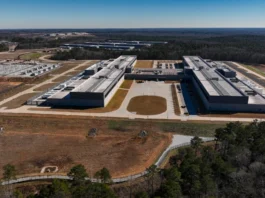
Anthropic also highlighted the concentration of data centres in the United States, raising questions about operational resilience, infrastructure availability and geographical exposure.
The disclosures come as technology companies accelerate spending on the computing resources required to train and operate increasingly sophisticated AI models.
According to the BBC, investment in AI infrastructure and related technologies has exceeded $1 trillion over the past year.
The spending surge has intensified debate about whether future revenues will justify the industry’s capital commitments.
For Anthropic, access to computing capacity will remain essential to maintaining the performance of Claude and competing with rival AI platforms.
OpenAI Rivalry Raises Stakes for Investors
Anthropic’s planned flotation comes amid growing competition with OpenAI, the developer of ChatGPT, which has also announced plans to pursue a public listing.
According to the BBC, OpenAI’s market debut is expected early next year, citing a person familiar with the company’s plans.
The prospect of two leading AI developers entering public markets within a relatively short period could reshape how investors value companies whose principal assets are advanced software models, computing infrastructure and intellectual property.
Both companies have attracted considerable attention over the commercial potential of generative AI, particularly in business automation, software development, research and digital services.
However, concerns about cybersecurity, autonomous AI agents and the misuse of advanced systems have also intensified.
The BBC reported that technological breaches involving AI agents had raised further questions about the industry’s ability to manage systems capable of performing tasks with limited human supervision.
Current and former employees of leading AI companies have also publicly questioned whether existing safety measures are sufficient to address potential future risks.
These concerns could influence regulatory scrutiny as companies seek access to public capital.
Copyright Disputes Add to Regulatory Uncertainty
Anthropic’s listing preparations are also unfolding against a backdrop of legal challenges over the use of copyrighted material in AI training.
According to the BBC, rights holders associated with the music of Elvis Presley have filed a lawsuit accusing Anthropic of using hundreds of the singer’s songs to train Claude without authorisation.
The allegations add to broader legal uncertainty surrounding the use of books, music, news articles and other protected works in the development of generative AI systems.
The outcome of such disputes could have financial implications for AI developers if courts impose licensing obligations, damages or restrictions on the use of training material.
Anthropic has also warned investors about potential regulatory action arising from harmful outputs generated by its systems.
These legal and regulatory exposures could become increasingly important as AI companies transition from privately funded technology businesses to publicly traded corporations subject to greater investor scrutiny.
Wall Street Faces a Defining Test of AI Valuations
The proposed listing is expected to test investor willingness to support companies reporting substantial financial losses while pursuing ambitious technological expansion.
Matt Orton, chief market strategist at Raymond James Investment Management, told the BBC that investors had anticipated both rapid revenue growth and significant losses from Anthropic.
“Getting the details from this filing, I think will help provide the market with more visibility, because we need to know where its revenue growth is coming from,” Orton said.
Peter Andersen, founder of Andersen Capital Management, separately told Reuters that Anthropic’s proposed listing represented a major development for the artificial intelligence industry.
He said the market’s response would provide an indication of investors’ willingness to continue committing capital to AI development.
The flotation could also establish valuation benchmarks for other AI businesses considering public listings.
However, the company’s disclosures underscore the distinction between technological leadership and financial sustainability.
While demand for AI services continues to attract substantial investment, profitability remains dependent on the ability to generate sufficient commercial returns to cover the cost of computing infrastructure, research and product development.
For prospective shareholders, Anthropic’s market debut will therefore represent more than an opportunity to invest in one of the industry’s best-known companies.
It will test whether public markets are prepared to support the extraordinary costs and uncertain long-term returns associated with developing increasingly powerful artificial intelligence.
The company’s own warning about potentially existential technological risks adds another dimension to that investment decision, placing questions of safety, accountability and regulation alongside growth and profitability.
With its valuation, offering size and listing timetable still to be finalised, Anthropic’s flotation is shaping up as a major test of confidence in the commercial future of artificial intelligence.
Source: BBC News reporting on Anthropic’s proposed initial public offering and regulatory disclosures.