





HARARE — Axia Corporation is planning to invest at least US$6 million in a centralised logistics hub in Sunway City, Harare, as the diversified retail and distribution group seeks to reduce warehousing costs and improve the efficiency of its supply chain.
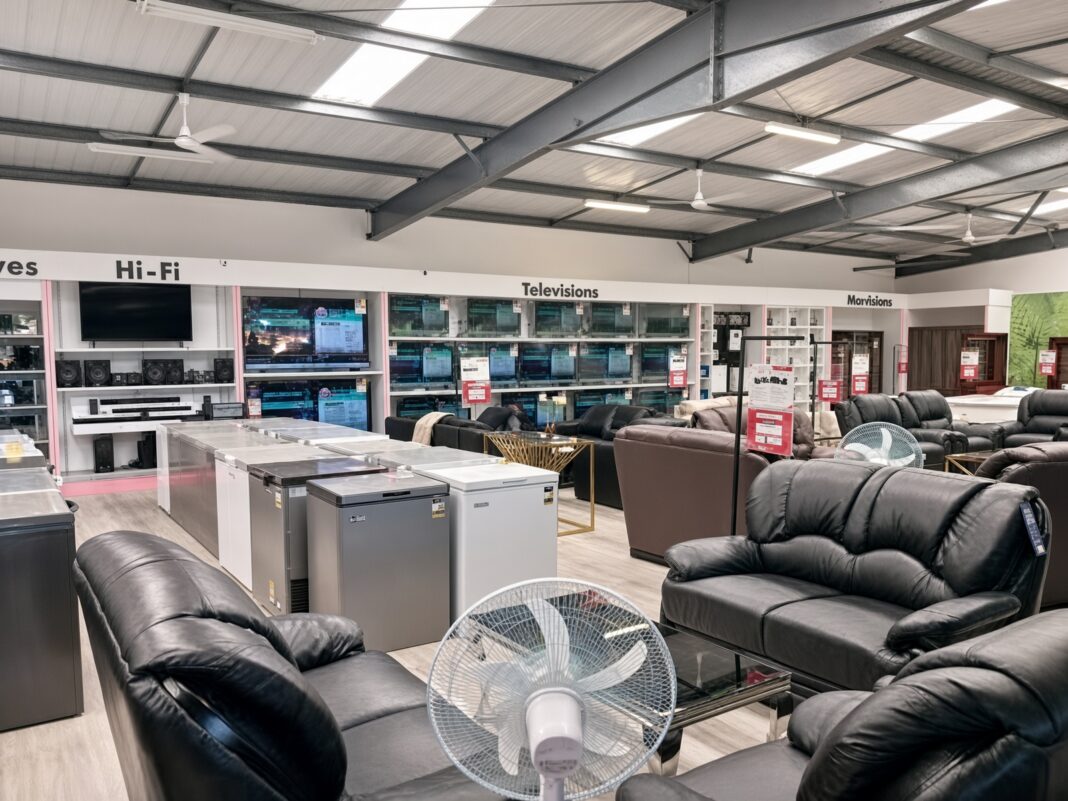
The facility will serve Axia’s flagship retail business, TV Sales & Home, replacing a fragmented logistics structure in which the division currently operates from three separate warehouses.
Axia finance director Simbarashe Mambanda told financial analysts that consolidating the operations into a single facility should reduce duplication and improve the movement of inventory through the business.
“This should improve logistics and save on warehouse and distribution costs,” Mambanda said.
Supply-chain resilience becomes strategic priority
The investment comes as Zimbabwean retailers continue to contend with supply-chain uncertainty, including delays at regional ports and border crossings.
Axia has responded by increasing inventory buffers to more than three months of operational demand, with plans to build that reserve to at least five months.
Mambanda said the higher inventory levels were intended to protect the group’s retail operations from disruptions and delays associated with global geopolitical tensions and regional logistics bottlenecks.
For a business heavily exposed to imported consumer goods, the strategy represents a deliberate trade-off between holding additional working capital and protecting sales from supply interruptions.
An industry analyst who spoke to The Zimbabwe Financial Mail said the warehouse investment should therefore be viewed as a supply-chain restructuring project rather than simply a property development.
“The economic value is in reducing the friction between procurement, storage and retail distribution. If Axia can consolidate inventory while improving stock availability, the new facility could generate savings and improve service levels at the same time,” the analyst said.
Stronger earnings provide investment capacity
The planned investment follows a strong financial performance from Axia during the year ended June 30, 2026.
The group reported a 68% increase in profit before tax to US$19.39 million, compared with US$11.54 million in the previous financial year.
Revenue increased 27% to US$249.55 million, reflecting stronger volumes across the group’s retail and distribution operations.
TV Sales & Home was a major contributor to the growth, recording a 37% increase in volumes, while Distribution Group Africa Zimbabwe reported a 39% increase following the acquisition of a new agency contract.
The performance provides Axia with greater capacity to fund expansion while simultaneously investing in infrastructure designed to improve operating efficiency.
Inventory becomes part of the competitive strategy
The decision to increase stock cover to as much as five months highlights the unusual operating environment facing Zimbabwean retailers.
Businesses must balance the cost of holding additional inventory against the commercial consequences of running out of popular products when imports are delayed.
The problem is particularly relevant for retailers dealing in durable consumer goods, where customer purchasing decisions can be highly sensitive to product availability, price and financing conditions.
A second analyst told The Zimbabwe Financial Mail that Axia’s approach reflected a broader shift in how Zimbabwean businesses are managing supply-chain risk.
“Inventory is increasingly being treated as a strategic asset rather than simply a working-capital cost. In an uncertain logistics environment, availability itself becomes part of the competitive proposition,” the analyst said.
Sunway City hub could support further growth
The proposed Sunway City warehouse is expected to centralise storage and distribution for TV Sales & Home, potentially allowing the retailer to simplify its logistics network as its volumes expand.
For Zimbabwe’s wider economy, investments of this nature are important because logistics infrastructure is a critical component of retail competitiveness. Inefficient warehousing increases handling costs, ties up capital and can ultimately feed into consumer prices.
Axia’s investment therefore comes at a time when companies are increasingly looking for productivity gains that can be achieved through better systems, scale and infrastructure rather than simply higher selling prices.
Retail growth meets a changing consumer market
The performance of TV Sales & Home also reflects continuing demand for household and consumer goods despite Zimbabwe’s challenging economic environment.
The division’s 37% volume growth suggests that demand remains responsive where retailers can provide product availability, competitive pricing and accessible purchasing arrangements.
Axia’s strategy is consequently moving beyond expanding its retail footprint towards strengthening the infrastructure behind that footprint.
The proposed US$6 million logistics hub, combined with higher inventory buffers, points to a business seeking to build resilience around its distribution model while using scale to reduce costs.
For analysts, the key measure will ultimately be whether the investment produces measurable savings, improves stock availability and supports further volume growth.
“The warehouse should be judged by the return it generates for the retail business. If consolidation reduces distribution costs while allowing Axia to carry the right inventory closer to customers, it becomes a productivity investment rather than simply another capital expenditure,” the first analyst said.
Axia’s latest results suggest the group currently has the earnings momentum to support that investment. The next challenge will be converting that growth into a more efficient operating platform capable of sustaining expansion as Zimbabwe’s retail and distribution market continues to evolve.


