





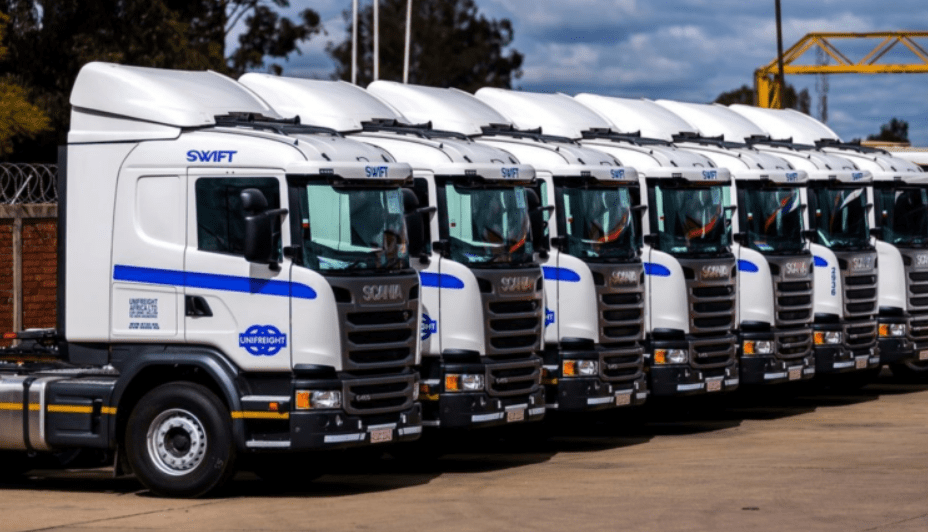
HARARE — Unifreight Africa has converted a dramatic improvement in cash collections into a major fleet renewal programme, deploying ZWG75.1 million on 40 new trucks and trailers after net operating cash flow surged more than tenfold in the first half of 2026.
The logistics group’s net cash generated from operations rose to ZWG101.5 million, from just ZWG9.8 million in the comparable period, strengthening the company’s capacity to reinvest in its transport network as regional trade and freight demand recover.
The biggest change was in working capital.
Trade and other receivables fell 37.7% to ZWG141.2 million, from ZWG226.8 million at December 2025, effectively releasing cash that had previously been tied up in the company’s debtors book.
Unifreight chairman Peter Annesley said the collections drive had been central to the improvement in cash generation, with working capital released from receivables being redirected towards fleet investment.
For a Zimbabwean logistics sector operating under persistent pressure from fuel costs, ageing equipment, foreign-currency requirements and regional trade constraints, the move represents a shift from balance-sheet repair towards productive capital deployment.
Debtors become trucks
The scale of the reinvestment is significant.
Unifreight spent ZWG75.1 million on vehicles and equipment during the six months, more than four times the amount spent in the comparable period in some categories and substantially above the ZWG19.5 million recorded in H1 2025.
The carrying value of the group’s fleet increased 13.7% to ZWG622 million, while a further ZWG38.4 million of capital expenditure has already been approved.
That puts the current fleet investment pipeline at more than ZWG113 million when committed expenditure is included.
Annesley said the fleet renewal programme is expected to reduce maintenance expenditure, improve fuel efficiency and vehicle availability, while giving the group additional capacity to handle rising freight volumes.
An analyst who spoke to The Zimbabwe Financial Mail said the company’s working-capital improvement was arguably as important as the truck purchases themselves.
“The important story is not simply that Unifreight bought 40 trucks. It is that the company has demonstrated that better collections can release cash from the balance sheet and convert it into productive assets,” the analyst said.
Revenue grows, but earnings grow faster
The fleet investment comes against a stronger first-half operating performance. Revenue increased 8.9% to ZWG434.2 million, from ZWG398.9 million, while operating costs increased by only 3.8%.
That operating leverage lifted EBITDA by 25.7% to ZWG92.8 million, pushing the EBITDA margin to 21.4% from 18.5%. Profit before tax rose 40.8% to ZWG53.2 million, while the pre-tax margin improved to 12.2% from 9.5%.
Annesley attributed the improvement to route economics, fleet utilisation and tighter overhead control.
The divergence between revenue and operating-cost growth is particularly important for a capital-intensive transport business. Each additional percentage point of revenue generated without a corresponding increase in the cost base can translate into a disproportionately larger improvement in operating earnings.
“The margin expansion suggests that management is extracting more earnings from the existing operating platform. The real test now is whether the new fleet can extend that operating leverage,” another analyst told The Zimbabwe Financial Mail.
Debt rises to fund expansion
Unifreight is not funding the entire fleet programme from internally generated cash.
Loans and borrowings increased to ZWG180.4 million at June, from ZWG89.4 million at December 2025. Total interest-bearing debt rose 34.3% to ZWG236.3 million, while gearing increased to 38.3% from 31.4%.
The company has nevertheless shifted towards longer-term financing, with non-current borrowings rising to ZWG157.5 million.
That structure more closely matches the financing period with the economic life of the trucks and other assets being acquired.
Annesley said the board was comfortable with the resulting capital structure, with EBITDA covering finance costs 7.1 times.
The cost of the additional borrowing is already visible.
Finance costs increased 55% to ZWG13.1 million, from ZWG8.4 million, while bank borrowing costs almost doubled to ZWG9.8 million from ZWG5.1 million.
That leaves Unifreight facing a clear investment hurdle: the new trucks must generate sufficient additional freight volumes, utilisation and earnings to compensate for the higher cost of capital.
The tax effect distorts bottom-line comparison
Profit after tax fell to ZWG38.7 million, from ZWG148 million in H1 2025.
However, the headline decline does not reflect a deterioration in underlying operations.
The 2025 comparative benefited from a ZWG110.2 million deferred tax credit following the group’s reassessment of its functional currency to the US dollar.
In the current period, Unifreight recorded a ZWG14.4 million tax charge.
Profit before tax and EBITDA therefore provide a more useful indication of the underlying operating trajectory, with the former rising by 40.8% and the latter by 25.7%.
Cash falls as investment accelerates
Unifreight’s closing cash balance fell to ZWG7.7 million, from ZWG31.8 million at the beginning of the year. But the reduction reflects aggressive capital deployment rather than weakening operating cash generation.
Net investing cash outflow reached ZWG106.7 million, driven primarily by fleet purchases and a property investment prepayment.
Financing activities used another ZWG19 million, as loan repayments exceeded new borrowing during the period.
The group also withheld an interim dividend, retaining capital within the business to support its expansion programme.
For investors, this creates a straightforward question for the second half of the year: can the enlarged fleet convert capital expenditure into sustainable earnings and cash flow?
“The balance sheet is carrying more debt and more productive assets. That increases both the opportunity and the financial risk. Investors will want to see utilisation rates and freight volumes rise quickly enough to justify the investment,” an analyst said.
Zimbabwe logistics sector enters a capital-intensive phase
The investment comes as Zimbabwe’s logistics industry continues to respond to changing regional trade patterns, infrastructure requirements and the cost of moving goods across increasingly integrated Southern African markets.
For transport operators, fleet age and fuel efficiency are becoming increasingly important competitive factors. Newer vehicles can reduce downtime and maintenance requirements while improving fuel consumption, although the benefits depend heavily on utilisation.
Unifreight’s strategy therefore reflects a broader business challenge in Zimbabwe: access to capital is only useful when it can be converted into productive capacity that generates foreign currency or sustainable local-currency earnings.
The company’s improved collections provide evidence that internal working-capital discipline can contribute to that process.
But the next stage will be harder.
Unifreight has already released cash from its debtors, increased operating cash generation and committed more than ZWG113 million to fleet and equipment investment.
The question now is whether those trucks can earn their keep.
The first half of 2026 demonstrated that better working-capital management can finance growth. The second half will show whether Unifreight can translate that capital into higher utilisation, freight volumes, earnings and returns while keeping its rising financing burden under control.


