
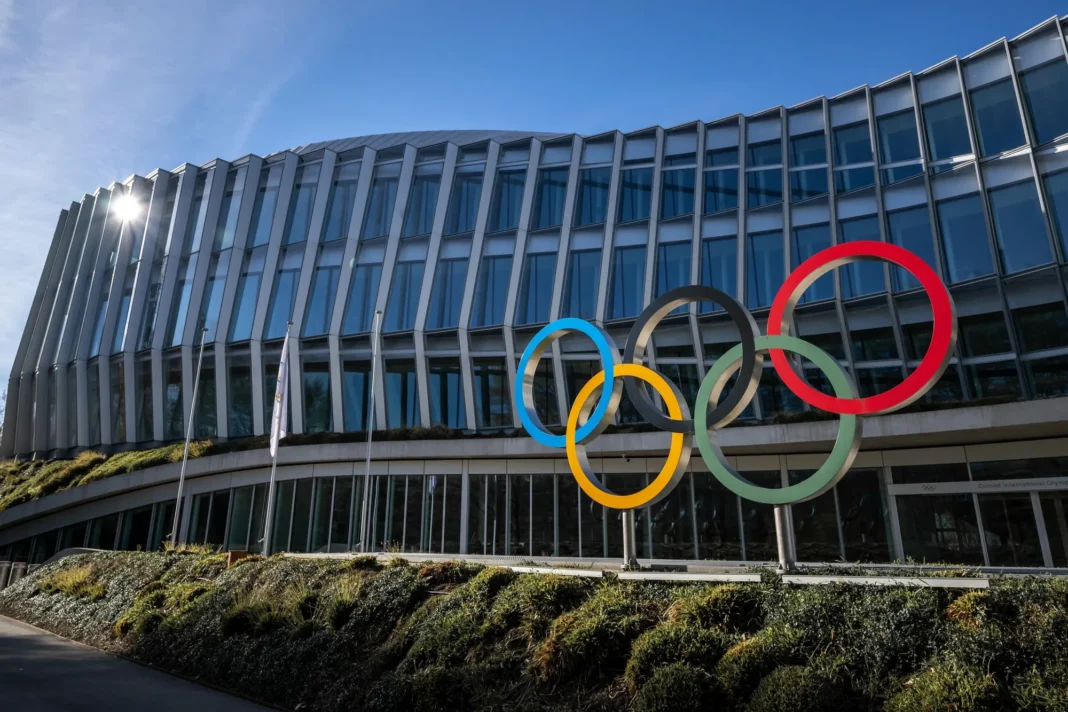
LAUSANNE, Switzerland — A senior executive within the International Olympic Committee (IOC) has privately expressed deep concerns about the future staging of Olympic Games in the United States, warning that growing geopolitical tensions, entry restrictions, and rising costs could threaten the core principles upon which the Olympic movement is built.
Speaking on condition of anonymity, the senior official said concerns within international sport are more serious than many people realise and extend far beyond questions of infrastructure or organisational capability.
“I would be dishonest if I said they were not,” the executive said when asked whether concerns about hosting major sporting events in the United States had reached the Olympic movement.
“There are serious discussions taking place behind closed doors. The Olympic Games are fundamentally different from any other sporting event. We are not talking about thirty-two football teams or a few hundred officials. We are talking about more than 200 national delegations, thousands of athletes, coaches, technical officials, media personnel, sponsors, diplomats, and hundreds of thousands of spectators from every corner of the world.”
According to the official, the success of the Olympic model depends on universal participation and unrestricted access for all accredited participants.
“The Olympic model depends on universal participation. The moment people begin questioning whether every athlete, official, or supporter can enter the host country on equal terms, the integrity of the Games itself comes into question.”
The executive identified predictability as one of the IOC’s principal concerns.
“Athletes spend their entire lives preparing for one opportunity that may last only a few minutes. We cannot have uncertainty hanging over whether competitors, coaches, officials, journalists, or support staff will be able to travel freely,” the official said.
“Ongoing controversies surrounding entry restrictions in the FIFA World Cup, visa disputes, and geopolitical tensions have not gone unnoticed. Every incident creates anxiety because the Olympics cannot function under conditions where participation appears dependent on political circumstances rather than sporting qualification.”
The official stressed that the Olympic Charter’s principles of universality and non-discrimination are central to the movement’s identity.
“The Olympic Charter is built on principles of universality and non-discrimination. Those principles are not optional. They are the foundation upon which the movement exists.”
Addressing the growing intersection between sport and politics, the executive acknowledged that political considerations inevitably affect major international events but warned against allowing governments to influence participation.
“Politics affects every major international event. The question is whether organisers can successfully insulate sport from political disputes,” the official said.
“At present, many people within international sport are asking difficult questions. If governments become active participants in determining who can and cannot attend, then sport ceases to be a neutral meeting ground.”
“The Olympics were created precisely because nations needed a space where political disagreements could be temporarily set aside. Once that space begins to shrink, the entire philosophy of the Games is weakened.”
The official also highlighted mounting concerns about the affordability of attending future Olympic Games, warning that escalating costs risk alienating ordinary supporters.
“The Olympics are increasingly becoming expensive to attend. Accommodation costs, transportation, security requirements, and ticket prices are all rising,” the executive said.
“One of our biggest fears is that the Games gradually transform from a global celebration into an exclusive event accessible primarily to corporations, government delegations, and wealthy visitors.”
“That would be a profound failure.”
“The Olympic movement draws its legitimacy from ordinary people. It belongs to schoolchildren dreaming of representing their countries, families saving for years to attend, and supporters travelling across continents to celebrate sport. If those people are priced out, something essential is lost.”
While publicly projecting confidence, the official suggested there is growing recognition within Olympic circles that the international environment is becoming increasingly challenging.
“More significant than many people realise,” the executive said when asked about the scale of concerns within the IOC.
“Publicly, the movement projects confidence. Privately, there is recognition that the global environment has become more complicated.”
“We are living in an era of geopolitical rivalry, growing nationalism, heightened border controls, and increasing diplomatic tensions. These developments inevitably create challenges for an event whose entire purpose is to bring the world together.”
“The Olympics cannot succeed if any nation feels excluded, if athletes fear administrative obstacles, or if supporters believe they are unwelcome.”
Despite the concerns, the executive was clear that the United States possesses the technical capacity to host a successful Olympics.
“The United States possesses extraordinary infrastructure, organisational expertise, and commercial capacity. Nobody disputes that.”
“The concern is not capability. The concern is whether the political and administrative environment can consistently guarantee the openness required for an event of this nature.”
The official argued that hosting the Olympics ultimately depends on trust rather than physical infrastructure alone.
“Hosting the Olympics is not simply about stadiums, airports, hotels, and television contracts. It is about trust.”
“The international community must trust that every qualified athlete will compete, every accredited official will be admitted, and every nation will be treated equally regardless of political relationships.”
“That trust is the most important infrastructure of all.”
In a final message to Olympic leaders, the executive warned against complacency and urged the movement to actively defend its founding principles.
“The Olympic movement must never assume its values are self-sustaining,” the official said.
“Universality, neutrality, accessibility, and equality require constant protection.”
“The world is watching closely. The success of future Games will not be measured solely by medal counts, attendance figures, or broadcasting revenues. It will be measured by whether the Olympics remain one of the last truly global institutions capable of bringing humanity together on equal terms.”
“That responsibility has never been greater than it is today.”