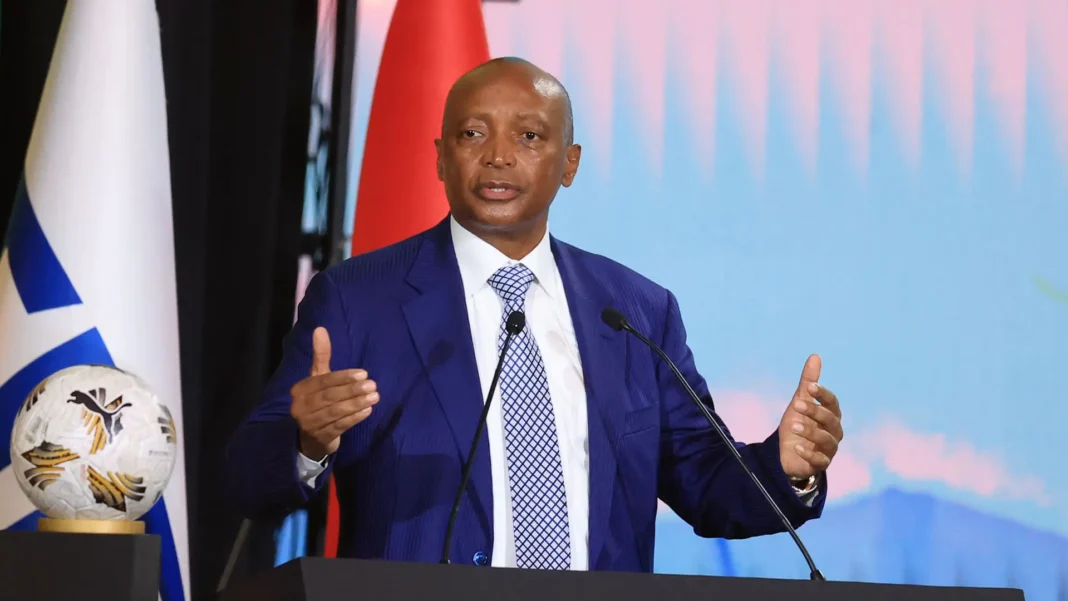
HARARE – The Confederation of African Football (CAF) has reversed its decision to stage the Africa Cup of Nations every four years, restoring the tournament’s biennial format after concerns emerged over the financial viability of a proposed replacement competition.
The decision, approved unanimously by CAF’s executive committee, represents a significant policy reversal for president Patrice Motsepe, whose administration had sought to overhaul Africa’s international football calendar through the introduction of an Africa Nations League.
The proposed competition was intended to generate additional commercial revenue while allowing AFCON to move to a four-year cycle, bringing its frequency closer to major international tournaments such as the FIFA World Cup and UEFA European Championship.
However, CAF concluded that the new competition would take too long to deliver the financial returns needed to sustain African football’s development programmes.
Motsepe had signalled a possible reversal during CAF’s Strategy Conference in Cabo Verde earlier this month, where the organisation reviewed the commercial and sporting implications of its proposed calendar reforms.
“We were also concerned by the several years required before the proposed new Africa Nations League Pan-African competition … could make the substantial financial and football development contributions for African Football and CAF competitions to be globally competitive and self-supporting,” Motsepe said.
The reversal highlights the financial importance of AFCON to African football, where revenues from broadcasting rights, sponsorship agreements and commercial partnerships help support the continental governing body’s activities.
Unlike European football, where wealthy domestic leagues provide substantial financial resources, many African national associations remain heavily dependent on international competitions and development funding.
Reducing AFCON’s frequency could therefore have created uncertainty over future commercial income, particularly before the proposed Nations League had established a reliable revenue base.
CAF said the decision also considered the interests of its 54 member associations and African players employed by clubs outside the continent.
The tournament’s scheduling has long generated tensions between national teams and European clubs, particularly when AFCON takes place during the European domestic season.
While retaining a two-year cycle preserves the competition’s regularity, it does not eliminate those scheduling disputes.
The next AFCON finals will be jointly hosted by Kenya, Tanzania and Uganda in 2027, marking a major opportunity for East Africa to showcase its football infrastructure and attract regional tourism and investment.
According to the calendar outlined by CAF, subsequent editions are planned for 2028, 2031 and 2033, with the gap following 2028 linked to the 2030 FIFA World Cup.
For Zimbabwe and other African football nations, the decision preserves more frequent opportunities to qualify for the continent’s premier international tournament.
Regular AFCON competitions also offer national associations opportunities to attract sponsorship, develop players and strengthen the commercial appeal of domestic football.
However, the continued success of the tournament will depend on CAF’s ability to balance its financial ambitions with player welfare, competitive standards and the demands of an increasingly congested international calendar.
Motsepe also emphasised AFCON’s wider cultural significance, describing the tournament as a celebration of Africa’s diverse traditions and a platform bringing together supporters from across the continent and its diaspora.
The reversal leaves CAF facing a familiar challenge: expanding the commercial value of African football without weakening the competition that remains central to its international identity.
For now, AFCON’s two-year tradition has survived another attempt at reform, with financial sustainability prevailing over the ambition to redesign the continental calendar.