





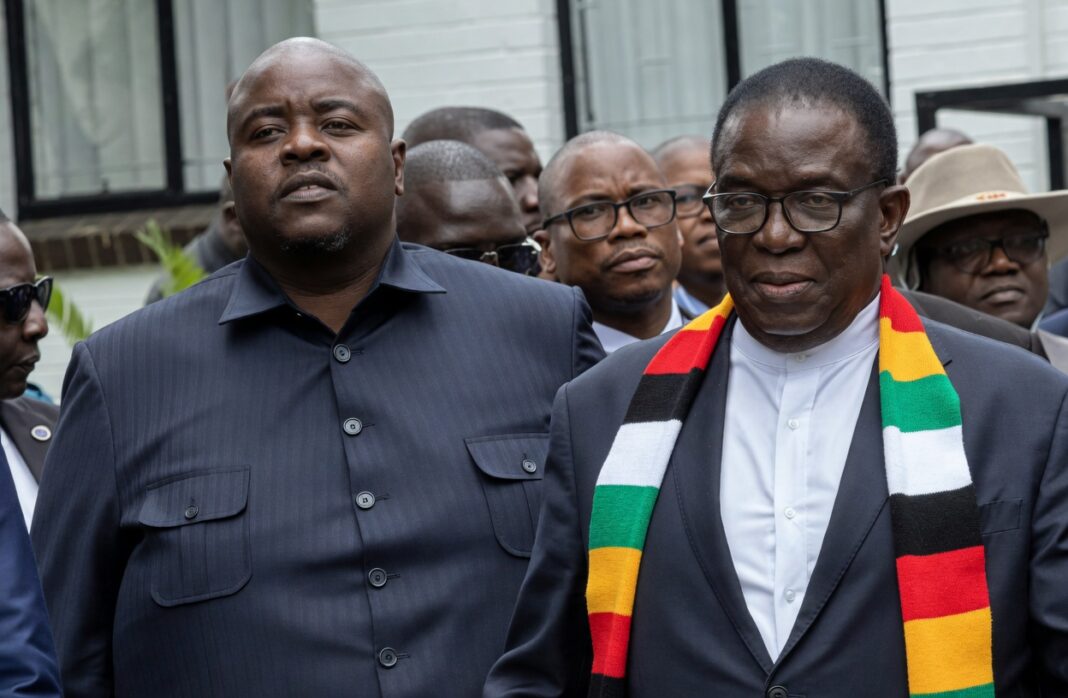
HARARE – President Emmerson Mnangagwa has called on Zimbabweans to safeguard the country’s natural wealth and ensure that proceeds from mining, agriculture, tourism and infrastructure development benefit future generations, amid growing criticism over the management of national resources under his administration.
Addressing mourners at the National Heroes Acre yesterday during the burial of liberation war hero Retired Major General Evaristo Dzihwema, Mnangagwa said Zimbabwe’s economic resources should be preserved and used to build a lasting legacy.
“The wealth which we generate from our land, from our mines, social services, tourism, infrastructure and development, as well as other entrepreneurial endeavours, should benefit generations to come, not just this present generation,” Mnangagwa said.


He added that Zimbabweans had a responsibility to create a better future for coming generations.
“We have a responsibility to live and build legacies for our children, and Zimbabwe for the future,” he said.
However, the President’s remarks have drawn scrutiny from critics who argue that they contrast sharply with concerns over the accumulation of wealth by politically connected individuals and business figures during his tenure.
Opposition groups and civil society activists have repeatedly questioned whether Zimbabwe’s vast mineral resources are translating into meaningful improvements in the lives of ordinary citizens, particularly amid persistent economic challenges, high unemployment, declining purchasing power and pressure on public services.
Critics point to the visible rise in luxury consumption among members of the country’s political and business elite, including expensive vehicles, private aircraft, lavish properties and other high-value assets, as evidence of growing inequality between those with access to state-linked economic opportunities and ordinary Zimbabweans struggling with daily economic pressures.
The government has previously dismissed allegations of corruption and elite accumulation, arguing that economic reforms, investment promotion and increased mineral production are necessary to rebuild the economy after years of stagnation.
Zimbabwe’s mining sector remains at the centre of the country’s economic strategy, with gold, lithium, platinum and other minerals expected to generate foreign currency earnings and support development. However, critics argue that weaknesses in transparency, accountability and oversight have allowed significant mineral wealth to leave the country without delivering sufficient benefits to the broader population.
Concerns over illicit financial flows, smuggling and revenue leakages in the mining sector have remained a major issue in public debate, particularly in relation to gold, Zimbabwe’s largest mineral export earner.
Analysts say resource-rich countries often fail to achieve meaningful development when mineral wealth is concentrated among a narrow elite rather than channelled into productive investment, infrastructure, healthcare, education and industrial development.


The President’s call for responsible stewardship of national wealth therefore comes against the backdrop of continued debate over who has benefited most from Zimbabwe’s resources since the government intensified efforts to expand mining output.
While authorities maintain that the country is on a path towards economic transformation, critics argue that genuine development requires stronger institutions, greater transparency and accountability over the management of public resources.
They say the true measure of resource nationalism is not the volume of minerals extracted, but whether ordinary citizens experience tangible improvements in living standards, employment opportunities and access to essential services.
As Zimbabwe seeks to leverage its mineral wealth to drive economic recovery, the unresolved question remains whether the country’s resources will become a foundation for broad-based prosperity or continue to fuel inequality and elite accumulation.


