


Zimbabwe’s economic debate is often framed in narrow, short-term terms: currency instability, fiscal deficits, municipal decay, or the perennial struggle to revive industry. Yet beneath these symptoms lies a deeper structural problem—the persistence of a linear economic model that extracts, consumes and discards, while steadily eroding natural capital, public finances and urban liveability.
By Brighton Musonza
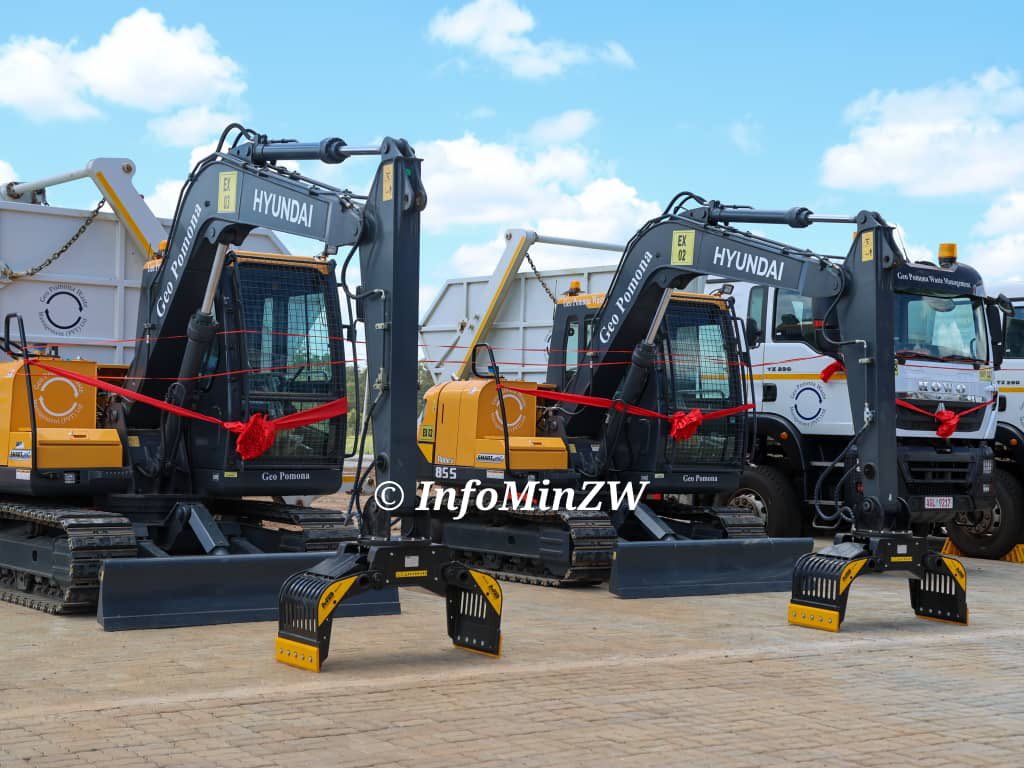
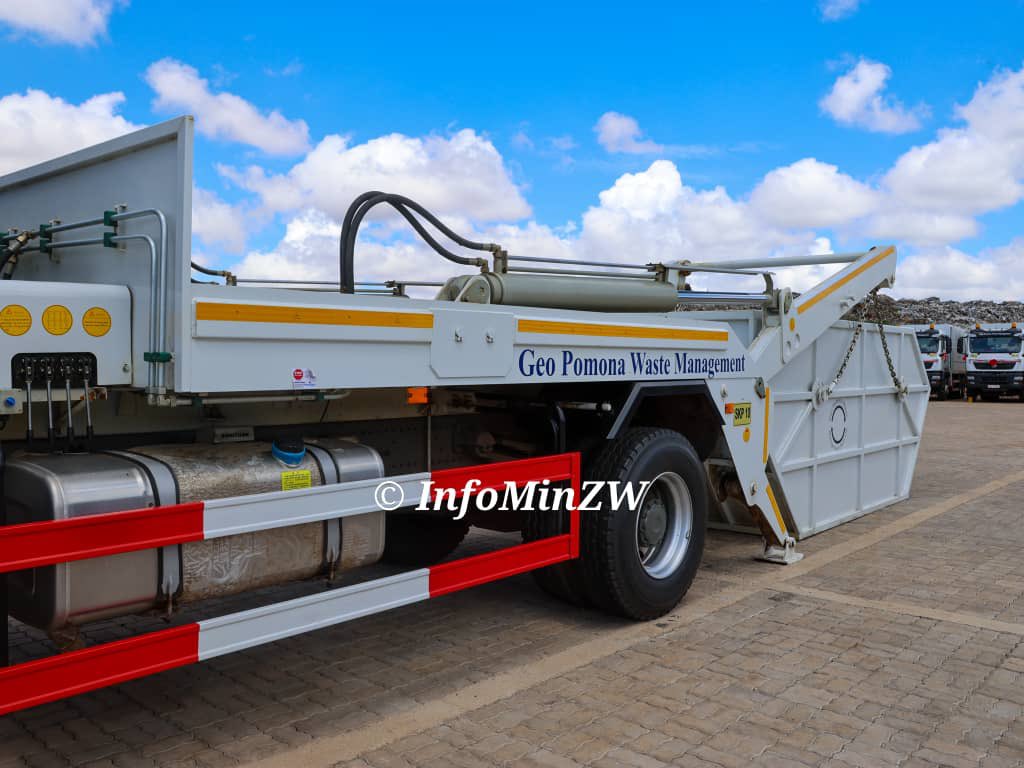
The ongoing waste-management interventions in Harare and other cities, including those linked to Geo Pomona, demonstrate that progress is possible. Cleaner streets and improved landfill management matter to residents far more than ideological arguments over ownership or concessions. However, these initiatives remain palliative unless they are embedded within a broader economic transformation towards a circular, restorative and regenerative model.
The circular economy, as articulated by the Ellen MacArthur Foundation, offers Zimbabwe a comprehensive framework to address its interlocking crises of urban decay, environmental degradation, fiscal strain and weak industrial productivity. At its core, the circular economy is not about waste management alone. It is a systems-level redesign of how value is created, preserved and regenerated across the economy. Its three central principles—eliminating waste and pollution, circulating products and materials at their highest value, and regenerating natural systems—are directly relevant to Zimbabwe’s developmental context.
Cities as engines of circular transformation
Zimbabwe’s cities are both the greatest generators of waste and the greatest opportunities for circular innovation. Harare, Bulawayo, Mutare, Gweru and Masvingo now produce far more waste than they did two decades ago, while municipal revenues have failed to keep pace. Under the linear model, waste collection has become a fiscal sinkhole, absorbing scarce public resources without generating economic return. A circular urban economy reverses this logic by treating waste as a resource stream.
For Harare, this means moving decisively beyond landfill-centric solutions towards material recovery, reuse economies and decentralised waste systems. Organic waste from markets and households can be composted or converted into biogas, reducing methane emissions while supporting urban agriculture and soil regeneration. Construction and demolition waste can be recovered and reused, lowering building costs and reducing pressure on quarries. Informal waste pickers—already performing a vital but undervalued role—should be formally integrated into municipal systems, provided with protective equipment, financing and stable markets. In doing so, cities become sites of green employment and innovation rather than environmental decline.
Urban circularity must also integrate biodiversity. Green infrastructure—urban wetlands, tree corridors, restored river systems and permeable surfaces—enhances climate resilience, reduces flooding and improves public health. A circular city is not merely efficient; it is ecologically functional.
The role of the Ministry of Finance: from linear budgets to circular incentives
The transition to a circular economy cannot occur without deliberate fiscal leadership. The Ministry of Finance sits at the fulcrum of this transformation. Current budgetary frameworks implicitly subsidise waste through under-priced disposal and externalised environmental costs. Circular economics demands the opposite: incentives for durability, reuse and regeneration.
High-level policy tools are available. Extended Producer Responsibility (EPR) schemes can shift the cost of plastic and packaging waste upstream, compelling manufacturers to design for reuse and recyclability. Differential taxation can reward circular business models—repair services, refill systems, second-hand markets—while penalising excessive single-use production. Public procurement, one of the state’s most powerful economic levers, should prioritise circular design, modular construction and recycled or reusable materials.
Crucially, fiscal planning must recognise waste reduction as a form of long-term savings. Every tonne of waste avoided reduces future expenditure on collection, landfills, healthcare and environmental remediation. This reframing is essential in a fiscally constrained economy such as Zimbabwe’s.
Plastic pollution as a systemic failure
Plastic pollution illustrates the limits of linear thinking. Zimbabwe’s urban environments are increasingly overwhelmed by plastic packaging, much of it imported, single-use and non-recyclable. Recycling alone cannot solve this problem; global evidence shows that recycling rates rarely exceed a fraction of total plastic output. The circular economy prioritises prevention and reuse.
Policy must intervene at the design stage: reducing unnecessary packaging, mandating reusable formats, and supporting deposit-return and refill systems. Localised packaging cooperatives and refill stations could dramatically reduce waste while keeping value within the domestic economy. Preventing plastic pollution is not an environmental add-on; it is an industrial strategy.
Agriculture, food systems and regenerative value chains
Zimbabwe’s agricultural recovery will remain fragile unless it is underpinned by circular food systems. Linear agriculture depletes soils, generates waste and increases chemical dependence. Circular and regenerative agriculture, by contrast, returns nutrients to the land, reduces input costs and enhances resilience.
Food waste—both post-harvest and urban—represents a massive loss of economic and nutritional value. Circular food systems emphasise shorter supply chains, improved storage, composting and bio-energy conversion. These approaches simultaneously address food security, soil health and climate adaptation. They also align with biodiversity regeneration, as healthier soils support more diverse and resilient ecosystems.
Mining, industry and material efficiency
Mining remains central to Zimbabwe’s economy, yet it epitomises linear extraction. A circular approach does not imply abandoning mining, but transforming it. Material efficiency, secondary mineral recovery and industrial symbiosis—where waste streams from one industry become inputs for another—can significantly reduce environmental damage while improving economic returns. This is consistent with global shifts towards resource productivity rather than volume extraction.
Education, skills and cultural change
A circular economy is ultimately a knowledge economy. Zimbabwe’s education system must be realigned to support systems thinking, circular design and ecological literacy. From primary education to universities and technical colleges, curricula should teach how products are designed for durability, repair and reuse. Vocational training should elevate repair, refurbishment and materials science as strategic skills. Without this human capital shift, policy ambitions will remain aspirational.
Finance, measurement and accountability
Circular economies require new financial instruments and new metrics. Traditional finance often struggles to value long-term resource efficiency and ecosystem regeneration. The Ministry of Finance should work with banks and development partners to develop green bonds, blended finance and concessional lending tailored to circular ventures.
Equally important is measurement. GDP alone is an inadequate indicator of progress in a resource-constrained economy. Material flow analysis, waste reduction metrics, biodiversity indicators and circularity rates must be integrated into national planning. What Zimbabwe measures will determine what it prioritises.
Conclusion: from survival to restoration
Zimbabwe’s economic challenge is not merely to grow, but to endure. Linear growth models are increasingly incompatible with the country’s ecological limits, fiscal capacity and demographic pressures. The circular economy offers a pathway towards a restorative, resilient and inclusive future—one that rebuilds natural capital, reduces public costs, and creates dignified work.
Cleaner cities are a start, but they are not the destination. The true measure of success will be whether Zimbabwe can redesign its economy to keep value circulating, ecosystems regenerating, and future generations secure. The tools, frameworks and global knowledge exist. What remains is the political will and institutional courage to move beyond linear thinking and embrace a genuinely circular national development strategy.

