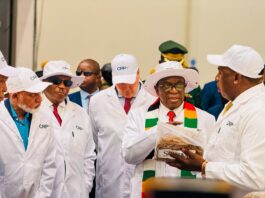

THE Mutapa Investment Fund aims to mobilise US$1 billion to anchor the National Development Strategy 2 (NDS2) initiatives, seeking to enhance the socio-economic livelihoods of citizens.
The fund will leverage its consolidated balance sheet of over 30 State-owned enterprises (SOEs), transferred from several line ministries, to raise financial resources under NDS2.
Part of the proceeds realised through dividends, asset disposals and bond issuances from the revival of portfolio companies will be channelled towards foreign reserves accumulation.
NDS2, running from 2026 to 2030, is the second five-year blueprint designed to fulfil Zimbabwe’s Vision 2030 of becoming an empowered upper-middle-income society.
It succeeds NDS1 and focuses on 10 national priority areas, including macroeconomic stability, maintaining a predictable investment environment, infrastructure and utilities and the modernisation of energy.
A core priority of NDS2 is the structural transformation of the economy, shifting from primary commodity exports to high-value manufacturing and mineral beneficiation. Simultaneously, the strategy emphasises enhancing human capital through universal access to quality healthcare, education and comprehensive social protection.
As of June 2024, a comprehensive valuation conducted by a consortium of reputable local and international accounting firms confirmed that Mutapa holds a gross asset value of US$16 billion. According to the NDS2 blueprint, the fund is expected to leverage its substantial balance sheet to mobilise capital, reinvest in strategic sectors and cultivate “investible surpluses” that will solidify its role as Zimbabwe’s premier Sovereign Wealth Fund.
“The Mutapa Investment Fund is mandated to make strategic investments that align with NDS2, aiming for long-term value creation while generating sustainable financial returns and promoting positive social and environmental outcomes,” the NDS2 blueprint states.
Among its key projects, Mutapa will invest in the revival and modernisation of fertiliser plants, blending facilities, and distribution networks. By leveraging local raw materials such as phosphates and ammonia gas, the initiative aims to reduce import dependency drastically.
Private investors will partner with Mutapa to capitalise Chemplex Corporation across its entire value chain, including Dorowa Minerals, Zimbabwe Phosphate Company, Zimbabwe Fertiliser Company, and Sable Chemical Industries.
This strategic partnership is designed to revamp domestic production capacity, ensuring Zimbabwe becomes self-sufficient in fertiliser with the potential to export to regional markets.
The fund will be mandated to conduct rigorous performance audits and international benchmarking of its portfolio companies. These interventions aim to drive restructuring and governance reforms that restore financial viability and prepare entities for eventual public listing.
By revitalising these assets, the fund will enhance fiscal contributions, stimulate job creation, and expand export capacity.
Mutapa will engage domestic and international investors to inject capital into under-performing subsidiaries, effectively mitigating fiscal risk and eliminating the need for Government bailouts.
During a recent public lecture at the Zimbabwe National Defence University, Mutapa chief executive Dr Mangudya said transforming State-owned entities into “cash cows” — highly profitable and financially efficient enterprises — was critical to generating significant benefits for the economy. He noted that the success of the strategy would mean SOEs transition from being a fiscal burden to becoming economic assets.
By becoming self-sustaining, they will no longer require Government bailouts or subsidies, thereby freeing up significant public funds that can be strategically reallocated toward essential infrastructure projects and critical social services across the country.
Dr Mangudya added that engagement with potential investors to capitalise some of the portfolios is currently ongoing.
Economic analysts suggest that by consolidating approximately 30 State-owned enterprises under a single US$16 billion balance sheet, Mutapa gives Zimbabwe the “clout” needed to access international capital markets. They argue the fund acts as a “super-holding company” that can negotiate better financing terms.
“The consolidation of over 30 State enterprises into a single US$16 billion entity isn’t just a restructuring — it’s the birth of a financial powerhouse,” said economist Mr Tobias Musara. “Mutapa now possesses the critical mass and balance sheet strength necessary to command attention on the global stage and unlock capital markets that were previously out of reach for individual parastatals.”
During the NDS1 period, Mutapa injected US$100 million into investee companies to enhance operations. A portion of this was used to rehabilitate 55,82 kilometres of railway track along critical corridors, including Mutare-Harare-Bulawayo, Bulawayo-Victoria Falls and Somabhula-Rutenga-Chicualacuala. Technical upgrades included re-sleepering, ballast renewal, and the installation of a new ballast production plant, resulting in a 35 percent reduction in derailments.
Through a combination of internal funding and Public-Private Partnerships (PPPs), Mutapa partly funded the refurbishment of the National Railways of Zimbabwe’s 11 locomotives, 538 wagons, four cabooses, and 32 passenger coaches. These upgrades helped stabilise and increase freight volumes from below two million tonnes per year to over 2,3 million tonnes.
Mutapa also funded fibre infrastructure along the Beitbridge-Victoria Falls-Rutenga and Somabhula–Harare routes.
The introduction of an integrated train control system between the Plumtree-Bulawayo and Rutenga-Chicualacuala sections has significantly enhanced operational reliability, reaching 40 percent completion during NDS1. This allowed for the reintroduction of passenger train services on the Harare-Mutare and Bulawayo-Victoria Falls routes, strengthening regional transit logistics.
Furthermore, Mutapa invested in Silo Foods and injected capital into the Cold Storage Company (CSC), successfully facilitating its exit from corporate rescue.
Mutapa was fully operationalised under the Sovereign Wealth Fund of Zimbabwe Act to anchor the establishment of a national Stabilisation Fund. This supports the funding of national development objectives by unlocking the commercial value of State-owned enterprises, thereby securing wealth for future generations. – Herald