
HARARE – The Amalgamated Rural Teachers Union of Zimbabwe (ARTUZ) has escalated its dispute with the Zimbabwe School Examinations Council (Zimsec), issuing a 24-hour ultimatum for the payment of outstanding allowances owed to teachers involved in the ongoing national examinations.
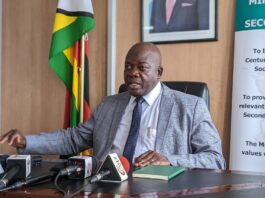
ARTUZ president Obert Masaraure said the union delivered a formal petition to Zimsec at around 11am demanding the immediate settlement of travel and subsistence (T and S) allowances for examiners. Less than an hour later, Zimsec made a partial payment amounting to about 30% of the total owed, a move the union says demonstrates that funds are available.
“War is declared,” Masaraure said, invoking the political philosophy of Thomas Hobbes to describe what he characterised as the harsh conditions under which teachers are forced to work. “We submitted a petition at 11am giving Zimsec a 24-hour ultimatum to settle T and S for examiners. By 12pm, they had made a 30% payment, which shows that the state has the capacity to pay but simply chooses not to.”
Masaraure said the partial payment was an acknowledgment of the legitimacy of the teachers’ demands, but stressed that ARTUZ would not stand down until the full amount is paid.
He accused authorities of placing the burden of economic challenges on workers, arguing that teachers continue to operate under difficult conditions while being denied timely compensation for their services.
“This is a crisis being carried on the backs of working people,” Masaraure said. “Teachers are essential to the examinations process, yet they are treated as an afterthought.”
The union warned that failure to settle the outstanding balance within the stipulated timeframe would result in further action, although it did not specify what form this would take.
Zimsec had not issued a formal response at the time of publication, but the swift partial payment suggests the examinations body is seeking to defuse tensions as the national examination period continues.
The standoff highlights ongoing labour disputes in the education sector, where teachers’ unions have repeatedly raised concerns over remuneration, allowances and working conditions amid Zimbabwe’s broader economic challenges.